How to use duct tape
The roll is already in the drawer, the carton flap has sprung, and last time the tape lifted by evening or tore into a sticky ribbon. How to use duct tape, on a UK household roll, comes down to a clean dry surface, firm pressure, and a tear across the scrim rather than down the length. This page was written from the saved amazon.co.uk review notes and from public UK guidance, on 21 October 2026. There is no lab peel test. A purchase through our links may earn a commission at no extra cost to you. Which roll to buy is on the [duct tape comparison](/hub/diy-supplies/duct-tape).
The roll is already in the drawer, the carton flap has sprung, and last time the tape lifted by evening or tore into a sticky ribbon.
The roll is already in the drawer, the carton flap has sprung, and last time the tape lifted by evening or tore into a sticky ribbon. How to use duct tape, on a UK household roll, comes down to a clean dry surface, firm pressure, and a tear across the scrim rather than down the length. This page was written from the saved amazon.co.uk review notes and from public UK guidance, on 21 October 2026. There is no lab peel test. A purchase through our links may earn a commission at no extra cost to you. Which roll to buy is on the duct tape comparison.
Our top picks
| Badge | Product | Hand tear | Residue | Water resistance | Note | Price | Offer |
|---|---|---|---|---|---|---|---|
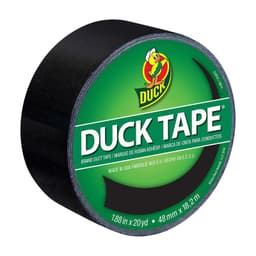
| Best overall |  Duck Duck Tape solid colours black, 48 mm × 18.2 m | Bullets say it tears by hand; one review says it does not rip as easily as it should | Clean removal time is listed as 21 days; reviews do not test that figure | Waterproof | 8.8 | about £3.11 | View offer |
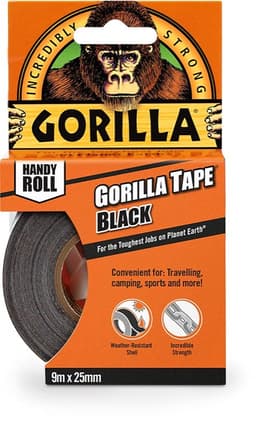
| Alternative |  Gorilla Gorilla Tape Handy Roll Black 9m | Reviews say it tears in straight lines | One review says it cuts without leaving too much residue | Water resistant | 8.0 | about £4.00 | View offer |
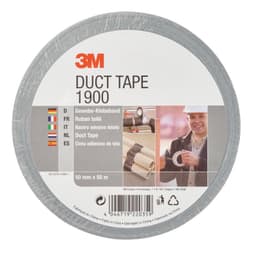
| Best value |  3M 3M Value Duct Tape 1900, 50 mm × 50 m | Bullets say easy to tear; reviews split between a clean tear and a roll that no longer tears cleanly | One review says it leaves a residue if left on or removed | Water resistant | 8.4 | about £5.16 | View offer |
On this page
Prepare the surface
Press and overlap
Tear across, not down the roll
Removal, paint, and the jobs to refuse
Common questions
Does the surface need to be dry?
How do I tear across the roll?
What if it splits down the length?
Can I put it on fresh paint?
When should I stop and call someone?
Related pages
Sources
Public UK sources and the amazon.co.uk listings compared on this page. Listings read 21 October 2026. Updated 22 October 2026.
- RS duct tape guide (retrieved October 2026)
- RS gaffer tape guide (retrieved October 2026)
- 3M UK duct tapes (retrieved October 2026)
- 3M 1900 UK data sheet, December 2008 (retrieved October 2026)
- Gorilla Glue UK (retrieved October 2026)
- Approved Document F, Volume 2 (retrieved October 2026)
- General Product Safety Regulations 2005 (retrieved October 2026)
- BS EN 60454-1:1995 (retrieved October 2026)