Drain blaster vs caustic soda
The sink is still sitting full, and there is a bottle of drain cleaner under the basin. A drain blaster vs caustic soda choice is a safety limit, not a star ranking. Use the hand tool before any corrosive cleaner. If the cleaner is already in the pipe, do not fire air into it. Sodium hydroxide and a liquid drain solvent can mean heat, steam, and a blown push-fit joint. None of the ten tools is a chemical. This uses GOV.UK, an NHS Wales estates alert, and Thames Water, not a lab. A qualifying purchase can earn a commission at no extra cost to you. Listings stay on the [drain blaster comparison](/hub/diy-supplies/drain-blaster).
The sink is still sitting full, and there is a bottle of drain cleaner under the basin. A drain blaster vs caustic soda choice is a safety limit, not a star ranking. Use the hand tool before any corrosive cleaner.
The sink is still sitting full, and there is a bottle of drain cleaner under the basin. A drain blaster vs caustic soda choice is a safety limit, not a star ranking. Use the hand tool before any corrosive cleaner. If the cleaner is already in the pipe, do not fire air into it. Sodium hydroxide and a liquid drain solvent can mean heat, steam, and a blown push-fit joint. None of the ten tools is a chemical. This uses GOV.UK, an NHS Wales estates alert, and Thames Water, not a lab. A qualifying purchase can earn a commission at no extra cost to you. Listings stay on the drain blaster comparison.
Our top picks
| Badge | Product | Mechanism | Charge | Stated outlets | Note | Price | Offer |
|---|---|---|---|---|---|---|---|
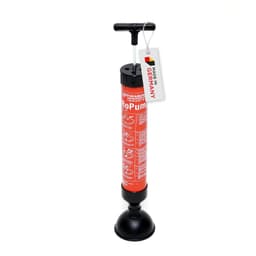
| Best overall |  Rothenberger Rothenberger RoPump 71991 | Suction-pressure hand pump | Hand strokes | Sink, shower, bath, urinal | 8.6 | about £21.92 | View offer |
| Alternative |  HzNzYHD HzNzYHD air drain pump, four suckers | Stored-air gun | Pull the handle about 10 to 20 times | Toilet, sink, bath, floor | 8.4 | about £14.99 | View offer |
| Best value |  XREXS XREXS drain buster, two cups | Dual-cup air plunger | Stroke the handle. No trigger stated | Toilet, sink, bath | 8.0 | about £12.34 | View offer |


On this page
A gun moves water. A corrosive cleaner heats it
Burns, and a closed pipe that makes steam
If the cleaner is already in the bowl
What neither tool will change
Common questions
Should I pour caustic soda or use the gun?
I already poured a cleaner and it is still blocked. Can I blast it?
What does sodium hydroxide do to skin and eyes?
Can a liquid cleaner blow a plastic joint on its own?
Is an enzyme bottle the same risk?
What do I tell the plumber?
Related pages
Sources
Public UK sources and the amazon.co.uk listings compared on this page. Listings captured 21 October 2026. Updated 22.10.2026.
- Wonkee Donkee: how a power plunger works (retrieved 22.10.2026)
- Silverline drain blaster manual (retrieved 22.10.2026)
- Approved Document H, drainage and waste disposal (retrieved 22.10.2026)
- Thames Water: blockages (retrieved 22.10.2026)
- GOV.UK: sodium hydroxide (retrieved 22.10.2026)
- NHS Wales: safe use of liquid drain cleaners (retrieved 22.10.2026)
- Citizens Advice: who repairs drains and sewers (retrieved 22.10.2026)
- Consumer Rights Act 2015, section 22 (retrieved 22.10.2026)