Independent comparisons. We may earn from shop links. More info

Deep hole marker buying guide: which type to buy

Updated: 23 October 2026

You are holding a bracket, a hinge, or a back box, and a normal pencil stops at the metal. A deep hole marker has to put a drill dot or a short line on the surface behind that hole. This buying guide is that choice: match the job, then the reach and the hole width together, then whether the mark may stay. The [deep hole marker comparison](/hub/diy-supplies/deep-hole-marker) holds the eleven amazon.co.uk listings, the prices in GBP, and the review counts. Those figures are the saved listings, not a live scrape and not a lab test. A qualifying purchase can earn us a commission at no extra cost to you.

You are holding a bracket, a hinge, or a back box, and a normal pencil stops at the metal. A deep hole marker has to put a drill dot or a short line on the surface behind that hole.

Our top picks

On this page

What the hole is asking for

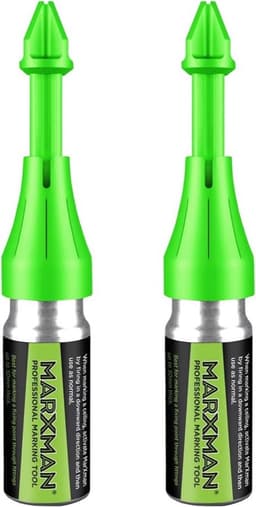
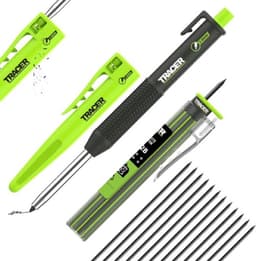
Four tools get called the same thing. Removable green chalk leaves a dot. An extendable pencil or a 45 mm mechanical nose leaves a graphite line. A long-nib felt pen leaves waterproof ink. If you are already stuck between chalk and a pencil, use chalk marker or deep hole pencil. Chalk is one press: a green dot you mean to wipe off. Shelf fitting wants that press. A chalk pen will not scribe a joinery line. A graphite line is the joinery job: a 45 mm nose, or 100 mm in a 3 mm hole and 145 mm in a 6 mm hole. Treat the aluminium Pro kit as a skip, not an upgrade. Felt belongs only where permanent ink can stay.

Reach and hole width together

A single 145 mm figure is not a buying test. Tracer's pencil pages pair the reach with the hole: up to 100 mm deep in a 3 mm hole, or 145 mm deep in a 6 mm hole. If the bracket hole is tighter than 3 mm, the longer number does not apply. The two figures are not interchangeable. Felt nibs sit much shorter: 20 mm, 30 mm, or a title that says 45 mm. RongPei's bullets never give millimetres. The Bentley twin pack states up to 50 mm. The single Marxman listing does not print a millimetre reach. Trueshot's amazon.co.uk bullet says up to 100 mm and does not state a minimum hole width. Screwfix prints a 5 mm tip, so the hole still has to accept the nozzle. There is no British Standard here that sets a reach. Hole width and fitting depth are on marking through fixings.

Colour, wipe-off, and permanent ink

Green chalk is sold as a mark you can see and then remove. Reviews describe a bright dot on brick, wallpaper, wood, and steel, and they say it wipes. One Bentley review says the mark is UV reactive, so a UV torch can still show residue. Wallpaper is the surface where a hard scrub does more harm than the dot. Graphite is a line you sharpen. It is not waterproof ink. Nicpro reviewers say the mark is weak on painted surfaces and that the lead blunts quickly on mortar. Felt listings say waterproof, quick-drying, permanent ink. SNAGAROG also says xylene-free, which is not a non-toxic claim. A marker does not locate cables. Leads blunt, a Marxman charge dies if the pin is left engaged, and felt nibs dry or mash. Trueshot's amazon.co.uk bullets do not state a shot count, so 350 on Tracer's page and about 250 on Screwfix are not a tested life for that listing.

What this set costs

Felt packs run from about £4.99 to about £8.49. Chalk markers run from about £6.39 to about £11.45. The Nicpro set is about £11.99. The extendable Tracer pencils are about £16.79 and about £24.95. Treat about £25 as the top of this set, not as proof of a tougher mechanism. tinshow's 5.0 from four reviews is not a better tool than 4.6 from 2,013 on the Bentley twin pack. The Pro's 3.8 from 551 is a repeated fault: the lead will not stay out. A clamp that fails in the first weeks is a quality point under the Consumer Rights Act 2015, section 9.

Common questions

Do I need chalk, a pencil, or a felt pen?
You need chalk for one drill dot you intend to wipe, the usual shelf, hinge, or back-box press. You need a pencil for a line on timber, or a 45 mm nose with spare leads. You need felt only where waterproof ink may stay.
Why is 145 mm not enough on its own?
Tracer pairs 145 mm with a 6 mm hole, and 100 mm with a 3 mm hole. A bracket hole under 3 mm does not get the longer reach, and a 20 mm felt nib never had that reach. Buy the pair of figures, or the millimetre nib length, not the word deep on the title.
Will a 20 mm nib mark through a deep bracket?
No. The YLYDMY pack states a 20 mm head. That can mark a shallow hole. It will not reach the wall behind a fitting around 50 mm. The 30 mm packs are still short of the Bentley up to 50 mm claim and the Trueshot 100 mm claim.
Is a 5.0 from four reviews better than a 4.6 from two thousand?
No. tinshow is 5.0 from four amazon.co.uk ratings, and one UK line says the pens are ok. The Bentley twin pack is 4.6 from 2,013 and states a reach. A perfect line on a handful of ratings does not outrank that sample.
What should I budget on amazon.co.uk?
Plan on about £5 to £8.50 for a felt pack, about £6.40 to £11.50 for chalk, about £11.99 for the Nicpro set, and about £16.79 or about £24.95 for the Tracer pencils. Those are the saved shelf prices in this comparison. A trade-counter Tracer nearer £10 is not the 12-lead kit and not the Pro.
When is permanent ink the wrong mark?
Permanent ink is the wrong mark on wallpaper and on any finish a chalk dot was meant to wipe. Use felt only where the surface can take a waterproof dot and the nib length is printed in millimetres. A timber line wants a pencil.

Related pages

Sources

Public UK sources and the amazon.co.uk listings compared on this page. Updated 22.10.2026.

  1. Tracer deep hole pencil (retrieved October 2026)
  2. Tracer Pro kit (retrieved October 2026)
  3. Tracer Trueshot (retrieved October 2026)
  4. Screwfix Trueshot (retrieved October 2026)
  5. Charles Bentley Marxman (retrieved October 2026)
  6. Selco Marxman (retrieved October 2026)
  7. Consumer Rights Act 2015, section 9 (retrieved October 2026)
  8. General Product Safety Regulations 2005 (retrieved October 2026)
  9. HSE INDG273 solvents (retrieved October 2026)