Independent comparisons. We may earn from shop links. More info

Trigger or aerosol de-icer

Updated: 23 October 2026

You already know you want a morning melt, and the shelf still splits into a pump and a can that print a similar temperature. A trigger or aerosol de-icer is that choice: more usable liquid and a warmer hand, or a jet you can aim at a lock, with propellant, caps and a shorter can. This page does not teach the morning order and it does not sell a night film. The twelve prices are on the [de-icer comparison](/hub/diy-supplies/de-icer). Peter F., DIY & tools editor, used these listings and review faults on 21 October 2026, not a cold-chamber test. A qualifying purchase can earn a commission at no extra cost to you.

You already know you want a morning melt, and the shelf still splits into a pump and a can that print a similar temperature.

Our top picks

On this page

What actually differs

Prestone’s UK trigger page and its aerosol page both state −40°C and both say no de-icer works faster. The aerosol page states 600 ml. The split is the package. That line is the brand’s sentence, not a timed result. A trigger puts the liquid you bought on the glass. An aerosol spends part of the can on propellant, feels empty while liquid remains, and goes cold in the hand. Parkers’ writers, on ordinary frosts, found an aerosol cold to hold and cracked a cap. That is a road-test note, not a standard. Pressurised cans fall under the Aerosol Dispensers Regulations 2009: do not pierce them, and do not store them above 50°C. That figure is a storage cap. A trigger avoids those can rules only if it is not an aerosol. The liquid can still be flammable.

When the trigger is the better buy

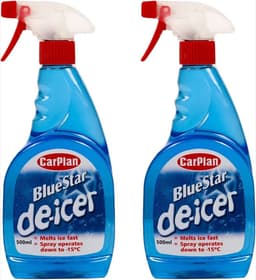
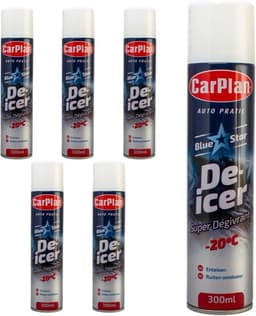
Choose a trigger for the daily windscreen. The Blue Star trigger twin is two 500 ml pumps at £5.12, with 4.4 from 3,485 reviews. The Blue Star aerosol is six 300 ml cans at £11.40, with 3.9 from 46 reviews and a stated −20°C. Reviews prefer the pump because the can goes cold and empties sooner. Autoglym’s DI500, a 500 ml water-free trigger at £7.00, fits a door pocket. Autoglym and Blue Star have leaks in the file too. Bluecol is also reported to leak onto the hand. Demon Ice and ANGIX triggers clog or mist. The Blue Star title says trigger, reviews describe a pump, and Item Form says Aerosol.
Autoglym Autoglym De-Icer 500 ml

Testsieger

Autoglym Autoglym De-Icer 500 ml
9.4/10about £7.00

When the aerosol is the better buy

Choose an aerosol for a lock you can reach from outside, and accept caps, propellant and a shorter can. Quebec’s pair of 600 ml aerosols is £8.99, 4.2 from 574 reviews, stated −20°C. Reviews suspect propellant, a brown spray on paint and broken lids. One de-ice used a whole can. Prestone Rapid is a jet, not a pump: £15.49, 4.7 from 616 reviews, stated −40°C. Five of six thin caps arrived smashed in one review. On thick ice it dilutes unless you scrape first. Fill is not printed. A night film is not a third format here.

Packs that are not the volume they seem

A six-pack title is not six cans until you count them. Prestone’s 600 ml × 6 at £15.48 is 4.7 from 115, stated −40°C. Two reviews say one can arrived, and the listed weight is 660 g. Goodyear’s 300 ml six-pack lists 275 g, with nine reviews and no temperature. LOYAS244UK is a pack of 3 at £10.17, 4.8 from 17, and the components line says one can. Six Blue Star 300 ml cans are £11.40 against £5.12 for about a litre of pump, and only if the cans arrive. Job and pack stay on the windscreen de-icer buying guide. The morning order is how to use de-icer. Use a pump for the daily screen. Use a can for a lock you can reach.

Common questions

Should I buy a trigger or an aerosol?
Buy a trigger for the daily windscreen if you want the liquid and a warmer hand. Buy an aerosol for a jet, including a lock from outside, and keep a spare indoors. Blue Star reviews that saw both prefer the pump. Quebec and Prestone Rapid are the jet examples, with high use and broken or smashed caps.
Why does a can feel empty when liquid is left inside?
Propellant pushes an aerosol out, so it can sputter while liquid remains. One Goodyear review died halfway round a Honda Jazz, and a Blue Star 300 ml can emptied after one spray. Those are single reviews, not a rate. A trigger avoids that gas share only while it is a pump. The Blue Star trigger is filed as an aerosol, so check the Item Form field.
Do trigger bottles leak?
Some do. Blue Star has leaked in the pack, Autoglym has a leak in the file, and Bluecol has leaked onto the hand. Demon Ice nozzles mist or clog, and ANGIX is said to leak in the boot. One detailing post is a spill in a boot, an anecdote rather than a rate. A pump can still be the better daily screen, and it is not a sealed can.
Which format is kinder on cold hands, and which aims into a lock?
The pump is kinder in the hand. Blue Star buyers left the can because it goes cold, and Parkers cracked an aerosol cap on an ordinary frost. The can is the easier aim into a lock you can reach from outside. A fine mist, a Demon Ice trigger complaint, blows off a small target. Keep the bottle you rely on indoors either way.
Is a six-pack of 300 ml cans better value than one trigger litre?
Not in this Blue Star pair. Six 300 ml cans are £11.40, 3.9 from 46 reviews, against two 500 ml triggers at £5.12 with 4.4 from 3,485 reviews. The extra labelled volume counts only if the cans arrive and you can use them. Empty tins and short counts are in the reviews.
Are aerosol de-icers flammable, and is Prestone’s trigger faster?
Pressurised cans carry flammability marking under the Aerosol Dispensers Regulations 2009. Do not pierce them, and do not store them above 50°C. That is a storage limit, not the −40°C on the label. A trigger skips the can rules only if it is not an aerosol, and the liquid can still be flammable. Prestone prints −40°C and “no de-icer works faster” on both formats. Nothing here times one against the other.

Related pages

Sources

Public UK sources and the amazon.co.uk listings compared on this page. Updated 22 October 2026.

  1. Highway Code rules 226 to 237 (retrieved 22 October 2026)
  2. Highway Code Annex 5, penalties (retrieved 22 October 2026)
  3. Construction and Use Regulations 1986, regulation 30 (retrieved 22 October 2026)
  4. RAC: how to de-ice your car (retrieved 22 October 2026)
  5. Met Office winter resources (retrieved 22 October 2026)
  6. Met Office: winter (retrieved 22 October 2026)
  7. Autoglym De-Icer DI500 (retrieved 22 October 2026)
  8. MyMotorWorld: CarPlan Demon Ice (retrieved 22 October 2026)