Copper sulphate buying guide
You have a garden job, a school tray, or a traditional name in the search box, and the amazon.co.uk results look like one blue chemical in different sizes. They are not. This copper sulphate buying guide sorts the eleven listings in our [copper sulfate comparison](/hub/diy-supplies/copper-sulfate) by the job first, then by hydrate, grams, and price. A classroom crystal, a cattle footbath, a crop spray, and a pond treatment sit in different legal boxes, and none of these files prints a MAPP number. Shelf prices are the figures stored with the category, not a live check on 20 October 2026. A qualifying purchase can earn us a commission at no extra cost to you. This page stops at the decision.
You have a garden job, a school tray, or a traditional name in the search box, and the amazon.co.uk results look like one blue chemical in different sizes. They are not.
You have a garden job, a school tray, or a traditional name in the search box, and the amazon.co.uk results look like one blue chemical in different sizes. They are not. This copper sulphate buying guide sorts the eleven listings in our copper sulfate comparison by the job first, then by hydrate, grams, and price. A classroom crystal, a cattle footbath, a crop spray, and a pond treatment sit in different legal boxes, and none of these files prints a MAPP number. Shelf prices are the figures stored with the category, not a live check on 20 October 2026. A qualifying purchase can earn us a commission at no extra cost to you. This page stops at the decision.
Our top picks
| Badge | Product | Stated pack | Hazard line | Review note | Note | Price | Offer |
|---|---|---|---|---|---|---|---|
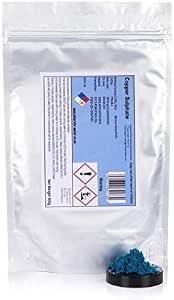
| Best overall |  Minerals-water.ltd 500 g copper sulphate pentahydrate | 500 g pouch | Follow recommended guidance. No CLP word | UK reviews mention scorch and residue | 8.8 | about £7.97 | View offer |
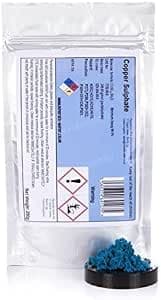
| Alternative |  Minerals-water.ltd 250 g copper sulphate pentahydrate | 250 g | Protective equipment. No CLP word | UK reviews dispute purity | 8.6 | about £5.97 | View offer |
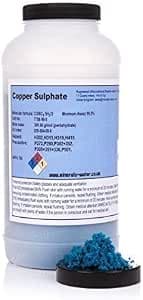
| Best value |  MAIGORAY 1 kg copper sulphate pentahydrate | 1 kg | Warning. Harmful if swallowed; skin and eye irritation | One UK review disputes the purity claim | 8.6 | about £7.97 | View offer |
On this page
Start with the job, not the blue crystals
Hydrate, form, and what the title is selling
Grade claims, residue, and mass
When these listings are the wrong product
Common questions
Is the blue crystal in these packs pentahydrate or anhydrous salt?
Does high purity, 99%, or 99.9% mean a laboratory certificate?
Why do some UK reviews mention brown or dark insoluble residue?
Can I use any of these packs on edible plants, a path, or a pond because the title says so?
Which pack is poor value per gram, and which mass is enough for school crystals?
The 1.4 kg title also prints an item weight of 1 kg. Which figure do I trust?
Related pages
Sources
Public UK sources and the amazon.co.uk listings compared on this page. Listings stored 20 October 2026.
- HSE: garden and allotment pesticides (retrieved 20.10.2026)
- HSE: active substance register (retrieved 20.10.2026)
- HSE: amateur garden pesticide database (retrieved 20.10.2026)
- NHS: poisoning (retrieved 20.10.2026)
- GOV.UK: report water pollution (retrieved 20.10.2026)
- GOV.UK: pollution prevention for businesses (retrieved 20.10.2026)
- Fisher Scientific UK: copper(II) sulphate pentahydrate safety data sheet, part C/8520 (retrieved 20.10.2026)