Branding iron for wood, leather, or food
A listing title that promises wood, leather, and burgers in one line is how people end up pressing an oak brand into a steak. A branding iron for wood, leather, or food has to be chosen for one of those surfaces. The heat that darkens timber is too high for leather, and a head that has burned wood is the wrong head for food. Heater choice is on [electric or flame branding iron](/hub/diy-supplies/branding-stamp/sub/branding-stamp-electric-or-flame). The five rows, priced on 19 October 2026, are in the [branding stamp comparison](/hub/diy-supplies/branding-stamp). A purchase via our amazon.co.uk links can earn a commission at no extra cost to you.
A listing title that promises wood, leather, and burgers in one line is how people end up pressing an oak brand into a steak. A branding iron for wood, leather, or food has to be chosen for one of those surfaces.
A listing title that promises wood, leather, and burgers in one line is how people end up pressing an oak brand into a steak. A branding iron for wood, leather, or food has to be chosen for one of those surfaces. The heat that darkens timber is too high for leather, and a head that has burned wood is the wrong head for food. Heater choice is on electric or flame branding iron. The five rows, priced on 19 October 2026, are in the branding stamp comparison. A purchase via our amazon.co.uk links can earn a commission at no extra cost to you.
Our top picks
| Badge | Product | Stated surfaces | Food on listing | Mark type | Note | Price | Offer |
|---|---|---|---|---|---|---|---|
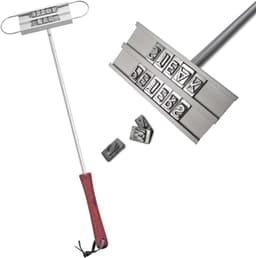
| Best overall |  WADY WADY barbecue branding iron | Steak and burgers | Yes, barbecue meat | Changeable letters | 4.0 | about £13.19 | View offer |
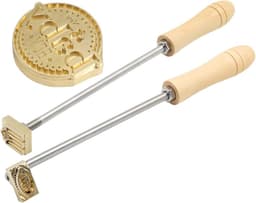
 Zopmopae Zopmopae custom branding iron | Wood, leather, kraft paper, bread | Bread named, no food-contact mark | Custom logo | 8.0 | about £7.89 | View offer | |
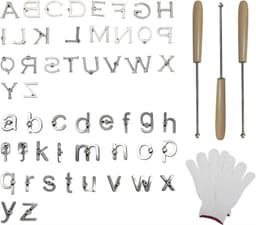
| Alternative |  SWTHM SWTHM alphabet branding iron kit | Wood, leather, hats, felt, cowhide | No | Changeable letters | 4.2 | about £29.99 | View offer |
Wood
Leather
Food
Which tool in this comparison fits
Common questions
Can the same head brand oak and a steak?
Which listing in this set says it is not for food?
Which listing is only a barbecue tool?
Does burger in a bullet make it food-safe?
Should you brand wood before oil or lacquer?
Related pages
Sources
Public UK sources and the amazon.co.uk listings compared on this page. Prices stored 19 October 2026. Updated 22 October 2026.
- Bowers & Freeman: branding irons (retrieved October 2026)
- Outpost Workshop: electric branding iron (retrieved October 2026)
- Outpost Workshop: fire-heated branding iron (retrieved October 2026)
- JH Machining: frequently asked questions (retrieved October 2026)
- GOV.UK: Electrical Equipment (Safety) Regulations 2016 (retrieved October 2026)
- Plugs and Sockets etc. (Safety) Regulations 1994 (retrieved October 2026)
- GOV.UK: Food contact materials regulations (retrieved October 2026)
- Retained Regulation (EC) 1935/2004, article 15 (retrieved October 2026)
- Consumer Rights Act 2015, section 9 (retrieved October 2026)
- Consumer Contracts Regulations 2013 (retrieved October 2026)
- OPSS product safety report 2312-0010 (retrieved October 2026)