Spokeshave blade width: 10 inches is the tool length

On these amazon.co.uk spokeshaves, a 10 inch cutting width is the tool length. Where a bullet states a blade, the figure is 44, 45, or 46 mm. Use that line.
On this page
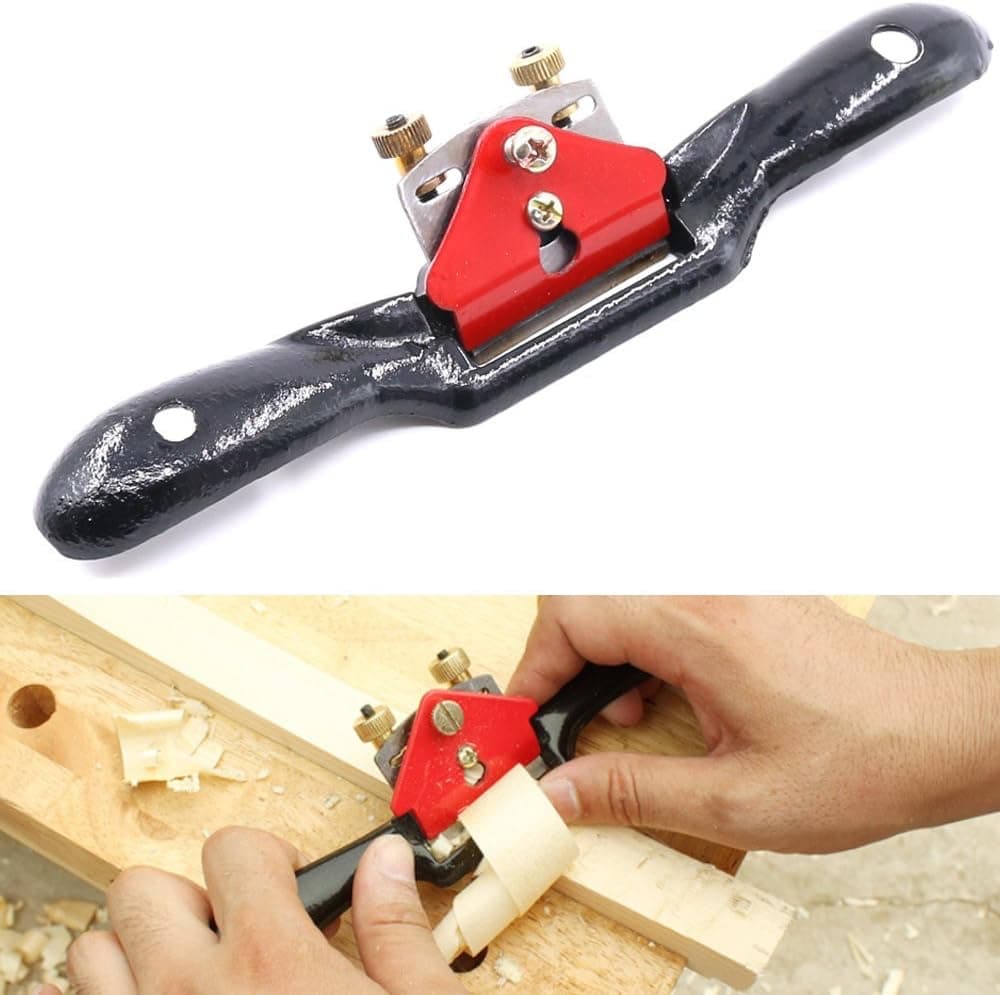
You have two amazon.co.uk tabs open and one specification table says the cutting width is 10 inches. That number is large enough to sound like the iron. Spokeshave blade width on the bullets that actually name a cutter is 46 mm, 45 mm, or 44 mm. Ten inches is 254 mm, the length of the tool in the title. A cutter of 254 mm would be longer than these shaves are.
Peter F. edited this page. The twelve prices, star lines, and dimensions below are the amazon.co.uk listing figures stored for our spokeshave comparison, captured around 15 October 2026. Record widths come from Find My Tool and Tooled-Up. We did not measure any iron, and we did not run a lab test. A qualifying purchase through our links can earn a commission at no extra cost to you.
In short
A 10 inch or 9 inch cutting width on these listings is the length the title boasts. Where a bullet states a blade, quote that figure as printed: 46 mm, 45 mm, or 44 mm. A 7 cm cell and an 8 inch cell stay as contradictions. Two UK pages put the Record A151 cutter at 54 mm and at 60 mm, so you do not average them, and you do not paste either number onto a budget ASIN.
A 10 inch spokeshave is the body
The clearest pair is the single Swpeet, ASIN B0773LKJ5Y. The bullet says a 46 mm carbon-steel blade and a tool length of 25.5 cm. The table says the cutting width is 10 inches and the cutting depth is 25.4 cm, which is 10 inches again, so both cells repeat the body. At £8.99, with 3.9 from 1,928 ratings, this is the busiest flat-base listing in the set.
The Swpeet pair, B07NVYHGGG, uses the same split. The title says two 10 inch flat-base spokeshaves, and the bullet says a 46 mm carbon-steel blade. The captured price is £4.44, with 4.1 from 66 ratings.
Three other titles stop at the inch figure. Lumanious B0FZ964N29, £8.59, puts 10 inches in the title, in a colour field that is not a colour, and in a table whose cutting depth is 2.05 inches. GIONAR B0H19VHQCW, £9.98, and MHYMX B0DSC4FJXH, £9.99, each set the table cutting width to 10 inches and neither states a blade in millimetres. Filling the gap with 45 mm because a neighbour said 45 mm is how a spare arrives and will not enter the mouth.
Nine inch titles are the same class of length. Wjelet B0DK2VMLRW says 9 inches in the title and 21 cm overall, with a 44 mm blade beside that 21 cm. Wjelet B0DT6XB176 and Voskilon B0H2DLNL1P are 9 inch titles too. A row that never prints a millimetre still has no spokeshave blade width.
Where the blade width is written
The cutter is the millimetre in the bullet. Glarks B07PT43VJS calls it a blade length of 45 mm and a thickness of 2 mm. That 45 mm is the edge across the mouth. The table then sets both cutting depth and cutting width to 2 mm, so the table width copies the thickness. The tool length is 10 inches. The price is £12.99, with 4.1 from 225 ratings, for two flat-base shaves and two extra blades.
On Wjelet B0DK2VMLRW the table cutting width repeats the 44 mm bullet. The listing weight of 54 g is not credible, a manual spokeshave is filed as corded electric, and the captured price is £7.69, with 3.6 from 17 ratings.
Four listings give a short figure you can quote: 46 mm on B0773LKJ5Y, 46 mm on B07NVYHGGG, 44 mm on B0DK2VMLRW, and 45 mm on B07PT43VJS. Say "about 45 mm" only for that band. For one ASIN, use the figure that ASIN printed. An empty cell is not a hidden 45 mm, and we have no caliper reading.
Cells that do not match
Voskilon B0H2DLNL1P puts a 9 inch tool in the title and 7 cm in the cutting-width cell. Seven centimetres is 70 mm, above the 44–46 mm bullets and well below a 9 inch body, about 229 mm. The sole is not named. The star line is 3.5 from three ratings, at £8.19, and one written review says every blade arrived blunt. Overwriting 7 cm with 45 mm would invent a figure this listing never printed.
The Glarks eight-piece set, B0BBFSWH6P, costs £16.99 and carries 4.2 from 152 ratings. One bullet prints 45 x 52 mm and 39 x 45 mm, then 1.5 in x 8 in for the second blade. Eight inches is about 203 mm, which cannot be an iron whose other printed size is 45 mm. The table sets both cutting depth and cutting width to 1.8 inches. The bodies are 240 mm and 212 mm. The set holds two shaves, four spare blades, a small plane and a four-way rasp, and reviewers say the plane's wedge does not hold. Those sizes cannot all be the same blade, so the cutter stays unstated until you measure it.
Record and Stanley widths
Find My Tool's note on the Record A151 states a mouth of 56 mm (2 1/4 inches), a cutter of 54 mm (2 1/8 inches), and a tool 10 inches long. Tooled-Up's A151 page states a cutter of 60 mm and a length of 250 mm. They disagree by 6 mm. Averaging them to 57 mm would invent a width neither merchant printed. A Screwfix result title says "Flat Sole Spokeshave 2 1/8 inch", and that price was not captured.
250 mm is about 9.8 inches, the same length class as a 10 inch title. Find My Tool's mouth is 2 mm wider than its 54 mm cutter, and a 46 mm bullet iron is a different spare from either Record figure.
Stanley sits outside this table. An amazon.co.uk search title for ASIN B0001IWDEM reads "STANLEY 55mm Flat 151". That string is a title only. It is not one of the twelve, and we did not capture a price. Common Woodworking does not state a millimetre width, so 55 mm is not the blade in a Swpeet box.
What to compare instead
Read a listing in this order, and stop when a cell contradicts itself.
- Find the bullet that puts a millimetre next to blade, cutter, or iron, and write that figure down with the ASIN.
- If the largest figure is 9 inches or 10 inches, record it as the tool length, including when the table calls it a cutting width.
- If a cutting-width cell says 2 mm, 7 cm, 1.8 inches, or 10 inches, check whether that number is the thickness, a contradiction, or the title length.
- Leave a Record 54 mm and a Record 60 mm as two pages. Do not copy either onto a budget ASIN, or a Stanley title onto one.
- Then compare the sole and the spares. A few millimetres of cutter width will not choose the tool.
A named flat base, on both Swpeet listings and the Glarks pair, suits a door edge, a chamfer, and a gentle curve. Spear & Jackson SSROUND states a round sole, gives 32.5 cm, and a review measured about 250 mm tip to tip, with no cutter in millimetres. SSCON, £26.74, is a concave and convex pair, and one UK review put the curve at about a 5 cm radius. The flat and round spokeshave guide covers that split. The buying guide puts sole and adjustment before stars.
The single Swpeet remains the top pick: a named flat sole, a claimed 46 mm blade, £8.99, and 3.9 from 1,928 ratings. The 10 inch table field is the length, and the sole and the iron still need a check and a hone. The £4.44 pair is the best-value way to get the same 46 mm claim twice. The Glarks pair states 45 mm and names two extra blades. Those fits are on the best spokeshave page. Shelf prices run from £4.44 to £26.74.
If you log a width at work, copy the bullet millimetres, the ASIN, and the date, and note that the 10 inch cell was the length. PUWER 1998 does not name a spokeshave model and does not apply to a household purchase. Where the page never states a millimetre, the width stays blank. A live price can move after 15 October 2026.
Common questions
Why does the title say 10 inches if the blade is about 45 mm?
Which field on the listing is the cutter?
Is 250 mm the same idea as 10 inches?
Why do two UK pages disagree on the Record A151 cutter?
What is a 7 cm cutting width on the Voskilon listing?
What does 1.5 inch by 8 inch mean on the Glarks set?
Does a wider blade make a better spokeshave?
Which of the twelve listings state a blade in millimetres?

Peter F. is the editor for DIY & tools at productscompared.co.uk. Comparisons in this category are checked against amazon.co.uk listings, review evidence and public UK sources.
Related articles
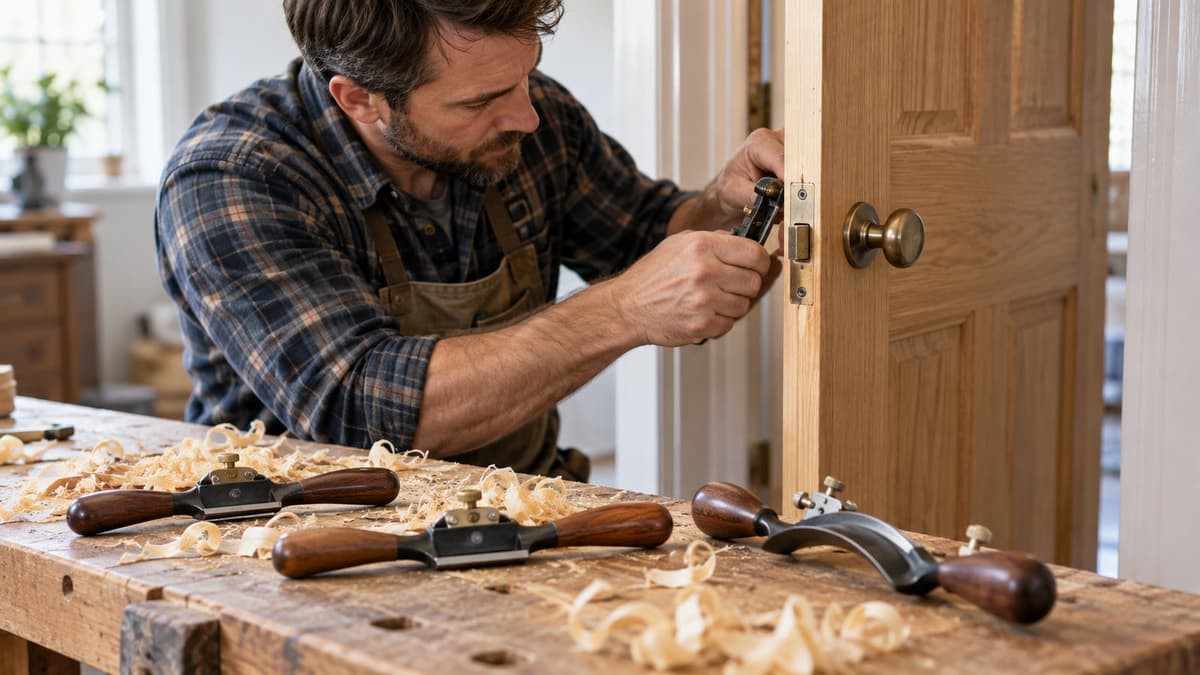
What a spokeshave costs in the UK
Shelf prices in this set run from £4.44 to £26.74. The pound figure does not tell you the cutter width.

Spare blades are not a sharpening plan
A spare has to match the iron you can measure. A title that promised four blades is a separate question.
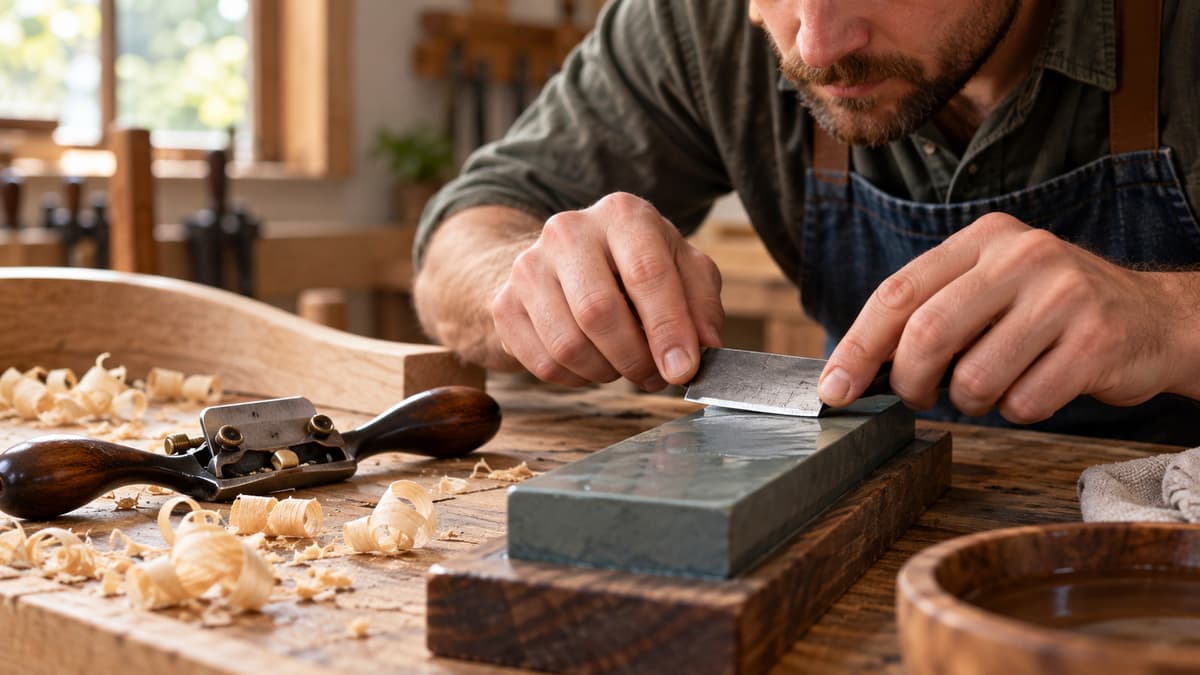
How to sharpen a spokeshave blade
These irons are short. Hone the bevel you can see, and keep your fingers off a 44–46 mm edge.