PUWER hand tools: duties when a spokeshave is at work

PUWER applies when a spokeshave is work equipment, including a tool staff bring in. It does not cover a household door, and it names no model you should buy.
On this page
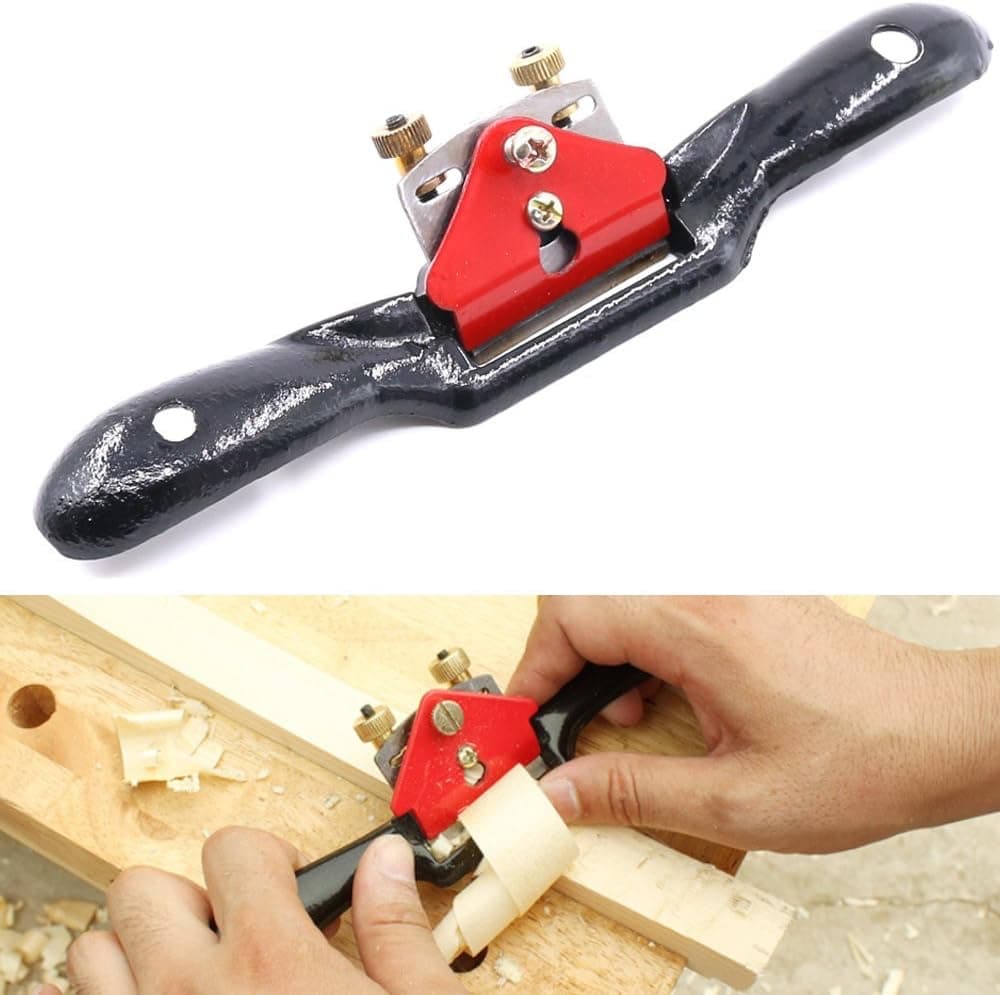
You are ordering a short list of spokeshaves for a joinery bench, or a fitter has turned up with their own, and someone has asked whether that hand tool sits under the work equipment rules. PUWER hand tools are work equipment when they are used at work. The regulations do not wait for a motor, and they do not name a spokeshave. They also do not follow you home to a door you are easing on a Saturday for yourself.
This page is from Peter F., editor for DIY & tools. It follows the Health and Safety Executive overview of the Provision and Use of Work Equipment Regulations 1998, SI 1998/2306, and the contents entry for that instrument on legislation.gov.uk. Prices and ratings are the amazon.co.uk figures stored in our spokeshave comparison, captured around 15 October 2026. We did not inspect a workplace, we did not test these tools in a lab, and this is not legal advice. A qualifying purchase through our links can earn a commission at no extra cost to you.
In short
PUWER applies when a spokeshave is work equipment, including a tool a member of staff brings in for the job. It does not apply to a spokeshave you buy for your own door at home, and it does not tell you which model to order. Keep the blade and the sole in good repair, and make sure the person using the tool has been shown how. A 10 inch cutting width on a listing is a poor line for a workshop note.
Work equipment includes the tool
The HSE overview puts the duties on people and companies who own, operate, or control work equipment, and on businesses whose employees use work equipment, whether or not the business owns it. Work equipment, in that account, is any machinery, appliance, apparatus, tool, or installation for use at work. A spokeshave is a tool. Once it is there to take a shaving because someone is at work, it is inside the definition. The 1998 regulations replaced the 1992 ones.
The same account covers a tool the employee provides. If a joiner keeps a shave in their own toolbox and uses it on your job, the duty stays with the business whose employee is using it. Telling staff to bring their own does not step outside PUWER 1998. A spokeshave has no guard to interlock, no emergency stop, and no power-press examination. A self-employed joiner with no staff, on a paid job, is not the householder case.
A household door is outside PUWER
A spokeshave you buy to ease your own door is not work equipment. PUWER does not apply to that household purchase, even when the casting matches one on a workshop board. Saturday at home, on your own timber, is outside these regulations. If that shave leaves the house and a member of staff uses it on a customer's door, it is work equipment for that job, including where the employee owns it. Handing one from the van to someone you employ was never the household case.
A flat sole and a straight iron are the ordinary match for a door edge or a chamfer, and a round sole is the match for a tighter hollow. That split is set out in the flat and round spokeshave guide. It is a buying choice, not a statutory specification. If the door is a fire door, planing it is a different problem, and a new shave does not solve it. The Swpeet B0773LKJ5Y was £8.99 with a 3.9 average from 1,928 ratings when we stored those figures. A live price can move after 15 October 2026 and still will not switch PUWER on at home.
Suitable, maintained, and someone trained
Where the shave is work equipment, the work equipment regulations ask that it be suitable for the work, maintained in an efficient state and in good repair, inspected where the risk requires it, and used by people who have information and training. Suitable means the sole and the iron match the cut. A flat sole on a door edge is a coherent choice. The same flat sole in a tight hollow will skate and dig. The buying guide compares stated sole and stated blade width. PUWER does not convert suitable into the model with the most reviews. A worn iron can be suitable once it is sharp. A new iron of the wrong curve is not suitable.
Do not invent a calendar. The pages we used name no monthly spokeshave inspection and no form for this tool. The risk you can see is a nicked edge, a rounded bevel, a painted or rocking sole, and screws that will not hold a setting. Hand tool inspection at work, for this shave, is that look before the tool is used. A spare does not hone the iron that is fitted today. Hone the bevel, the heel, and a light camber, then take one test shaving, as in how to sharpen a spokeshave blade. If the mouth is cast so the blade cannot project evenly, that is a repair or a replacement.
The person who will cut needs to know how the two screws change the depth, which way the shave runs, and when to hone. The how-to-use guide is a plain account of that setting, not a certificate. PUWER does not name a course length. Following the Approved Code of Practice is not compulsory. HSE says inspectors may treat it as good practice.
PUWER does not name a model
Nothing in the HSE overview, and nothing we took from the contents list of SI 1998/2306, tells you to buy a particular amazon.co.uk ASIN. A spokeshave at work can be an old tool with a known iron or a new casting, provided it is suitable, maintained, and the user has been shown how. The best spokeshave notes compare listings. They are not compliance. If a supplier says a model is PUWER approved, ask which regulation names it.
On these amazon.co.uk pages a 10 inch cutting width often repeats the length of the tool. The Swpeet B0773LKJ5Y bullet states a 46 mm carbon-steel blade and a length of 25.5 cm. The table's 10 inches lines up with that length, not with a 254 mm iron. Write 46 mm if that is the tool you issued, and say the figure is the listing bullet, not a measurement we took with calipers. The trap is set out in why a 10 inch cutting width is not the blade. A Record A151 specification that prints a cutter width is a buying fact, not a PUWER requirement. This comparison did not capture a Record width.
Reviewers describe door-edge work that went ahead once the blade was set, and also painted soles, a hone, and fiddly screws. Those are reasons to maintain it if you issue it, not a finding that the regulations require this ASIN. Issue the tool with the width you can defend, the sole you chose, and the name of the person who will hone it. A chipped new iron, or blades the listing promised and did not send, is a consumer-rights question. A blunt but complete iron is maintenance.
Product safety is not PUWER
The GOV.UK note on the General Product Safety Regulations 2005 for Great Britain is about consumer goods placed on that market, not about PUWER. Use it when the question is whether a consumer product was safe to supply, and the HSE overview when the question is use at work. That page says Northern Ireland moved, on 13 December 2024, to EU Regulation 2023/988 for that product-safety regime. The Great Britain note is not Northern Ireland's current product-safety regime. The date does not turn PUWER into a consumer-safety note, and it does not pick a blade width.
If your question is work equipment in Northern Ireland, the HSE sources used here are the Great Britain overview, not a full statement of Northern Ireland health and safety law. A household buyer does not pick up a PUWER duty by ordering a shave. A workplace buyer does not meet the duties by reading a product-safety leaflet or by treating a conformity mark as a chosen model. Marks answer a supply question. Suitable, maintained, and trained answer the use question only when the tool is work equipment.
Common questions
Does PUWER apply to hand tools or only to machinery?
Does PUWER apply if a member of staff brings their own spokeshave?
Does PUWER apply to a spokeshave you buy for your own door?
Does PUWER tell you which spokeshave to buy?
What maintenance duty touches a spokeshave blade and sole?
Who needs training to use a spokeshave at work?
Is a 10 inch cutting width a quotable figure for a workshop record?
Is Great Britain product-safety guidance the same as PUWER, including in Northern Ireland?

Peter F. is the editor for DIY & tools at productscompared.co.uk. Comparisons in this category are checked against amazon.co.uk listings, review evidence and public UK sources.
Related articles

Why a 10 inch cutting width is not the blade
On these listings, 10 inches is often the tool length. The blade bullet is about 44–46 mm.
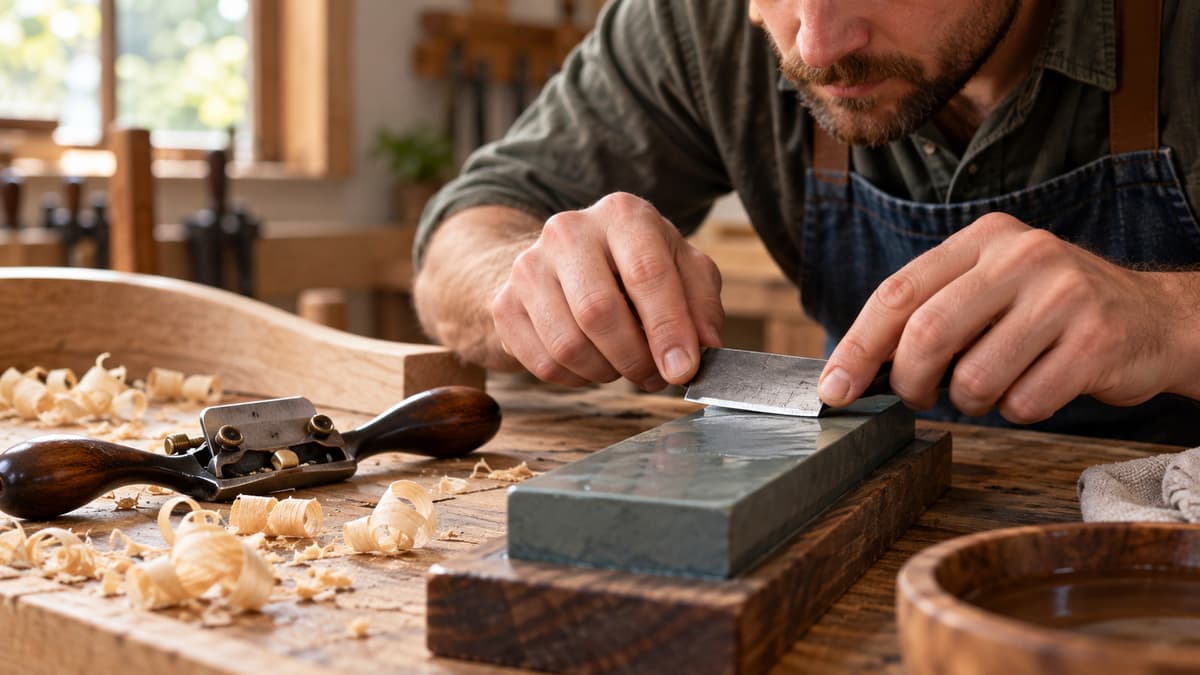
How to sharpen a spokeshave blade
A blunt iron is a hone on the bevel. A chipped new blade is a return, not a finer stone.

Your rights if a spokeshave arrives faulty
A faulty new spokeshave is a consumer-rights question. Use at work is a separate duty.