Side cutters vs flush cutters
Side cutters vs flush cutters is a fork in the edge, not two brands. A bevel leaves a point on both ends. A flat face sits nearly flush on the piece you keep. Most cheaper packs here are flush tools sold under the side-cutter name. A 160 mm diagonal cutter is a different cut. The [side cutter comparison](/hub/cutting-tools/side-cutters) holds the product table. Length and wire class sit on the [side cutters buying guide](/hub/cutting-tools/side-cutters/sub/side-cutters-buying-guide). How you hold the flat face sits on [how to use side cutters](/hub/cutting-tools/side-cutters/sub/side-cutters-how-to-use). A qualifying purchase can earn a commission at no extra cost to you. Peter F., DIY & tools editor, 20 October 2026. This is not a lab test.
Side cutters vs flush cutters is a fork in the edge, not two brands. A bevel leaves a point on both ends. A flat face sits nearly flush on the piece you keep.
Side cutters vs flush cutters is a fork in the edge, not two brands. A bevel leaves a point on both ends. A flat face sits nearly flush on the piece you keep. Most cheaper packs here are flush tools sold under the side-cutter name. A 160 mm diagonal cutter is a different cut. The side cutter comparison holds the product table. Length and wire class sit on the side cutters buying guide. How you hold the flat face sits on how to use side cutters. A qualifying purchase can earn a commission at no extra cost to you. Peter F., DIY & tools editor, 20 October 2026. This is not a lab test.
Our top picks
| Badge | Product | Edge | Finish on the keep side | Stated wire | Note | Price | Offer |
|---|---|---|---|---|---|---|---|
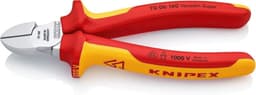
| Best overall |  KNIPEX Knipex 70 06 160 diagonal cutter | Bevel. RS records this cut as with bevel | A small point on both ends | Soft and hard wire. No millimetres in the saved listing. | 9.4 | about £27.26 | View offer |
| Best value |  HOUSERAN HOUSERAN 6 inch flush cutters, 2-pack | Flush, hardened | Flat face toward the piece you keep | Up to 12 AWG. Hard steel will damage the edge. | 9.2 | about £10.99 | View offer |
| Alternative |  BOENFU BOENFU 6 inch flush side cutter | Flush, angled head | Flat face toward the piece you keep | Up to 2.3 mm | 8.8 | about £7.99 | View offer |


On this page
Two edges, not two brands
When the flush edge is the right one
When the bevelled diagonal cutter is the right one
Owning both
Common questions
What is the difference between side cutters and flush cutters?
Which one leaves a flat end on a cable tie?
Which one is stronger on copper?
Can I use flush cutters on steel wire?
Why does my side cutter leave a sharp stub?
Is a flush cutter just a smaller side cutter?
Do I need both?
Related pages
Sources
Sources listed in the research digest for this comparison, retrieved 20 October 2026. Prices and review counts are amazon.co.uk listing lines. This is not a lab test.
- Electricity at Work Regulations 1989, regulation 14 (retrieved 20 October 2026)
- HSE HSG85, Electricity at work: safe working practices (retrieved 20 October 2026)
- HSE INDG291, Providing and using work equipment safely (retrieved 20 October 2026)
- ISO 5749:2004, Pliers and nippers — Diagonal cutting nippers (retrieved 20 October 2026)
- Maun Industries, Is VDE a legal requirement for insulated tools? (retrieved 20 October 2026)
- Knipex 70 06 160 diagonal cutters (retrieved 20 October 2026)
- Digital Toolbelt, Side cutters vs diagonal cutters (retrieved 20 October 2026)
- Toolsmith, Wire cutters: flush, side, end and cable (retrieved 20 October 2026)