Independent comparisons. We may earn from shop links. More info

Side cutters buying guide

Updated: October 2026

You are on amazon.co.uk because a cable tie will not trim, a copper tail is too long, or the old pair has a gap you can see. A side cutters buying guide should settle the job before the brand: what you are cutting, how thick it is, and whether the handle needs a real insulation mark. The titles already mix 5 inch flush packs, a 160 mm diagonal cutter and a three-size set with no wire class. The [side cutters comparison](/hub/cutting-tools/side-cutters) holds the product table and the GBP prices. This page is the decision order only. A qualifying purchase can earn a commission at no extra cost to you.

You are on amazon.co.uk because a cable tie will not trim, a copper tail is too long, or the old pair has a gap you can see.

Our top picks

On this page

Side cutters and diagonal cutters

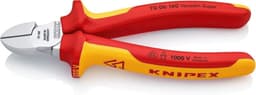
In UK shops the two names usually mean one family: pliers that shear from the side of the head. The fork that matters is not the word side versus dikes. It is a flush face for a flat finish on soft work, or a bevelled 160 mm head that leaves a small point and keeps a stronger edge. A listing that says side cutters can still be a 5 inch spring flush pack. A listing that says diagonal cutter can still be that same pack, or the Knipex 70 06 160 sold as 1000 V insulated. ISO 5749 is a dimension and test-value standard for diagonal nippers. It is not an electrical approval, and it does not tell you the amazon.co.uk title is honest about the edge. The edge itself is finished on side cutters vs flush cutters. Sheet metal, cable cutters and aviation snips are different tools.

Length and leverage

Five-inch flush packs in this batch reach into a tight box or a model sprue and have less leverage. A 6 inch flush cutter such as BOENFU or HOUSERAN still sits in the craft and tie class. The extra inch is reach and a slightly longer handle, not a licence for steel. A 160 mm diagonal cutter is the general toolbox length in this folder: the two Sharp-tec pairs and the Knipex 70 06 160. Millimetres are the honest unit here. 160 mm is about 6.3 inch, which is why some titles say 6 inch and some say 160 mm for the same sort of head. The US PRO 1820 set is one 6 inch, one 8 inch and one 10 inch drop-forged diagonal plier. That is three handle lengths, not three certified capacities. A longer handle multiplies force at the jaw if the edges meet. It does not invent a wire class. If the 10 inch pair will not cut a split pin, as one UK review reports, the problem is the edge. Entry prices in this batch run about £4.59 to £9.99. Mid is about £10.99 to £22.90. The Knipex sits at about £27.26 on the amazon.co.uk file. RS listed that part at £38.56 including VAT when checked. That is a different shelf.

Wire class, not cutting width

Soft copper, medium-hard wire and hard wire are different diameters on a serious listing. Knipex publishes Ø 4.0 mm soft, Ø 3.0 mm medium-hard and Ø 2.0 mm hard for the 70 06 160 on its own page, with edges about 62 HRC. The amazon.co.uk saved listing for that ASIN does not print those millimetres. Quote them only for that model, and only as the maker’s figures. Do not copy them onto Sharp-tec, KAIHAOWIN, BOENFU or US PRO. KAIHAOWIN KH008 states up to 16 AWG soft copper, about 1.3 mm solid, and says hard steel is not recommended. HOUSERAN states up to 12 AWG, about 2 mm solid, and says hard steel will damage the edge. BOENFU states up to 2.3 mm. Several KAIHAOWIN packs say only plastic or soft electrical wire. Sharp-tec names copper, aluminium and soft iron with no diameter. US PRO names nothing. A not-for-hard-wire line is a stop, not a hint. Amazon’s cutting-width field in this folder often repeats the tool length, 5 inches or 6 inches. That is not a jaw opening and it is not a copper capacity. Twin-and-earth is two insulated conductors plus an earth. Cut one conductor at a time, further back on the jaw, and only after the circuit is dead. If the listing will not name a class, treat the cutter as a tie and sprue tool.

One pair or a pack

A multipack is rational when the edge is a cheap flush cutter you expect to notch, and the job is cable ties, floral wire or model sprue. You are buying spares, not a harder steel. UK notes on the KH008 10-pack include broken jaws on speaker cable and on 0.8 mm copper-coated steel. UK notes on the six-pack include a tip snapping on thin wire and a break on first use. One 160 mm pair is rational when the toolbox job is mixed copper and the listing names soft and hard wire, or at least copper rather than soft electrical wire only. The two Sharp-tec 160 mm ASINs share one 1,005-review block, so the 4.2 line is not two independent samples, and neither listing prints a diameter. The US PRO set is three lengths for about £12.68 with no wire class. Check the close on paper before you trust a pack or a set. The FLZOSPER 4.5 inch mini at about £4.59 has no review line in this file. A missing star row is not a bargain proven in use. DIN ISO 5743 on the BOENFU listing is a pliers standard, not a voltage rating. A coloured grip is not IEC 60900. That question is finished on side cutters for electricians.

Common questions

Are side cutters and diagonal cutters the same tool?
Usually they are one family of side-cutting pliers. The useful split is the edge and the insulation mark, not the two English names. A 5 inch flush pack and a 160 mm 1000 V diagonal cutter can both be sold as side cutters on amazon.co.uk.
Should I buy 5 inch flush cutters or a 160 mm pair?
Buy 5 inch flush cutters for ties, sprue and soft copper in a tight space. Buy a 160 mm pair for mixed toolbox copper when the listing names copper or hard wire. A longer handle is not a harder edge if no wire class is printed.
What does cutting capacity mean if the listing only says soft wire?
It means the seller will not support hard wire. Stay on plastic ties, floral wire and soft copper. Do not promote 16 AWG or 12 AWG from another listing onto that tool, and do not copy Knipex millimetres onto it.
Can these cut twin and earth?
Not as a whole oval in the tip. Cut one dead conductor at a time, further back on the jaw, and only with a cutter whose listing matches copper. A flush pack that forbids hard electrical wire is the wrong tool for that job.
Why does Amazon say the cutting width is 5 inches?
In this batch that field often repeats the tool length. It is not the opening of the jaws and it is not a copper diameter. Read the wire-class bullet instead.
Is a three-size set a substitute for one rated 160 mm cutter?
No. The US PRO set is three lengths with no stated wire class. Two UK reviews say the edges do not cut. Three handles do not replace a printed capacity or an insulation mark. A multipack is only sensible as spares for ties, not as ten substitutes for one insulated 160 mm cutter.

Related pages

Sources

Sources listed in the research digest for this comparison, retrieved 20 October 2026. Prices and review counts are amazon.co.uk listing lines. This is not a lab test.

  1. Electricity at Work Regulations 1989, regulation 14 (retrieved 20 October 2026)
  2. HSE HSG85, Electricity at work: safe working practices (retrieved 20 October 2026)
  3. HSE INDG291, Providing and using work equipment safely (retrieved 20 October 2026)
  4. ISO 5749:2004, Pliers and nippers — Diagonal cutting nippers (retrieved 20 October 2026)
  5. Maun Industries, Is VDE a legal requirement for insulated tools? (retrieved 20 October 2026)
  6. Knipex 70 06 160 diagonal cutters (retrieved 20 October 2026)
  7. Digital Toolbelt, Side cutters vs diagonal cutters (retrieved 20 October 2026)
  8. Toolsmith, Wire cutters: flush, side, end and cable (retrieved 20 October 2026)