Independent comparisons. We may earn from shop links. More info

How to use a glass cutter on annealed sheet

Updated: October 2026

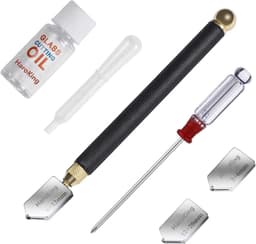
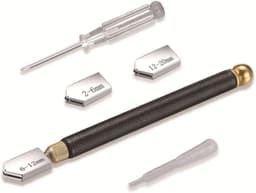
A second pass is how a usable offcut becomes scrap, and a toughened pane is how the whole sheet turns into cubes. This is how to use a glass cutter when you already have annealed sheet, a straightedge and a pencil cutter: one continuous score, then a controlled snap. You should finish knowing what a good line looks like, how hard to press, and when to stop. The listings are on the [glass cutter comparison](/hub/cutting-tools/glass-cutter). We did not run a lab test. A qualifying purchase through an amazon.co.uk link can earn us a commission at no extra cost to you.

A second pass is how a usable offcut becomes scrap, and a toughened pane is how the whole sheet turns into cubes.

Our top picks

On this page

Set the sheet up before you score

Work on annealed glass only. Picture glass around 2 mm and horticultural sheet around 4–6 mm are the usual home jobs. If the pane is labelled toughened or safety, or it is a shower door, a hob cover or a sealed unit, do not start. Put the sheet on a flat, clean bench. Sweep off grit. A grain under the glass becomes a crack that ignores your line. Wear eye protection and cut-resistant gloves before the snap, which is what HSE lists for glazing work. Lay a straightedge where the cut should be. All About Framing uses an offset of about 2 mm on thin picture glass so the wheel, not the rule, sits on the line. Check that offset on scrap, because a fatter head needs a different gap.

Make one score

The score is one movement, not a saw. Hold the cutter so the wheel stays roughly upright. Start just off one edge and finish just off the other, so the fissure runs out of the sheet. All About Framing scores towards you on picture glass. The direction matters less than even pressure and a wheel that does not tilt onto its shoulder. Listen for a light, steady zip. Bullseye describes a good score as a faint line and that sound. A white, gritty line means you are pressing too hard. No line, and no zip, means slightly more pressure or oil, on a new path. Never retrace. Fluid, the wick and leaks are on the glass cutting oil page.

Snap the score

Snap promptly. For a short straight cut, slide the score just past a bench edge, score side up, and press the waste down evenly while the other hand holds the kept piece flat. Thumbs can finish a small picture-glass snap: even pressure, not a twist. A small rock along a long score is All About Framing’s move if the crack stalls. Keep that tap light and on the underside. A heavy blow is how the crack leaves the score. Running pliers suit a longer line. Set the jaw line over the score, use the set screw to meet the thickness, then back it off slightly. The Rustark set is the pliers in this comparison, and the jaw covers reduce chips. They still need a real score. A grozer nibbles a rough edge afterwards.

When it will not break cleanly

A score that will not run is usually too light, too heavy, or scored twice. Too light feels smooth under a fingernail. Oil the wheel and make a new line on scrap. Too heavy is the white dusty trench. Scored twice, the glass picks a fissure at random. Leaning harder on the same line does not fix it. If the sheet cubes as soon as the wheel bites, stop. That is toughened glass. A wheel that leaves no mark on annealed glass is a different fault. FIXTEK reviews describe wheels that sound as if they score and leave nothing, and one Rustark wheel arrived pitted. The Consumer Rights Act 2015 short-term right to reject is 30 days when the tool will not do the job the listing describes. Call a glazier for toughened, laminated, wired or sealed glass, or when you need a hole or a polished edge. Mirror faces are on the how to cut a mirror page.

Common questions

Do you push or pull the cutter?
Use the direction that keeps the wheel upright and the straightedge still, with the line in view. All About Framing scores towards you on picture glass. A push is fine if that is how your hand stays steady. Changing direction halfway, or sawing back and forth, is what ruins the score.
How hard should you press?
Hard enough for a faint line and a steady zip, and no harder. A white gritty line means you are grinding. No line at all means a little more pressure or oil, on a fresh path. The right pressure on 2 mm picture glass is lighter than on 6 mm horticultural sheet.
Can you go over a faint line?
No. A second pass on the same path chips the edges of the fissure and the break wanders. Move the cut, or scrap the piece and score once on a new line.
How do you snap without running pliers?
Set the score just proud of a firm bench edge, score side up, and press the waste down evenly while the kept piece stays supported. On small picture glass, thumbs either side of the line are enough. Tap the underside only lightly if a long crack stalls. Do not twist.
What does a good score look like?
A faint continuous line from edge to edge, with a light zip as the wheel runs, and no white dust. You should not see a deep trench. If you cannot see or hear anything, the wheel is dry, tilted, or blunt. Check oil and the wheel before you press harder.
Why did the whole pane turn into small cubes?
The sheet was almost certainly toughened. Scoring the surface lets the built-in stress release, and the pane granulates. Stop, glove up, and clear it. You cannot recut that glass. Order a factory size if you still need the pane.

Related pages

Sources

Public UK sources from the research digest. Listing prices, stars and review counts are the amazon.co.uk lines used for this comparison, retrieved 20 October 2026.

  1. HSE — Glass and glazing (retrieved 20 October 2026)
  2. HSE — Automotive glazing (retrieved 20 October 2026)
  3. Approved Document K (retrieved 20 October 2026)
  4. IQ Glass — Can toughened glass be cut? (retrieved 20 October 2026)
  5. Pilkington Gl@ssary (retrieved 20 October 2026)
  6. Consumer Rights Act 2015 notes (retrieved 20 October 2026)
  7. Wholesale Glass Company — oil-reservoir cutters (retrieved 20 October 2026)
  8. All About Framing — how to cut glass (retrieved 20 October 2026)