Independent comparisons. We may earn from shop links. More info

How to cut a mirror without flaking the silver

Updated: October 2026

A household mirror is annealed glass with a silvered back and a coat of paint, and the usual ruin is a score on that paint or a snap so rough the silver chips. This is how to cut a mirror you can lift: the clear face, one pass, a prompt break, and the point where the mirror is the wrong glass. It is not a guide to a toughened bathroom door or an acrylic mirror. Which pencil to buy stays on the [glass cutter comparison](/hub/cutting-tools/glass-cutter). We did not run a lab test. A qualifying purchase through an amazon.co.uk link can earn us a commission at no extra cost to you.

A household mirror is annealed glass with a silvered back and a coat of paint, and the usual ruin is a score on that paint or a snap so rough the silver chips.

Our top picks

On this page

Which mirrors you can trim

You can score an ordinary annealed mirror: a wardrobe door of plain float with a silver back, a picture mirror, or a craft mirror tile, if you can support it and it is not where building regulations expect safety glass. Mosaic notes often put mirror around 4 mm, a little stiffer than picture glass. If a stamp or the seller says toughened or safety, stop. Scoring toughened glass makes it cube. A bathroom mirror in a door, or low glass people can walk into, is an Approved Document K problem as well. You order a factory mirror. If you cannot support both pieces when they part, the sheet breaks where it wants to, often through the silver. A home-cut edge is sharp. It will not look factory-polished.

Score the glass, not the paint

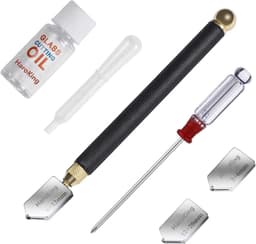
Lay the mirror silver-side down on a blanket or a clean board, not a gritty bench. Grit under the backing prints black scratches in the reflection. Clean the clear face. Mark the line on the glass, not on the paint. Score the clear face once, wheel upright. MirrorVista and a long-running UK DIY thread agree: the non-silvered face, one pass. On the paint the wheel skids, tears the coating, and often never marks the glass. Use a straightedge and a small offset so the wheel, not the rule, sits on your mark. A little cutting oil helps the fissure stay open. Fluid and a full handle that leaks are on the glass cutting oil page.

Break it before the silver chips

Break as soon as the score is done. Keep the silver down, score side up, and snap with even pressure and no twist. The general bench snap is on the how to use a glass cutter page. If you use pliers, start the crack from one end with the jaw line on the score. Jaw covers matter, because a bare metal jaw chips the silver. The Rustark set is the pliers here, and the covers are fitted for that reason. Do not tap hard. A heavy tap knocks silver off in black flakes. A grozer should take the lightest bite that moves glass. Expect a sharp edge. Frame it, tape it, or have it arrissed if hands will touch it.

Mirror tiles and a tired wheel

Small mirror tiles chip more easily than a large pane, because the waste is a narrow strip. Mosaic guides suggest breaking at once with gentle pliers. A wheel that was fine on the first three tiles may only scratch the fourth. One HaroKing reviewer kept breaking mirror tiles. One HRLORK reviewer said the wheel was not sharp enough for a mirror. Other buyers do cut mirrors with these kits after practice. The HRLORK kit is the best value only when the tile in front of you is spare and you already know a one-pass score. Stop if the sheet is toughened or larger than you can support.

Common questions

Do you score the shiny side or the painted side?
Score the clear glass face, with the silver and paint downwards on a soft support. The wheel has to fissure the glass. Scoring the paint tears the backing and often leaves no line in the glass. Mark the cut on the face you are scoring so you are not guessing through the coating.
Can you cut a toughened bathroom mirror?
No. If the mirror is toughened or sold as safety glass, it was cut before that treatment. Scoring it makes it shatter into small cubes. A mirror in a door, or low glazing people can walk into, is also the wrong place for a home-cut float mirror. Order the size you need.
Why does the silver flake on the edge?
The backing chips when the break is rough, when you tap hard, when you grind the edge, or when the score was on the paint instead of the glass. Break straight away, with light pressure and covered plier jaws. A perfectly clean silver edge is not guaranteed. Hide the edge in a frame if the flake bothers you.
Is mirror thicker than picture glass?
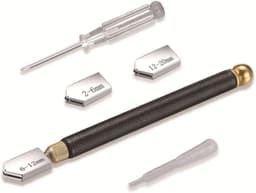
Often, yes. Picture glass is commonly around 2 mm. Craft and mosaic notes often put mirror nearer 4 mm, so it needs a slightly firmer score than a thin frame glass and it flexes less. Check the actual sheet. Do not assume a 12–20 mm cutter head is the right one.
Should you tap the score or use pliers?
Prefer a prompt snap or running pliers from one end, with the silver supported. A light tap under a stalled line can help. A heavy tap knocks silver off the edge. Pliers with jaw covers are the gentler option on tiles and on longer cuts.
Can a cheap kit cut mirror tile?
Sometimes. Reviewers have cut mirrors with these pencils, and others have only shattered tiles or failed to mark the glass. Success needs the clear face, one pass, oil, and a wheel that actually scores. A blunt wheel or a score on the paint fails at any price. Practise on a spare tile first.

Related pages

Sources

Public UK sources from the research digest. Listing prices, stars and review counts are the amazon.co.uk lines used for this comparison, retrieved 20 October 2026.

  1. HSE — Glass and glazing (retrieved 20 October 2026)
  2. HSE — Automotive glazing (retrieved 20 October 2026)
  3. Approved Document K (retrieved 20 October 2026)
  4. IQ Glass — Can toughened glass be cut? (retrieved 20 October 2026)
  5. Pilkington Gl@ssary (retrieved 20 October 2026)
  6. Consumer Rights Act 2015 notes (retrieved 20 October 2026)
  7. Wholesale Glass Company — oil-reservoir cutters (retrieved 20 October 2026)
  8. All About Framing — how to cut glass (retrieved 20 October 2026)