Independent comparisons. We may earn from shop links. More info

Carpet cutter vs carpet knife

Updated: October 2026

You are fitting one room, or you are pulling an old carpet out, and the basket has both a dolphin knife and something titled carpet cutter. They are not substitutes. A knife, with a straight or hook blade, is what UK fitting guides use at the skirting. A sprung cutter or a pair of shears sections sheet and trims backing. If you buy only the cutter, the edge still will not tuck onto gripper. This page is that one contrast. The twelve listings, and the thickness limits for cordless heads, sit on the [carpet cutter comparison](/hub/cutting-tools/carpet-cutter).

You are fitting one room, or you are pulling an old carpet out, and the basket has both a dolphin knife and something titled carpet cutter. They are not substitutes.

Our top picks

On this page

What each name refers to

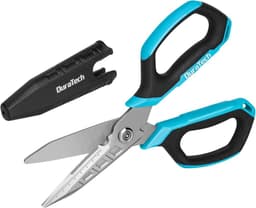
A carpet knife in UK fitting shops is usually a utility or trimming knife. Re-new Flooring Tools treats a dolphin-style knife as the minimum cutting tool: a straight blade to section carpet, a hook blade under the backing where the edge will be hidden, and a concave blade for vinyl. BuildWiz says a straight blade drags the pile and a hooked blade should catch the backing. That is their instruction, not a lab test. HSE prefers a round-ended blade where a point is unnecessary. A carpet cutter in this amazon.co.uk set is a sprung-arm tool or a pair of shears. Dapetz is the 50° example: sprung arms, 230 mm, about £6.49. It is a push cut, not the guided wall trimmer in Floorwise’s catalogue. C.JET is the shear: 250 mm serrated blades at about £23. A loop-pile row cutter is a third tool, and it is not in this set.

When the knife is the right tool

Use the knife when the carpet has to be fitted. B&Q’s method leaves about 50–75 mm, creases the edge, and cuts with a dolphin knife about 5 mm above the pile before a knee kicker stretches the carpet and the edge is tucked. The gripper gap in that guide is about 7 mm. Homebuilding cuts from the back at about 5–10 mm. The kicker and the gripper are not sold in this comparison. The sequence is on how to cut carpet. A hook blade earns its place under the backing on a hidden edge. Change it as soon as it snags, keep the free hand clear, and do not carry loose blades in a pocket. Shears do not become a knife because the handles are long. A sprung cutter has no fence against the skirting. The 50° blade is in the middle of a push, not guided along the wall.

When shears or a sprung cutter earn their place

Use shears or a sprung cutter when you are cutting an old carpet into pieces, trimming backing, or snipping underlay offcuts, not when you are tucking onto gripper. C.JET reviewers cutting carpet, underlay and tiles say the 250 mm blades take less effort than a Stanley knife. A large area still needs repeated cuts. That is sectioning, which is where a knife becomes tiring. Dapetz reviews include a large old carpet cut into sections, and a spring that held the angle on carpet and underlay. They also include the miss: carpet tiles pulled, and reviewers who went back to a Stanley knife. The copies at about £4.99 do not add a better story. The edge that meets the gripper is still a knife cut.

Which to buy for a first room

If the carpet must be fitted, buy a knife and a fresh blade, plus a way to stretch. The cutter will not finish the edge. If the carpet is coming out in pieces a council will take, the C.JET-class shear is the listing whose reviews describe that work, and a sprung cutter is the cheaper attempt with a known miss on tiles. Do not buy a sprung cutter at about £6 expecting a Floorwise trimmer, and do not buy 10 inch shears expecting them to hook the backing at the skirting. A qualifying purchase through our links can earn us a commission at no extra cost to you. We used UK fitting guides and the review themes in this set. We did not fit a room.

Common questions

Can shears replace a dolphin knife?
No, not on a fitted edge. B&Q specifies a dolphin knife about 5 mm above the pile after the surplus is creased. Shears can section an old carpet, which is why some C.JET reviews prefer them to a Stanley knife for that cut. The tuck still needs the knife.
What is a hook blade for?
Re-new uses a hook under the backing where the edge will be hidden. BuildWiz says a straight blade can drag pile, and a hook should catch the backing. Use a straight blade when you are sectioning. HSE’s workplace note still prefers a round end when a point is unnecessary.
Is a sprung-arm cutter an edge trimmer?
No. A trimmer in the Floorwise catalogue runs along the wall. The Dapetz-style cutter is a 50° blade on sprung arms, about 230 mm long, and you push it through sheet. It has no fence. Treat it as a push cutter.
Why do some reviews prefer scissors to a Stanley knife?
Because the job in those reviews is trimming and sectioning, not the skirting tuck. C.JET reviewers say the shears take less effort than a knife on carpet and underlay. That does not move the fitted edge off the dolphin knife.
Why do other reviews abandon the sprung cutter for a knife?
The blade and the material. On Dapetz, reviewers report poor blades, a break within days, and carpet tiles that pulled instead of gliding. A knife with a fresh blade then finishes the line. Keep the sprung cutter when the spring holds flat sheet.
Do I still need a knee kicker?
Yes, if you are fitting rather than removing. B&Q’s sequence stretches with a knee kicker before the final tuck. Scissors do not tension carpet across a room. This comparison does not include kickers or gripper.
Is a loop-pile cutter a knife?
No. It cuts between the rows so the loops stay intact. Flooringtech lists it separately from the utility knife and from carpet shears. Shears across a loop-pile seam chew the face. This set does not sell a row cutter.

Related pages

Sources

Public UK sources and amazon.co.uk listings, checked on 19 October 2026. Shelf prices and star lines are the figures in the display file. Trade-shop prices named in the guide are not the Amazon shelf price.

  1. HSE: Hand knives in textiles (retrieved 19 October 2026)
  2. HSE: PUWER overview (retrieved 19 October 2026)
  3. General Product Safety Regulations 2005 (retrieved 19 October 2026)
  4. Consumer Rights Act 2015, section 22 (retrieved 19 October 2026)
  5. B&Q: How to lay a carpet (retrieved 19 October 2026)
  6. Floorwise tools catalogue (retrieved 19 October 2026)
  7. The Tool Shed Plymouth: 50° carpet cutter (retrieved 19 October 2026)
  8. Falkirk Council: bulky household waste (retrieved 19 October 2026)