Independent comparisons. We may earn from shop links. More info

How to cut carpet for a fit or for the tip

Updated: October 2026

You are either trimming a new carpet so the edge tucks onto gripper, or cutting an old one into pieces you can lift. Those are different cuts, with different tools and different sizes. Mixing them up is how a pair of shears ends up at the skirting, or a fitted offcut gets shredded when the council wanted a tied roll. By the end you should know which sequence you are in, what UK fitting guides actually specify, and when to stop and call a fitter. Model choice stays on the [carpet cutter comparison](/hub/cutting-tools/carpet-cutter).

You are either trimming a new carpet so the edge tucks onto gripper, or cutting an old one into pieces you can lift. Those are different cuts, with different tools and different sizes.

Our top picks

On this page

Decide which cut you are making

Name the job before you pick up a blade. A fitted edge is a knife cut along the skirting, after the carpet has been stretched. A disposal cut is a series of straight sections you can carry, usually with shears or a sprung cutter, once you have read your own council’s rule. Underlay stops at the gripper and must not overlap. A 4 V rotary head is a poor default for all three, because the guard only accepts a thin edge. That limit is on electric carpet cutter. Pipes, cables and a heated floor are not something a long blade should discover. A knee kicker is not in this product set.

Trim a fitted edge

Quote the guide you are following rather than averaging the millimetres. B&Q says to leave about 50–75 mm, crease the edge, and cut with a dolphin knife about 5 mm above the pile, then stretch with a knee kicker and tuck. Their gripper gap is about 7 mm. Homebuilding puts gripper about 8 mm from the skirting and cuts from the back at about 5–10 mm. Re-new treats a dolphin-style knife as the minimum cutting tool. Change the blade when the cut starts to tear. Keep your free hand out of the line. Shears are the wrong tool for this tuck. If you are still unsure which to buy, that comparison is carpet cutter vs carpet knife.

Cut an old carpet into pieces you can lift

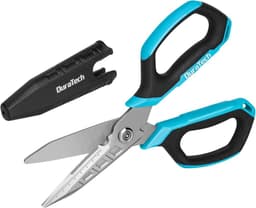
Put a board under the cut so you do not score the floor. Mark straight lines you can lift, then cut from the top or the back, whichever lets the blade run without folding the pile into the edge. Long shears are the tool reviewers in this set describe for carpet and underlay. A sprung-arm cutter can section a large old carpet when the spring holds the material, and it has a repeated miss on carpet tiles. Tie what you cut. Falkirk Council asks for carpet in tied sections of about 4 ft. Fife wants liftable sections. North Yorkshire accepts carpet at household waste centres. Those are examples, not a UK standard. McCarthy Marland asks you not to shred carpet they will sort.

Underlay and the point where you stop

Underlay is cut level with the gripper, not overlapped. B&Q and Homebuilding both use a sharp knife for that edge. Overlap shows as a ridge through the new carpet. Shears can divide a surplus once the line exists. Stop for stairs, a patterned or loop-pile seam, a damp or heated subfloor, and any line you cannot keep off pipes, cables and your other hand. A loop-pile seam needs a row cutter, which this set does not sell. If the only tool you own is a 4 V head and the backing is thicker than its printed limit, that is a stop. A qualifying purchase through our links can earn us a commission at no extra cost to you. This page used public UK fitting guides and did not cut a test room.

Common questions

Do I cut from the pile or the backing?
For a fitted edge, B&Q cuts with a dolphin knife about 5 mm above the pile, and Homebuilding cuts from the back at about 5–10 mm. Follow one guide. For a disposal cut, use whichever face lets the blade run straight on a board. A snagging cut usually means the blade is dull.
How much excess should I leave?
B&Q and Homebuilding both leave about 50–75 mm before the trim. CESC suggests about 5–10 cm, and Re-new at least 5 cm. That surplus is what you tuck after the stretch. Measure from the skirting after the carpet is in the room.
Can I use carpet scissors at the skirting?
Not for the tuck. Scissors and a sprung cutter section waste and can trim backing, but the edge that goes onto gripper is a knife cut in the UK guides cited here. You can snip a thread or a small surplus after the knife has set the line. If the scissors are struggling, the material is probably still the fitted edge, not an offcut.
How do I cut underlay?
Cut it so it meets the gripper and does not climb over it. A sharp knife is the usual tool, with the underlay held flat so the blade does not wander. Overlapped seams telegraph through the carpet. Shears can divide a large offcut once the edge is marked. Do not use a rotary guard as a long straightedge along the wall.
What size pieces will a council take?
It depends on the council. Falkirk asks for tied sections of about 4 ft for bulky uplift. Fife wants sections you can lift. North Yorkshire points carpet to household waste centres. Check your own page before you cut. A contractor can refuse a loose roll.
Should I shred carpet for recycling?
Only if the scheme you are using asks for small pieces. McCarthy Marland asks people not to shred carpet that they will sort. Many kerbside services do not take carpet at all, which is why the bulky-collection rules exist. Tied, liftable sections are the usual request. Shredded fibre is harder to handle and can be rejected.
When do I stop and call a fitter?
Stop for stairs, a loop-pile or patterned seam, a damp or heated subfloor, and any cut you cannot keep clear of pipes, cables and your free hand. Also stop if you have no way to stretch the carpet. A knee kicker is part of the B&Q method, and it is not in this set.

Related pages

Sources

Public UK sources and amazon.co.uk listings, checked on 19 October 2026. Shelf prices and star lines are the figures in the display file. Trade-shop prices named in the guide are not the Amazon shelf price.

  1. HSE: Hand knives in textiles (retrieved 19 October 2026)
  2. HSE: PUWER overview (retrieved 19 October 2026)
  3. General Product Safety Regulations 2005 (retrieved 19 October 2026)
  4. Consumer Rights Act 2015, section 22 (retrieved 19 October 2026)
  5. B&Q: How to lay a carpet (retrieved 19 October 2026)
  6. Floorwise tools catalogue (retrieved 19 October 2026)
  7. The Tool Shed Plymouth: 50° carpet cutter (retrieved 19 October 2026)
  8. Falkirk Council: bulky household waste (retrieved 19 October 2026)