Independent comparisons. We may earn from shop links. More info

Air nibbler van conversion

Updated: October 2026

You are standing in a van with a window template on the skin. An air nibbler is the cold cut people reach for on that panel. It is the right tool only for the thin outer skin, after you have looked behind it, and it is the wrong tool for a pillar, a seat-belt anchorage or a stiffener you have decided to nip through. This page stays on that vehicle job: what you may cut, where you stop, and what you do with the bare edge the same day. Oil, the regulator and the general swarf routine are on the [how to use an air nibbler](/hub/cutting-tools/air-nibbler/sub/air-nibbler-how-to-use) page. The six listings are on the [air nibbler comparison](/hub/cutting-tools/air-nibbler).

You are standing in a van with a window template on the skin. An air nibbler is the cold cut people reach for on that panel.

Our top picks

On this page

Skin, stiffener, pillar

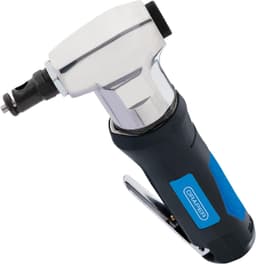
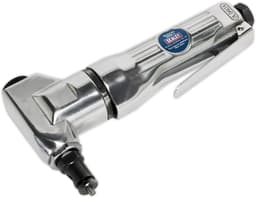
Body skin, the strengtheners behind it, and the structural pillars are three different pieces of metal, even when they are painted the same colour. Practical Motorhome's window guide and Camper Glass's fitting guide agree on the limit: look for wiring and pipework before you cut, and do not cut structural pillars. Measure the panel you are about to open. Sealey and Draper state 1.5 mm steel. The 325B states 1.2 mm. Walfront states nothing. If a stiffener appears in the cut, you stop. You do not raise the pressure.

A cut that starts from a hole

Fitters start a window at the corners. You drill a hole the nibbler head can enter, check again that the cavity behind that hole is empty of looms and pipes, and only then follow the template. The panel can spring as the aperture opens, which Camper Glass warns about, so support the offcut rather than letting it peel and twist the last uncut corner. Walfront buyers who cut van windows, vents and an electrical hook-up point also said the head was hard to see and that some shapes needed a sanding disc afterwards. If you meet a stiffener, leave it. A tool that starts well and dies halfway along the bottom edge is usually the compressor, which is the compressor size page.

Sparks, chips and the edge

A nibbler is chosen because it does not throw a disc full of sparks into the insulation and the wiring. It is not a clean process. The waste is sharp crescents, and on a painted van they sit in the reveal, in the door shuts and on the roof if you are cutting a vent. Left overnight they rust and speckle the paint you have not masked. Brush or magnet them up with the airline disconnected. The bare edge is bare steel. Practical Motorhome's sequence ends with filing and paint. Paint or a proper edge treatment the same day, including the inside of the aperture where the rubber or the clamp frame will hide the metal and trap moisture. Gloves, eye protection and hearing protection stay on. Stop if the opening is in a roof and the fall protection is not already there.

What this comparison's buyers actually cut

Two listings in this set have van sentences in the UK reviews, and both have limits. A Walfront reviewer cut windows, vents and a hook-up point, called the cuts easy, and still described line-control trouble and shapes that needed more work. Another Walfront review failed on 0.5 mm steel after managing thin aluminium, so a van job is not a thickness rating. The listing itself never states a capacity. LiebeWH has one written review, from three in total: window holes in a Transit campervan. The listing states 1 mm. Cocoarm has no review text, so it has no van job you can cite. If you want a tool whose millimetre is printed before you commit a side panel, use the buying guide and choose a stated 1 to 1.5 mm steel rating you can scrap-test on a piece of the same skin. Call a fitter when the line meets structure, or when the window is a bonded-glass system you have not used.

Common questions

Will an air nibbler cut a van window opening?
It will cut thin body skin if the head fits the thickness and you start from a drilled hole. UK reviews in this set describe van windows, vents and a hook-up point on a Walfront, and Transit window holes on a LiebeWH. Those reviews do not show a pillar being cut, and they do not give you a universal skin thickness. You still file the edge and paint it.
How thick is van skin?
There is no single UK figure that covers every van. A club-forum comment has put some body tinware around 1 to 1.2 mm, and that comment is experience, not a manufacturer specification. Measure your panel. Tools in this comparison that state a steel figure sit between 1 mm and 1.5 mm. Walfront and Cocoarm state none.
What if I hit a stiffener?
Stop. A stiffener is not skin, and forcing it stalls the punch or tears the opening out of shape. Do not raise the air pressure to chew through it, and do not remove a reinforcement because the window would look better larger. Mark where the metal changed, and decide with a fitter or a vehicle-specific guide whether the opening can move.
Where do I start the cut?
Drill at the corner so the head can enter, confirm the cavity is clear, and follow the template with the offcut supported. Practical Motorhome and Camper Glass both work from that kind of start. The first centimetre on scrap, cut from the same panel if you have an offcut, tells you whether this tool will hold the line.
Which listing in this set was used on a van?
Walfront reviews mention windows, vents and a hook-up, with complaints about keeping the line. LiebeWH's only written review is Transit campervan window holes, against a stated 1 mm capacity and only three reviews in total. No other kept listing has a window-opening review in the text we kept. Use those sentences as use-cases with limits, and do not ignore a missing thickness.

Related pages

Sources

Maker specifications, HSE and legislation pages, a fittings guide, and a compressor guide named in the digest. Listing prices, stars, and review counts are from amazon.co.uk on 19 October 2026.

  1. Ingersoll Rand 325B air nibbler (retrieved 19 October 2026)
  2. Sealey SA28.V2 instructions (retrieved 19 October 2026)
  3. Draper 70835 air nibbler (retrieved 19 October 2026)
  4. HSE — PUWER overview (retrieved 19 October 2026)
  5. Control of Noise at Work Regulations 2005, regulation 4 (retrieved 19 October 2026)
  6. HSE — Pressure Systems Safety Regulations (retrieved 19 October 2026)
  7. Hosemaster — air hose fittings (retrieved 19 October 2026)
  8. Sealey — guide to compressors (retrieved 19 October 2026)