How to use a 50 litre air compressor
You have an upright 50 litre air compressor in the garage and you want the first session to end with the pump stopping on its own, the tool on the regulator, and the water out of the tank. The shared rules are a closed drain, a first fill with no tool, regulator pressure for the tool, and no compressed air on clothing. Switch direction is in that model's manual, not here. Which of the five you bought is on the [vertical air compressor 50 L comparison](/hub/compressors/vertical-air-compressor-50l). Listings were read on 15 October 2026. This is not a repair guide. If you buy through our links, we may earn a commission at no extra cost to you.
You have an upright 50 litre air compressor in the garage and you want the first session to end with the pump stopping on its own, the tool on the regulator, and the water out of the tank.
You have an upright 50 litre air compressor in the garage and you want the first session to end with the pump stopping on its own, the tool on the regulator, and the water out of the tank. The shared rules are a closed drain, a first fill with no tool, regulator pressure for the tool, and no compressed air on clothing. Switch direction is in that model's manual, not here. Which of the five you bought is on the vertical air compressor 50 L comparison. Listings were read on 15 October 2026. This is not a repair guide. If you buy through our links, we may earn a commission at no extra cost to you.
Our top picks
| Badge | Product | Oil-free | UK 13 A plug stated | Maximum pressure | Note | Price | Offer |
|---|---|---|---|---|---|---|---|
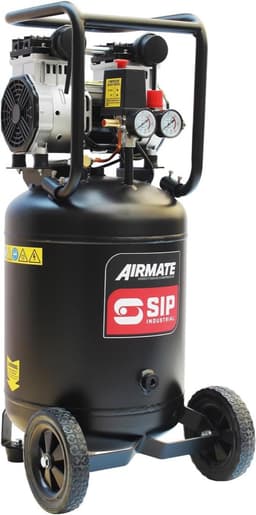
| Best overall |  SIP SIP Airmate 50 L | Yes | Yes, 1.3 m cable with a 230 V/13 A plug | 8 bar; bullet also says 116 psi | 3.6 | about £263.98 | View offer |
 Einhell Einhell TC-AC 240/50/10 OF | Yes | n/a | 10 bar in the title and a bullet; 145 psi in the title | 5.2 | about £212.95 | View offer | |
| Alternative |  Stanley Stanley DST 150/8/50V | n/a | Bullet says UK Plug | 8 bar | 4.7 | about £268.52 | View offer |


On this page
Before the first plug
First fill and the regulator
Drain the water
What not to blow, and when to stop
Common questions
What should you do the first time you switch on a 50 litre compressor?
How often should you drain the tank?
What pressure do you set for a tool, the tank maximum or the regulator?
What if the compressor does not stop when the tank is full?
When do you stop and call a competent person?
Related pages
Sources
Public UK sources and the SIP product page for the split noise figures. Listing prices, stars, and review counts are from amazon.co.uk on 15 October 2026.
- HSE INDG178 — Written schemes of examination (retrieved 15 October 2026)
- Pressure Systems Safety Regulations 2000, Schedule 1 (retrieved 15 October 2026)
- HSE — Pressure systems and the PSSR (retrieved 15 October 2026)
- Control of Noise at Work Regulations 2005, regulation 4 (retrieved 15 October 2026)
- HSE HSG39 — Compressed air safety (retrieved 15 October 2026)
- Electrical Equipment (Safety) Regulations 2016, regulation 35 (retrieved 15 October 2026)
- BCAS — Working safely with compressed air (retrieved 15 October 2026)
- SIP Airmate 50 L 2 hp low-noise vertical compressor, 05483 (retrieved 15 October 2026)