Independent comparisons. We may earn from shop links. More info

10 bar vs 8 bar air compressor

Updated: 21.10.2026

You are looking at a 10 bar receiver and an 8 bar workshop compressor and trying to decide whether the extra 2 bar changes the nailer you can run. In most home workshops it changes how much air the tank stores, not the pressure you should set on the tool. This 10 bar vs 8 bar air compressor page keeps to receivers. A 150 psi cordless inflator is a different argument and stays off this page. The six listings we actually compared are on [Air compressor 10 bar](/hub/compressors/air-compressor-10-bar). Products Compared read those amazon.co.uk pages and public UK sources on 19 October 2026. We did not measure either kind of compressor.

You are looking at a 10 bar receiver and an 8 bar workshop compressor and trying to decide whether the extra 2 bar changes the nailer you can run.

Our top picks

Einhell Einhell TC-AC 240/50/10 OF

Best overall

Einhell Einhell TC-AC 240/50/10 OF
8.6/10about £212.95
ABAC ABAC Ease-AIR 50V

Alternative

ABAC ABAC Ease-AIR 50V
7.2/10about £195.99
On this page

10 bar and 8 bar in psi

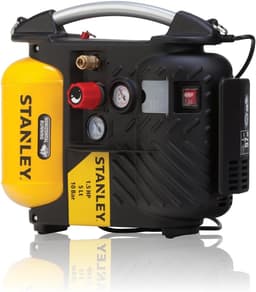
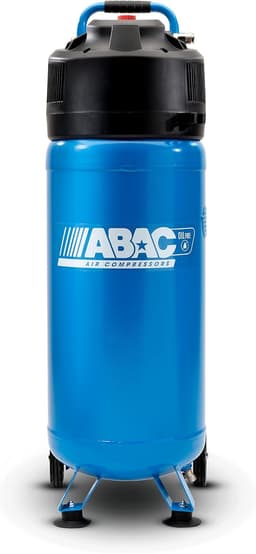
Ten bar is the figure sellers also print as 145 psi. Eight bar is about 116 psi. Both numbers are the ceiling the tank is allowed to reach, not the pressure a brad nailer wants at the nose. The Einhell TC-AC 240/50/10 OF and the ABAC Ease-AIR 50V in our set are 50 litre tanks rated to 10 bar. The Stanley DN200/10/5 is a 5 litre tank at the same 10 bar ceiling. Several 8 bar machines turned up in the same search and were left out of the shortlist because the title did not meet 10 bar. Eight bar remains a common UK workshop rating. It is not a failed 10 bar compressor. The useful reading is the tool plate, then the regulator. If the plate says 6 bar or 7 bar, both an 8 bar tank and a 10 bar tank can supply it, provided the regulator is set there and the compressor can deliver enough air at that pressure. A higher ceiling does not make a low-delivery pump stronger at the gun. How the two gauges split is on how to use a 10 bar air compressor.

What the tool asks for

TEH Tools says most of the pneumatic tools it sells run at 5 to 8 bar, and that pressure above what the tool needs wastes air. On a UK Workshop thread, owners say a brad nailer rarely needs 10 bar, that the extra tank pressure only buys a few more shots, and that airflow matters more than the last 2 bar. That is forum experience, not a British Standard. It matches the way the tools are plated. A gun marked 8 bar maximum should not be fed at 10 bar because the compressor can reach it. You turn the regulator down. Spraying is the job where people hope the extra bar will help. It usually will not, if the compressor’s delivered air at 4 to 7 bar is already short of the gun. The Einhell’s amazon.co.uk page prints 240 litres per minute. That line is not free air delivery. A Tooled-up sheet for the same model prints 76 litres per minute at 7 bar, about 2.7 cfm, as the retailer’s output claim. We did not test it. If your spray gun asks for more air than that claim, a 10 bar badge on the tank will not close the gap. The same caution applies to the ABAC’s 220 litres per minute, which the listing marks as aspirated.
Einhell Einhell TC-AC 240/50/10 OF

Testsieger

Einhell Einhell TC-AC 240/50/10 OF
8.6/10about £212.95

Stored air is not airflow

A higher cut-out stores a little more air in the same tank, because the compressor stops later. It does not increase the litres per minute the pump can push while the tool is open. Think of a 50 litre tank at 8 bar and the same tank at 10 bar. The extra 2 bar is a small reserve above the pressure you already regulate down to 6 or 7 bar. It can mean a few more nail shots before the motor starts. It cannot turn a noisy direct-drive pump into a high-delivery spray compressor. We are not going to invent a shot count. The direction is enough. An 8 bar machine can be the one with more usable air. SIP’s QT 50 litre, which is not in our ASIN set, is sold as an 8 bar oil-free unit with a stated free air delivery of 13 cfm (368 litres per minute) beside 16 cfm displacement, and a catalogue 62 dB. Put that next to the Einhell claim of about 2.7 cfm at 7 bar and a 95 dB line on amazon.co.uk. These are different machines and different kinds of claim. We have not tested either. The comparison still shows the trap: 10 bar on the title can be the louder machine with the weaker delivery figure, and 8 bar can be the one that publishes a free-air number you can set beside the tool. Displacement, intake, and aspirated litres are not that number.

When to pick which

Choose a 10 bar receiver in this set when you want that ceiling on a 50 litre tank and you accept the airflow caveat. The Einhell at £212.95, 4.3 from 2,487 reviews, is the stronger public record. The ABAC at £195.99 lists a Type G adaptor and a 3.6 from 205 reviews whose saved texts are not from the United Kingdom. The Stanley is the 10 bar choice only when the tank can be 5 litres and the jobs are short. Catalogue noise on those three is 95, 97, and 98 dB. Employer action values are 80 dB(A) and 85 dB(A). A catalogue decibel is not a workplace assessment, and it is still the tie-break if two machines can both feed the tool. Choose an 8 bar compressor, even one outside this table, when the tool’s maximum is under 8 bar and that model states free air delivery at a pressure near the tool. A quiet cabinet with a real FAD figure can be the better buy, though it stops at 8 bar. Do not buy 10 bar for safety. The higher number is not a safer gun setting. Do not buy it because a cordless pump says 150 psi. That pump has no receiver. Which of the six listings matches a job is on the best 10 bar air compressor page.

Common questions

Is 10 bar stronger than 8 bar at the nailer?
Only if you set the regulator higher. The nailer sees the regulated pressure, not the tank ceiling. If both compressors are regulated to 6 or 7 bar, the gun does not know that one tank could have reached 10 bar. What changes is how long the motor rests, and whether the pump can keep up.
Will 8 bar run a brad nailer?
Usually yes. UK tool sellers place most air tools, including many nailers, in a 5 to 8 bar band, and workshop owners on a public forum say a brad nailer rarely needs the full 10 bar. Check the plate on your gun. If it says 8 bar maximum, an 8 bar compressor is enough on pressure, as long as the delivered air keeps up.
Does 10 bar store more air in the same tank?
Yes, a little. The compressor cuts out later, so the same 50 litres holds a higher pressure and you have a small reserve above the tool setting. That reserve is not the same thing as a higher litres-per-minute output while the tool is running. We have not counted shots.
Which is quieter?
Not the higher bar rating. In this set the 10 bar tanks print 95 to 98 dB. An 8 bar example outside the set, the SIP QT, prints 62 dB and a separate free-air figure. Those are catalogue claims from different brands. Do not treat 10 bar as the quiet choice, and do not treat 62 dB as a measurement we made.
What if the tool plate says 8 bar maximum?
Set the regulator to 8 bar or below, including on a 10 bar compressor. Feeding the gun at the tank maximum because the compressor can reach 10 bar ignores the plate. The extra pressure stays in the receiver as stored air. It should not go down the hose at 10 bar.
Should I buy 10 bar for spraying?
Buy the compressor whose free air delivery, at the gun’s pressure, meets the gun, with a margin. A 10 bar title does not guarantee that. The Einhell’s useful published output claim is 76 litres per minute at 7 bar on a Tooled-up sheet, not the 240 litres per minute on Amazon. If the gun needs more, look for a stated FAD, including on an 8 bar model.

Related pages

Sources

Public UK sources below. amazon.co.uk listings checked on 19 October 2026.

  1. HSE, PSSR overview (retrieved 19 October 2026)
  2. HSE, INDG178 written schemes (retrieved 19 October 2026)
  3. Control of Noise at Work Regulations 2005 (retrieved 19 October 2026)
  4. GOV.UK, Pressure Equipment (Safety) Regulations 2016 (retrieved 19 October 2026)
  5. GOV.UK, Supply of Machinery (Safety) Regulations 2008 (retrieved 19 October 2026)
  6. BSI, BS EN 1012-1:2010 (retrieved 19 October 2026)
  7. Electrical Safety First, extension leads (retrieved 19 October 2026)
  8. Sealey oil-free 50/100 L instructions (retrieved 19 October 2026)