Independent comparisons. We may earn from shop links. More info

How to use a 10 bar air compressor

Updated: 21.10.2026

You have a tank compressor in the garage, the gauge is climbing towards 10 bar, and it is not obvious which knob feeds the nailer. This is how to use a 10 bar air compressor for a first session: let the receiver reach cut-out, set the tool below that pressure, and empty the water before you store it. The steps follow a UK oil-free manual pattern, mainly Sealey’s SAC50V instructions, plus the devices named on the Einhell TC-AC 240/50/10 OF listing. If your own manual disagrees, the manual in the box wins. Product choice sits on the [Air compressor 10 bar](/hub/compressors/air-compressor-10-bar) comparison. Products Compared did not run these machines in a lab.

You have a tank compressor in the garage, the gauge is climbing towards 10 bar, and it is not obvious which knob feeds the nailer.

Our top picks

Einhell Einhell TC-AC 240/50/10 OF

Best overall

Einhell Einhell TC-AC 240/50/10 OF
8.6/10about £212.95
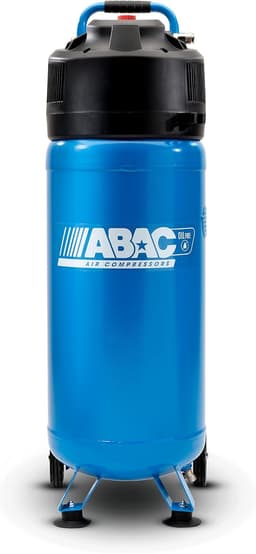
ABAC ABAC Ease-AIR 50V

Alternative

ABAC ABAC Ease-AIR 50V
7.2/10about £195.99
On this page

Tank pressure and tool pressure

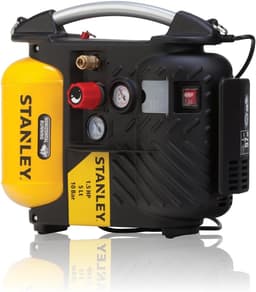
A 10 bar receiver has two pressures, and mixing them up is how a brad nailer gets a bad afternoon. The tank gauge shows what is stored, up to the cut-out the pressure switch allows. On the Einhell listing that ceiling is 10 bar, also printed as 145 psi. The regulator and its second gauge show what you send down the hose. A nailer plate often asks for something nearer 5 to 8 bar. Setting the tool to the tank maximum wastes air and can fire the fastener too hard. You do not set 10 bar on the nailer because the title says 10 bar. Close the regulator, or set it to zero, before the first start so the hose is not live while the tank fills. When the motor cuts out, raise the regulator until the tool gauge matches the plate on the gun, then fire a few test nails into scrap. If the plate says 8 bar maximum, stop there even though the tank can hold more. People who think the tool must run at the full 10 bar can read 10 bar vs 8 bar air compressor before they turn the knob up. The Stanley 5 litre model in the same comparison reaches 10 bar quickly and then refills often. The method is the same. The pauses are shorter.

Start, run, and stop

Put the compressor near the socket. UK sellers tell you to lengthen the hose rather than leave a coiled extension reel feeding a hot motor. Check the plug before the first start. In this set only the ABAC listing states a Type G adaptor. Stanley reviews often describe a European plug, and the Einhell table does not say BS 1363. Fit wheels and the outlet valve before you rely on the machine. Einhell reviews describe that as a bolted job, not a clip-together one. Start on the switch and let the pump run until it cuts out by itself. That cut-out is the pressure switch doing its job. Sealey’s oil-free instructions say to stop on the switch as well, so the pump head can vent, and not to stop by pulling the plug except in an emergency. Set the regulator back towards zero after use. The Einhell listing says the motor is oil-free and can be transported in any position. Oil-free does not mean it can run all afternoon. Tooled-up prints motor duty S3 25 per cent for this TC-AC 240/50/10 OF only. That is a retailer specification for this model, not a rule for the ABAC or the Stanley. If the head is too hot to hold, stop and let it cool.
Einhell Einhell TC-AC 240/50/10 OF

Testsieger

Einhell Einhell TC-AC 240/50/10 OF
8.6/10about £212.95

Drain the receiver

Air from a compressor is wet. Water collects in the tank, and a UK oil-free manual warns that water left inside can corrode the steel. Sealey’s SAC50V sheet says drain daily. The Einhell listing names a drain cock, which is the fitting you open, not a screw you invent. With the machine off and the tank pressure released, hold a tray under the cock, open it until the air and the water stop, then close it. Angle the tank if a dribble remains. Reviews of the Einhell say the paperwork is vague on bleeding, so use this order and then follow any extra line in the Einhell manual. The safety valve is not a drain. Air Supply’s maintenance note says you may pull the ring briefly as a check, with eye protection, to confirm it spits and reseats. If it stays open, or if it will not move, stop using the compressor and replace the valve. Do not adjust it, shim it, or wire it shut. The Einhell listing also names a check valve and a pressure switch. Leave both alone. A tank that is empty the next morning may be a leaking coupling, a drain cock left cracked open, or a check valve that is not seating.

When to stop

Stop and unplug, as an emergency, if you smell burning, see sparks, or the motor will not cut out and the safety valve is lifting. Those signs appear in owner reviews of receivers in this comparison, including a burning-plastic return on the Einhell and cut-out failures described on the ABAC’s non-UK review sample. Do not recalibrate the switch yourself. A workplace that uses a 50 litre tank at 10 bar is at 500 bar litres. The Health and Safety Executive’s written-scheme guidance treats 250 bar litres and above as the range where an employer is likely to need a scheme. A private householder with no employees is not that user. The sum, and who it binds, is set out on the 10 bar air compressor buying guide. Catalogue noise for the tanks here is 95 dB on the Einhell, 97 dB on the ABAC, and 98 dB on the Stanley. Employer action values are 80 dB(A) and 85 dB(A). At home those figures are not a legal exposure calculation, and hearing protection is still the sensible choice beside the pump.

Common questions

Where do I set 10 bar, on the tank or on the tool?
You do not set the tool to 10 bar unless the tool plate says so. The tank gauge shows stored pressure up to cut-out. The regulator sets the hose, usually lower. Match the regulator to the plate on the nailer or the spray gun, and leave the extra pressure in the tank as stored air.
How do I drain the tank?
Switch off, let the tank pressure fall, put a tray under the drain cock, and open it until water and air stop. Close it afterwards. Do this daily on the Sealey pattern, because water left in the receiver can corrode it. The Einhell manual in the box overrides this if it gives a different order.
Can I switch it off at the wall?
Use the compressor’s own switch for a normal stop, so the head can vent. Pulling the plug, or switching off at the wall while it is running, is the emergency stop in the Sealey instructions, not the everyday one. After a normal stop, set the regulator towards zero.
How long may an oil-free pump run?
There is no single answer for every 10 bar machine. Tooled-up marks S3 25 per cent on the Einhell TC-AC 240/50/10 OF only. Do not apply that fraction to the ABAC or the Stanley. If the pump is hot, or it is refilling without a break on a 5 litre tank, stop and let it cool.
What if it never cuts out?
Switch it off and unplug it. A motor that runs on while the gauge sits at the top, or a safety valve that stays open, is not something to adjust with a screwdriver. The same applies to a burning smell or sparks. Those are stop-using faults, including ones owners have already described.
Why is the tank empty the next morning?
Some tanks hold pressure for days and some do not. An overnight loss can be a drain cock, a coupling, or a check valve. It is not fixed by setting the regulator higher. If the drop is large and you cannot find a leak at a fitting, stop using it until the leak is found.
Is the inflator used the same way?
No. A cordless or 12 V inflator has no tank to drain and no regulator split. Set the door-placard pressure, connect the hose, and let auto shut-off stop the pump. HOVVIDA’s listing says it will not run while the charger is plugged in. That preset is not a receiver pressure switch.

Related pages

Sources

Public UK sources below. amazon.co.uk listings checked on 19 October 2026.

  1. HSE, PSSR overview (retrieved 19 October 2026)
  2. HSE, INDG178 written schemes (retrieved 19 October 2026)
  3. Control of Noise at Work Regulations 2005 (retrieved 19 October 2026)
  4. GOV.UK, Pressure Equipment (Safety) Regulations 2016 (retrieved 19 October 2026)
  5. GOV.UK, Supply of Machinery (Safety) Regulations 2008 (retrieved 19 October 2026)
  6. BSI, BS EN 1012-1:2010 (retrieved 19 October 2026)
  7. Electrical Safety First, extension leads (retrieved 19 October 2026)
  8. Sealey oil-free 50/100 L instructions (retrieved 19 October 2026)