Independent comparisons. We may earn from shop links. More info

How to use a 50L air compressor

Updated: 21.10.2026

You have a 50 litre oil-free compressor in the garage, a nailer or a blow gun on the bench, and the first start feels riskier than the listing made it sound. Tank pressure, the pressure the tool should see, the drain and the safety valve are four different things. This is how to use a 50L air compressor for that first session: let it fill and cut out, set the regulator, do the job, drain the water, and unplug it if the motor will not stop. The [50 L air compressor comparison](/hub/compressors/50l-air-compressor) is the model table, not this sequence. We used the amazon.co.uk listings, a Clarke method example from a different machine, and UK guidance on condensate. We did not test these units in a lab.

You have a 50 litre oil-free compressor in the garage, a nailer or a blow gun on the bench, and the first start feels riskier than the listing made it sound.

Our top picks

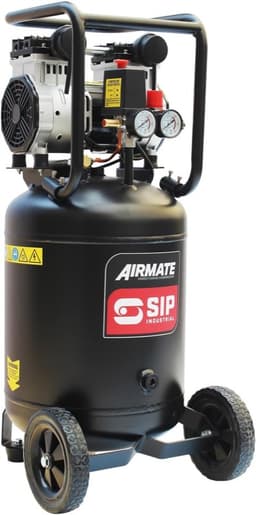
SIP SIP Airmate 50L vertical

Best overall

SIP SIP Airmate 50L vertical
6.3/10about £263.98
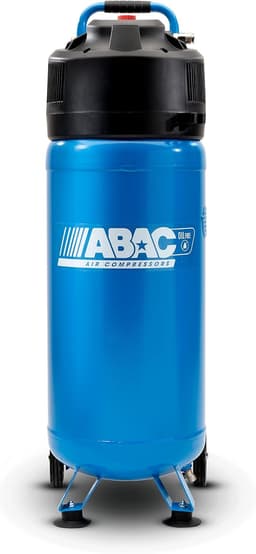
ABAC ABAC Ease-AIR 50V

Preis-Tipp

ABAC ABAC Ease-AIR 50V
5.7/10about £195.99
On this page

Before you pull the trigger

Start with the machine where you will use it, on a firm floor, with the wheels or feet settled so it cannot walk while it runs. Close the tank drain before you switch on. If you leave it open, the pump will run and the tank will not store air. Back the regulator off so the outlet is not trying to feed a tool at full tank pressure on the first fill. The Einhell listing describes a drain cock, a safety valve, a regulator and a gauge, and it prints a hose of 2 feet, so most jobs need a longer air hose rather than an extension lead. The vertical SIP listing includes a 13 A plug on a 1.3 m cable. Check the plug you actually have before you assume every 50 litre machine in this set is the same. Switch on and wait. The motor should run, the tank gauge should climb, and the pressure switch should cut the motor out near the listed maximum, 8 bar on the SIP models or 10 bar on the Einhell and ABAC. That cut-out is the sign the receiver is doing its job. If the motor keeps running at the top of the gauge, stop and unplug it. Do not stand and watch a machine that will not cut out. ABAC reviews in this set include units that leak and then run without stopping. That is a fault, not a running-in period.

Set the regulator, then the tool

Only then connect the tool and set working pressure on the regulated outlet gauge, not on the tank gauge. The tank can sit at 8 or 10 bar while the tool must not. Lock the regulator if your model has a lock. The Clarke Boxer 55 instructions describe that lock on a different machine, so treat them as a method example, not the manual for these ASINs. For a brad or finish nailer, start at the low end of the tool’s own range. Many of those nailers sit around 60–90 psi, about 4–6 bar. Test on scrap, and do not exceed the maximum printed on the tool.
SIP SIP Airmate 50L vertical

Testsieger

SIP SIP Airmate 50L vertical
6.3/10about £263.98

Drain and the safety valve

Air leaving a compressor cools, and water condenses in the receiver. Oil-free still makes that water. After the job, switch off, let the machine cool, and reduce tank pressure the way the manual describes before you open the drain. Wear eye protection. Put a container under the drain cock, open it slowly, and expect a mix of air and dirty water rather than a clean trickle. Close the cock once the tank is empty. If you leave it open, the next start will not fill. Where that water goes depends on what is in it. A householder’s cup of condensate from an oil-free garage compressor is not the same problem as oily trade effluent. Businesses must not discharge oily condensate to surface water. GOV.UK separates a foul drain from a surface-water drain, and the British Compressed Air Society makes the same point. Oil-free avoids oil from a sump. It does not invite you to tip oily workshop waste into a rain gully. If the liquid is clearly oily, treat it as waste. The safety valve is a last stop, not a regulator. A daily ring-pull, as the Clarke Boxer manual describes under pressure, should release a brief blast and then reseat. You are checking that the valve can move, not setting a new pressure. Do not adjust the valve, and do not wedge it. If it passes continuously, or if it lifts every time the tank fills, unplug the machine and stop using it.

When to stop and fetch help

Unplug the compressor if the motor does not stop once the tank gauge has reached the listed maximum. A pressure switch that fails closed will keep the pump working against a full receiver until something else gives way. Reviews of the ABAC in this set include that pattern, alongside leaks that stop the tank holding pressure. Neither is a reason to raise the safety valve or to keep the session going. Stop as well if the safety valve will not reseat, if you smell burning, or if the breaker trips and you are about to fix it by changing the consumer unit. An electrician should see a supply problem. A householder does not need a written scheme under the Pressure Systems Safety Regulations 2000. If this compressor is work equipment, including self-employed use, a 50 litre receiver at 8 or 10 bar is over 250 bar litres and the written scheme is the dutyholder’s job. How long the pump may keep running is a buying fact, not a guess from the tank size. Einhell UK states S3 25% for article 4010393. That is the manufacturer’s intermittent class. It is not a minute count. The SIP pages used here do not state a duty percentage, and ABAC’s bullets say occasional or intermittent use. If you need the motor on for long spells, the buying guide is where this set may be the wrong machine. Noise while it runs is on the quiet 50 litre air compressor page. Which listing matches the job is on the best 50L air compressor page.

Common questions

What do I do the first time I switch it on?
Close the drain, back off the regulator, and let the tank fill until the motor cuts out. Then fit the tool and set the outlet gauge to the tool’s pressure. If the motor does not cut out near 8 or 10 bar, unplug it. Do not connect a nailer to an unregulated tank at full pressure.
Which gauge is the tool pressure?
The regulated outlet gauge is the tool pressure. The tank gauge shows what is stored, up to the listed 8 or 10 bar. You can have 10 bar in the receiver and 5 bar at a nailer if the regulator is set that way. Read the outlet gauge after you lock the regulator, and test on scrap before you fire into the work.
What pressure should a nailer see?
Use the range printed on the nailer. Many brad and finish nailers sit around 60–90 psi, about 4–6 bar, and the safe start is the low end of that range. There is no universal pressure for every gun. Do not take the compressor’s 8 or 10 bar maximum as the nailer’s setting.
How do I drain the tank without spraying myself?
Switch off, let it cool, and lower the pressure as the manual says. Wear eye protection, put a container under the cock, and open it slowly. Close it again when the flow stops. The drain is on the tank, not at the tool.
Can the water go down an outside drain?
Clean condensate from a household oil-free compressor is a small volume of water. Oily or solvent-laden workshop waste must not go to surface water or a rain gully. Businesses need the foul-drain route their consent allows. If the liquid looks oily, do not tip it outside.
How do I check the safety valve without adjusting it?
With the tank under pressure, pull the ring briefly, as the Clarke Boxer instructions describe for that model. Air should release and the valve should reseat. Do not turn the valve body to change its set pressure. If it will not reseat, or if the motor does not cut out at full pressure, unplug the compressor. Do not compensate by adjusting the valve.

Related pages

Sources

Public UK sources and the manufacturer page below. amazon.co.uk listings checked on 19 October 2026. Listing prices, stars and review counts are those shelf figures.

  1. legislation.gov.uk: Pressure Systems Safety Regulations 2000 (retrieved 19 October 2026)
  2. HSE: Written schemes of examination (INDG178) (retrieved 19 October 2026)
  3. HSE: Pressure Systems Safety Regulations overview (retrieved 19 October 2026)
  4. legislation.gov.uk: Control of Noise at Work Regulations 2005, regulation 4 (retrieved 19 October 2026)
  5. HSE: NOMAD report on noise quantities (retrieved 19 October 2026)
  6. Einhell UK: TC-AC 240/50/10 OF, article 4010393 (retrieved 19 October 2026)
  7. BCAS: condensate and oily waste (retrieved 19 October 2026)
  8. SGS Engineering: air compressor buyer’s guide (retrieved 19 October 2026)