Independent comparisons. We may earn from shop links. More info

How to use a 12V tyre inflator

Updated: 21.10.2026

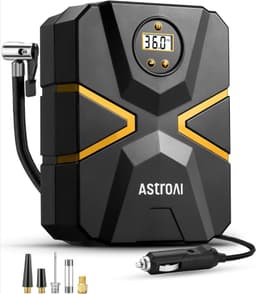
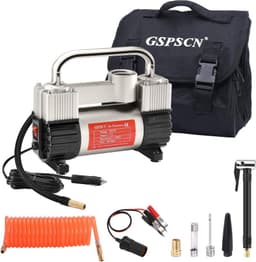
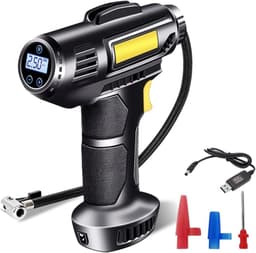
You have a soft tyre on the drive or in a supermarket car park, and a 12V pump you have not used in months. How to use a 12V tyre inflator starts with the sticker on the car, not with the maximum printed on the pump. By the end you should know which number to set, in which unit, and when to stop. The [12V air compressor comparison](/hub/compressors/12v-air-compressor) lists the nine amazon.co.uk models if you do not own a pump yet. This page assumes you do. The rows below show how three power types in that set connect. They are not a ranking. The Products Compared editorial team has not inflated a tyre for this article. The sources are TyreSafe, the Highway Code and the listings, dated 19 October 2026. A qualifying purchase can earn us a commission at no extra cost to you.

You have a soft tyre on the drive or in a supermarket car park, and a 12V pump you have not used in months. How to use a 12V tyre inflator starts with the sticker on the car, not with the maximum printed on the pump.

Our top picks

On this page

Read the sticker before you touch the pump

The pressure you set is the one the vehicle maker prints for that load, on a cold tyre. It lives on the driver’s door jamb, the fuel flap or in the handbook. It is not the maximum moulded into the sidewall, and it is not the 150 psi ceiling on a cheap inflator. TyreSafe asks you to check at least monthly, before a long trip, and before the car has done about two miles, so the air inside has not heated up. Highway Code annex 6 asks for a weekly check before the journey, cold, at the manufacturer’s figure for the load you are carrying. A full car wants the loaded line on the sticker, not the empty one. Units catch people out. One bar is about 14.5 psi. TyreSafe’s factor of 14.504 turns 2.4 bar into about 35 psi. If the sticker says 2.4 bar and the pump is still showing psi, you set about 35, not 2.4. Typing 36 while the screen is in bar is not a car pressure at all. The pump’s 150 psi is a claimed ceiling. If you are still choosing a pump, the 12V tyre inflator buying guide is the decision order. This sequence stays the same once you have one.

A safe sequence

Park off the live lane. A drive, a quiet car park bay or a services bay is a place to kneel by a wheel. The hard shoulder is not a workshop. Apply the parking brake. If the pump takes power from the car, start the engine. Parkers’ advice for a socket inflator is to leave the engine running so the alternator supports the battery. Battery clamps draw from the same system, so the engine should be running there too. A cordless pack is the exception: idling the car does not charge it. Do not leave any engine running in a closed garage. A UK Michelin manual for a different 12V inflator says to connect the power before you attach the hose. Treat that as category practice, not as a feature of the AstroAI or the AA. Seat the connector, then set the target in the same unit as the sticker. If the pump has auto shut-off, wait until it stops and recheck before you pull the hose. If the display unit was wrong, you have not finished: correct it and set the placard again. Replace the valve cap, then move to the next tyre. A spare uses its own figure when the placard prints one. Do not copy the road-tyre number onto a spare the sticker lists differently.

When to stop

A pump adds air. It does not repair a tyre. Stop if you can see a bulge, a cut or cord, or if air leaves as fast as the pump puts it in. The 1.6 mm tread minimum for cars and light vans is a wear rule, not a pressure rule, and a compressor will not put tread back. Larger vehicles can sit under a different tread rule in the Highway Code, so do not paste the car figure onto every motorhome without checking the class. Regulation 27 of the Road Vehicles (Construction and Use) Regulations 1986 still requires a pneumatic tyre to be inflated so it is fit for the use. Fitness includes pressure. It does not include a damaged casing. Stop if the place is unsafe. Highway Code annex 6 says that if a tyre fails you stop where it is safe, which means a breakdown service rather than a crouch beside a live lane. Stop if the accessory fuse blows again after a like-for-like replacement. Do not fit a larger fuse to finish the tyre. That fault belongs on the cigarette lighter or battery clamps page, then with an auto electrician. A warning light that stays on after a correct cold pressure is not something this article can reset.

Questions while you inflate

A hot tyre reads higher because the air inside has expanded. TyreSafe’s line is to set the placard before about two miles. A top-up that copies a hot reading can leave the tyre over once it cools, and a top-up that forces the cold number into a hot tyre can leave it low the next morning. When you can, wait until the tyre is cold. When you cannot, add only enough to reach a safe place and check again. Auto shut-off that arrives too soon usually means a poor seal, the wrong unit, or a target copied from the sidewall. Reseat the connector, confirm psi or bar against the sticker, and run again. A pump that never reaches a large tyre is a different problem, and this page does not rank models. A van or motorhome that needs more air than a car pump can move is on the van and motorhome page.

Common questions

Do I use the number on the tyre sidewall?
No. The sidewall maximum is what that tyre can tolerate, not what your car should run. Use the placard on the door, the fuel flap or the handbook, for the load you are carrying. TyreSafe and Highway Code annex 6 both point at the manufacturer’s cold figure. A 12V inflator that claims 150 psi has not changed that number.
Should the tyres be cold?
Yes, when you are setting the placard. Cold means the car has not been driven, which TyreSafe puts at before about two miles. Heat raises the reading, so a tyre set while hot can sit low the next morning. If you are already on a trip, add only what you need to reach a safe place and recheck once the tyres have cooled.
Does the engine stay on?
For a cigarette-lighter pump, Parkers’ advice is to keep the engine running so the alternator supports the battery. Battery clamps draw from the same 12V system, so the engine should be running there too, once the car has started. A cordless inflator does not use the car’s socket or battery. Idling the engine does not charge that pack. Do not run a car in a closed garage while you inflate.
Should I set PSI or bar?
Use the unit printed on the placard. One bar is about 14.5 psi, and TyreSafe’s factor of 14.504 makes 2.4 bar about 35 psi. If you set 2.4 while the screen says psi, the tyre is nearly empty. If you set a psi figure while the screen says bar, you are asking for a pressure no car tyre uses. After any unit change, recheck the number before you put the pump away.
What if the pump stops early?
Check the connector first. A leak at the valve can trip a preset before the tyre is at the target. Then check the unit and the number against the door sticker. Auto shut-off at the right figure is the pump finishing, not failing. If a socket pump stops because the fuse has blown, replace that fuse like for like once, and stop if it blows again. A larger fuse is not a repair.
What if the tyre is damaged, or I am on the hard shoulder?
Stop if the tyre is bulging, cut, or losing air as fast as you add it. That is a tyre fitter’s job, or a breakdown service if you cannot move safely. Regulation 27 still requires the tyre to be fit for the use, and a pump will not restore worn tread. Treat a hard shoulder as a place to get clear and call for help, not as a workshop. If the car has a spare, use the spare’s own placard figure.

Related pages

Sources

Public UK sources first. amazon.co.uk listings for the nine ASINs checked on 19 October 2026.

  1. Construction and Use Regulations 1986, regulation 27 (retrieved 19 October 2026)
  2. Highway Code annex 6: vehicle maintenance, safety and security (retrieved 19 October 2026)
  3. TyreSafe: car tyre pressure (retrieved 19 October 2026)
  4. TyreSafe: tyre pressures explained (retrieved 19 October 2026)
  5. General Product Safety Regulations 2005 (retrieved 19 October 2026)
  6. ATO ATC: 12V socket dead after a tyre inflator (retrieved 19 October 2026)
  7. Parkers: tyre inflator compressors (retrieved 19 October 2026)
  8. amazon.co.uk listings for the nine ASINs (retrieved 19 October 2026)