Independent comparisons. We may earn from shop links. More info

Report mould to a landlord in England

Updated: October 2026

If you rent in England and mould keeps returning, the first job is a written record the landlord can act on. A shop-bought mould test is optional. It does not score your home under the housing health and safety rating system, and it does not replace a repair. In 2024 the English Housing Survey recorded a damp problem in 10% of private rented homes. Photograph the growth before anyone removes it. Kit types, if you still want one later, are on the [main mould test comparison](/hub/climate-measuring/mould-test).

If you rent in England and mould keeps returning, the first job is a written record the landlord can act on. A shop-bought mould test is optional.

Our top picks

On this page

What to write down before you buy anything

Start one folder and date everything. For each room, note when you first saw or smelled the mould, which wall it sits on, and whether it is worse after rain, after a shower, or in cold weather. Take a wide photograph and a close photograph, with a tape measure or a coin for scale. If you later wipe a small patch, photograph it again so you can show whether it returned. Note anyone who is more affected: a baby, an older person, or someone with asthma or a weak immune system. You do not need a GP letter before the landlord inspects. Then write to the landlord or agent with the address, the location, and a request for an inspection. Shelter England publishes a letter layout with those points. Do not dry-brush heavy growth.

Private renting in England

The Homes (Fitness for Human Habitation) Act 2018 requires a rented home in England to be fit to live in when the tenancy starts and throughout it. Serious damp and mould can make a home unfit. Separately, the Housing Health and Safety Rating System (England) Regulations 2005 list damp and mould growth as hazard 1. Council environmental health officers use that system to judge the risk in the dwelling, not a petri dish. Your landlord is responsible for repairs to the structure and the installations that supply and drain water, and for damp those defects cause. Everyday moisture from cooking or showers does not move a leak or a failed roof onto you. Withholding rent can put you in breach. Get advice before you stop paying.

Social housing and Awaab's Law

If your landlord is the council or a housing association in England, Awaab's Law adds clocks that private tenants do not get. It is named after Awaab Ishak, who died after prolonged exposure to mould. Those times apply to social landlords. They do not bind a private landlord, even when the mould looks the same. The clocks run from the written report, not from the day you bought a kit. If those steps slip, use the landlord's complaints process and then the Housing Ombudsman. Environmental health remains available where the hazard is serious.

What a mould test kit adds

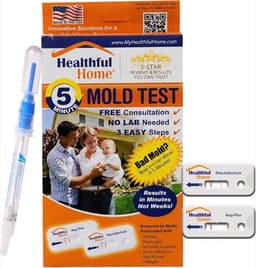
Buy a kit only after the report is sent, and only if a photograph is being dismissed. A labelled picture of the patch is often enough. A settle plate or a swab can help where someone says the mark is dust. That note is not a survey, not a species certificate for the flat, and not an HHSRS score. A blank dish does not clear the room. The plate cannot see a gutter, a cavity, or a failed fan. If you still want a kit, use the buying guide, the how-to-use guide, and the DIY-or-surveyor page before you treat a dish as the cause. The repair depends on the report you made and the duty your landlord already has.

Common questions

What should I send my landlord?
Send the address, the rooms, dated photographs taken before cleaning, any health effects, and a request for an inspection. Email it so you have a trail, and post a copy if the tenancy requires notices by post.
Do I have to let them in?
Yes, for a real inspection and for the repair, at a time you agree. Confirm it in writing. If nobody comes, record the date and offer another. Refusing all access weakens the later complaint.
How fast must a private landlord act?
As fast as the problem requires, and sooner if water is coming in or someone is at higher risk. This guide's sources do not give one private-rented day limit, so do not quote one. If weeks pass with no inspection, write again, then speak to environmental health. After works, expect a further look at about six weeks.
What is different if I rent from a council or housing association?
Awaab's Law applies in England: 24 hours for an emergency, 10 working days to investigate significant damp and mould, then 5 working days to make it safe, with longer works started within 12 weeks. Those clocks do not bind private landlords.
When do I contact environmental health?
When you have reported it and the landlord has not dealt with it, or when it is serious and getting worse. That is the council team. Send the letters and photographs. You do not need a kit result first.
Will a mould test kit prove my case?
It can support a photograph where someone calls the mark dust. It does not prove the cause, and it is not the council's score for the home.
Should I clean the mould before they visit?
Photograph first and leave one patch if you can. Do not dry-brush, and do not bleach and repaint the whole area before the visit. A small wipe so you can use the room is fine once the photographs exist.
What if I am in Scotland or Northern Ireland?
Damp still has to be dealt with, but the English fitness route, the English rating system, and Awaab's Law are not your timetable. Use advice written for that nation.

Related pages

Sources

Public UK sources used for this comparison, last reviewed in October 2026.

  1. GOV.UK: damp and mould, health risks for rented housing (retrieved October 2026)
  2. English Housing Survey 2024 to 2025, housing quality (retrieved October 2026)
  3. Awaab’s Law: guidance for tenants in social housing (retrieved October 2026)
  4. HHSRS (England) Regulations 2005 (retrieved October 2026)
  5. NHS inform: damp and mould indoors (retrieved October 2026)
  6. Shelter England: damp and mould in rented homes (retrieved October 2026)
  7. RICS consumer guide: damp and mould (retrieved October 2026)
  8. UK Centre for Mould Safety: choosing a surveyor (retrieved October 2026)
  9. University of Connecticut EHS: facts about DIY mould test kits (retrieved October 2026)