Independent comparisons. We may earn from shop links. More info

DIY mould test vs professional survey

Updated: October 2026

A settle plate on the kitchen table and a damp survey are not two ways of asking the same question. The plate, or a strip wiped across a patch, can only say something narrow about what landed on that surface or settled from the air in that spot. A surveyor is there to find why the building is wet enough for mould to grow, and only then to decide whether a laboratory sample would change the repair. The kits themselves are set side by side on the [main mould test comparison](/hub/climate-measuring/mould-test).

A settle plate on the kitchen table and a damp survey are not two ways of asking the same question.

Our top picks

On this page

Two different questions

The first question is local. Is this mark fungal growth, and did spores settle on the dish while it was open? The second is about the house. Where is the moisture coming from, and what should be fixed before anyone treats a species list as the diagnosis? Condensation, a split downpipe, a leak under a bath, and leftover moisture after a flood can all grow mould that looks similar on the paint. A positive plate does not separate those causes. A negative plate means that dish, on that day, missed what you hoped to catch. RICS consumer guidance on damp and mould asks you to start with the moisture, not with a gadget. JPS 2022, the joint position statement RICS publishes with other bodies, says establish the cause before you treat the symptom. On solid masonry a high reading can come from salts, not from a failed damp-proof course.

What the home kits in this comparison can show

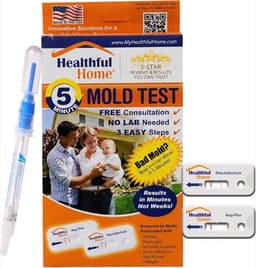
The kits in this comparison are consumer settle plates and surface strips, typically in the £13 to £40 range. None of them draws a measured volume of air, and none includes an outdoor control taken at the same time. Particles fall onto the growth medium. Outdoor air, pets and house dust all carry spores, so plates of this type are expected to grow. Growth is proof the medium grew what fell on it, not proof the room has a mould problem. A swab only confirms the spot you touched. Choosing a kit, and setting it, sits on the buying guide and the how-to page.

What a surveyor does instead

A damp and mould survey starts with the building. The surveyor should take a history, then look at rainwater goods, ground levels, windows, ventilation, and plumbing, and tie the staining to a mechanism: condensation, rain getting in, a leak, or a combination. Sampling is a later choice. The UK Centre for Mould Safety puts the test in one line: take a sample only when you already have a question the sample can answer. There is no pass-or-fail score for a home. When an air sample is justified, compare indoor air with outdoor air from the same visit, using a known volume. These plates do not take that step. A surveyor who skips the moisture path is repeating the DIY method at a higher fee. You are paying for a written mechanism, not a quote for chemical injection.

When to stop testing and get help

Put the kit away when mould returns after cleaning, shows in more than one room, follows a leak, or hides in a musty void. A vulnerable person in the room, or a purchase where damp has been flagged, belongs in the same list. A hobby plate cannot see behind finishes. If that outline comes back, the next spend is a surveyor. Use a DIY mould test for a narrow look at one surface, knowing growth is the usual outcome. Instruct a surveyor when you need why the building is wet. The dish answers the dish. The survey answers the house. Who must act if you rent is on the page about reporting mould if you rent.

Common questions

Does a dramatic plate mean the house has toxic black mould?
No. The false alarm is a dramatic plate in a home with no damp pattern. A dark colony is not a toxicity test, and a hobby kit cannot tell you that you have toxic black mould in any medical sense. Colour on agar is not a diagnosis. Growth shows that the medium grew what fell on it.
Does a sparse plate mean the room is clear?
No. The false all-clear is a sparse plate while mould sits behind a wardrobe, under a bath, or inside a wet wall. You cannot sample a cavity with a dish on the coffee table, and you cannot describe air you never exposed. A negative plate means that dish, on that day, did not collect what you hoped to catch.
Should I compare my plate with a garden plate?
Not with these kits. None of them draws a measured volume of air, and none includes an outdoor control taken at the same time. The comparison that means something is indoor air against outdoor air from the same visit, with a known volume. A dish you open in the garden is not that control.
What should I ask before I book a surveyor?
Ask three things. Will they look for the cause before they recommend a treatment? If they sample air, will they take an outdoor comparison with a measured volume? Do they also sell the remedial work on the same visit? Membership of RICS shows a professional scheme. It does not, on its own, prove the moisture-first approach in JPS 2022.
Is a kitchen plate an emergency result for Aspergillus?
No. The Health and Safety Executive warns that Aspergillus can become a risk when contaminated material is disturbed during refurbishment, and that vulnerable people nearby need proper controls. That is a site warning for building work. It is not a reason to read a kitchen plate as an emergency result.

Related pages

Sources

Public UK sources used for this comparison, last reviewed in October 2026.

  1. GOV.UK: damp and mould, health risks for rented housing (retrieved October 2026)
  2. English Housing Survey 2024 to 2025, housing quality (retrieved October 2026)
  3. Awaab’s Law: guidance for tenants in social housing (retrieved October 2026)
  4. HHSRS (England) Regulations 2005 (retrieved October 2026)
  5. NHS inform: damp and mould indoors (retrieved October 2026)
  6. Shelter England: damp and mould in rented homes (retrieved October 2026)
  7. RICS consumer guide: damp and mould (retrieved October 2026)
  8. UK Centre for Mould Safety: choosing a surveyor (retrieved October 2026)
  9. University of Connecticut EHS: facts about DIY mould test kits (retrieved October 2026)