Independent comparisons. We may earn from shop links. More info

Wireless alarm system buying guide

Updated: 16 October 2026

You are in a UK hallway with a front door, a back door and an insurer's question still open: what actually happens when the alarm goes off? This wireless alarm system buying guide starts with that response, before a brand name. The ten kits on our [wireless alarm system](/hub/burglar-protection/wireless-alarm-system) comparison are self-fitted sets from amazon.co.uk. Shelf prices on 15 October 2026 run from £53.19 to £309.99. They can sound a siren and, on some models, ping a phone. None of them asks the police to attend. Products Compared is an editorial comparison of those listings and public UK sources, not a lab test. A qualifying purchase can earn a commission at no extra cost to you.

You are in a UK hallway with a front door, a back door and an insurer's question still open: what actually happens when the alarm goes off?

Our top picks

On this page

Start with the response, not the brand

Police.uk splits domestic alarms into three types, and that split sorts this shelf better than a star rating. A monitored alarm is linked to an alarm receiving centre that can ask the police under the NPCC policy. An unmonitored alarm, often called bells-only, sounds at the house and relies on you or a neighbour. An auto-dialler rings numbers you have stored. Ask the police says forces attend NPCC-compliant alarms, that most domestic alarms are audible only, and that you should dial 999 if you see a crime rather than walk in to check the panel. Do not store 999 in any dialler. If the policy wants officers on the drive, read DIY alarm vs monitored alarm before you add a kit to the basket.

What a grade means if an insurer has asked

A grade is a design standard, not a louder siren. PD 6662:2017 is the UK scheme that applies BS EN 50131 to intruder alarms. NSI says new systems that want a police response also need BS 8243:2021, which covers confirmation so one stray sensor does not call the police. BIBA's purchaser guidance puts Grade 2E as audible-only for lower-risk homes, and Grade 2 with monitoring as the usual choice for a higher-risk home. None of the ten amazon.co.uk kits here publishes a PD 6662 certificate in the listing. A 4.3-star average is not Grade 2. Locks still come first.
Yale Yale HSA Essentials, 5-piece

Testsieger

Yale Yale HSA Essentials, 5-piece
8.8/10about £81.88

Siren, backup and sensor count

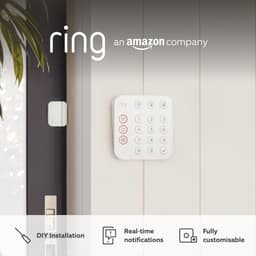
Three filters sort the DIY shelf once you know a certificate is not required. The first is an external siren. Yale HSA, Yale IA-320, Yale IA-330, Ring Pack M and Ring Pack XL include one. Ring Pack S does not, and neither do the X-Sense AS05 or AS08. Those decibel figures are listing claims. We have not measured them. The second filter is what happens when Wi-Fi or mains fails. Ring states battery backup on self-monitoring, and cellular backup only with Alarm Calls. X-Sense reviewers say the AS05 has no battery backup. Ofcom says 3G networks are switched off and 2G ends by 2033 at the latest. The third filter is sensor count against the doors you use. The Yale IA-320 ships with one contact and two PIRs at £199.04. The IA-330 adds a second contact, at £241.48. Buy the contacts for the entry points first.

What wireless does not include

Wireless, on these kits, means the sensors talk to the panel by radio. It does not mean the panel can reach you with no broadband, no mains and no SIM. Wi-Fi is a second hop: the hub uses your router to send the app alert. A SIM is a third hop, and it is a mobile plan even when the alarm seller charges no monthly fee. The burglar alarm with no monthly fee page separates those costs. Set the siren cut-out as you fit it. GOV.UK says a council can act on alarm noise after 20 minutes of constant sound, or one hour intermittent, when no keyholder can be reached.

Common questions

Will the police come if this alarm goes off?
Not because a DIY kit has sounded. Ask the police says forces attend alarms that meet the NPCC policy, and that most domestic alarms are audible only. If you can see a crime in progress, dial 999 yourself. None of these ten kits raises a Unique Reference Number.
Do I need an outdoor siren or is a hub sounder enough?
An outdoor siren is the piece a neighbour can hear from the street. A hub sounder is enough when you are in the flat and the job is to wake you and send a phone alert, which is how reviewers use the X-Sense kits. On the AS08 one buyer says an outside alarm cannot be connected at all.
Will a DIY kit satisfy my home insurance?
Only the policy can say. BIBA distinguishes an audible Grade 2E system for a lower-risk home from monitored Grade 2 for a higher-risk home. A self-fitted Amazon kit does not arrive with an NSI or SSAIB certificate. If the schedule already requires an alarm, ask what evidence they want before you order.
Is a wireless kit the same as a Wi-Fi kit?
The sensors on these kits use their own radio to reach the panel. Wi-Fi is how some hubs then send you the alert, and that hop fails when the router fails. Yale HSA does not establish an app at all, so it is wireless without being a Wi-Fi product. XUK and XNH also advertise a SIM. The word wireless on the title does not answer the backup line.
How many door sensors does a two-bedroom house need?
Start with the doors a person can open from outside: typically the front and the back, and a side door if you have one. That is a rule of thumb, not a standard. The Yale IA-320 includes one contact, so a second door is an extra part. The IA-330 and Ring Pack M include two. Windows matter more when they are hidden from the street.

Related pages

Sources

Public UK sources and the amazon.co.uk listings in this comparison. Listings checked 15 October 2026.

  1. Ask the police, Q75: when police attend an alarm (retrieved 15 October 2026)
  2. Police.uk: keep burglars out of your property (retrieved 15 October 2026)
  3. NSI: home intruder alarm systems (retrieved 15 October 2026)
  4. NPSA: home security systems (retrieved 15 October 2026)
  5. BIBA: intruder alarms guidance for purchasers (retrieved 15 October 2026)
  6. GOV.UK: how councils deal with noise nuisances (retrieved 15 October 2026)
  7. Ofcom: 2G and 3G switch-off (retrieved 15 October 2026)
  8. Ring UK plans (retrieved 15 October 2026)