How to fit a window restrictor
You have a packet of screws and either a uPVC casement or a timber sash. The job is to put the plates where the cable, or the Yale staple, meets sound material and stops short of glass or steel. This is how to fit a window restrictor without treating another brand's sheet as your box contents. Which type to buy is on the [window lock buying guide](/hub/burglar-protection/window-lock/sub/window-lock-buying-guide), and prices are on the [window lock comparison](/hub/burglar-protection/window-lock). If you buy through our links, we may earn a commission at no extra cost to you. The page is from the Products Compared editorial team. These steps were not a lab fit.
You have a packet of screws and either a uPVC casement or a timber sash. The job is to put the plates where the cable, or the Yale staple, meets sound material and stops short of glass or steel.
You have a packet of screws and either a uPVC casement or a timber sash. The job is to put the plates where the cable, or the Yale staple, meets sound material and stops short of glass or steel. This is how to fit a window restrictor without treating another brand's sheet as your box contents. Which type to buy is on the window lock buying guide, and prices are on the window lock comparison. If you buy through our links, we may earn a commission at no extra cost to you. The page is from the Products Compared editorial team. These steps were not a lab fit.
Our top picks
| Badge | Product | Where it goes | Screw note | Frame | Note | Price | Offer |
|---|---|---|---|---|---|---|---|
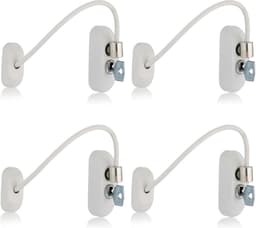
| Best overall |  Schlosser Technik Schlosser Technik cable restrictor, 2 pack | Body on frame, cable on sash | One review: 2.5 mm pilot | uPVC | 8.6 | about £13.40 | View offer |
| Preis-Tipp |  XFORT XFORT Viper cable restrictor, 4 pack | Body on frame, cable on sash | Supplied screws too long in reviews | uPVC, aluminium, wood, metal | 8.3 | about £18.99 | View offer |
| Alternative |  Yale Yale 8K101 window latch, 4 pack | Staple on frame, body on sash | Mark with the sash shut | Hinged timber casement | 8.4 | about £20.98 | View offer |


On this page
Check the frame before you drill
Fit a keyed cable restrictor
Wide sashes, adhesive, and the timber latch
When to stop
Common questions
Where do the cable and the lock body go?
Do I need a pilot hole in uPVC?
What if the supplied screws feel too long?
Can I rely on the adhesive pads?
Is one restrictor enough on a wide window?
How do I fit a Yale 8K101?
When should I stop and call someone?
Related pages
Sources
Public UK sources and the amazon.co.uk listings in this comparison. Listings captured 15 October 2026. Page updated 16 October 2026.
- Approved Document K (2013) (retrieved 15 October 2026)
- Approved Document Q (retrieved 15 October 2026)
- HSE: falls from windows (retrieved 15 October 2026)
- CWCT: are window restrictors designed to resist adequate loads (retrieved 15 October 2026)
- BSI: PAS 24:2022+A1:2024 (retrieved 15 October 2026)
- AXA Connect LC01 locks requirement (retrieved 15 October 2026)
- MLA minimum security requirements, January 2025 (retrieved 15 October 2026)
- RoSPA: falls (retrieved 15 October 2026)