Battery or solar outdoor security light
The solar light over the side gate has gone dim again, and it is only November. The wall faces north, or a tree covers it by mid-afternoon, and another panel on the same bricks will see the same weak sun. Battery or solar outdoor security light is that fork. If the panel cannot see winter sun, buy a battery light you can charge or reload, and do not buy a second panel for the same wall. This page does not rank the eight battery models. Those rows, with prices from 19 October 2026, are on the [motion sensor outdoor battery comparison](/hub/burglar-protection/motion-sensor-outdoor-battery). A purchase through our links can earn a commission at no extra cost to you.
The solar light over the side gate has gone dim again, and it is only November. The wall faces north, or a tree covers it by mid-afternoon, and another panel on the same bricks will see the same weak sun.
The solar light over the side gate has gone dim again, and it is only November. The wall faces north, or a tree covers it by mid-afternoon, and another panel on the same bricks will see the same weak sun. Battery or solar outdoor security light is that fork. If the panel cannot see winter sun, buy a battery light you can charge or reload, and do not buy a second panel for the same wall. This page does not rank the eight battery models. Those rows, with prices from 19 October 2026, are on the motion sensor outdoor battery comparison. A purchase through our links can earn a commission at no extra cost to you.
Our top picks
| Badge | Product | Power | Weather rating | How you reload | Note | Price | Offer |
|---|---|---|---|---|---|---|---|
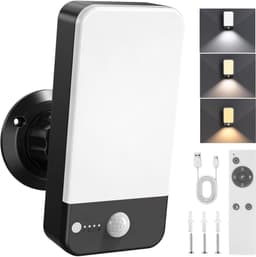
| Best overall |  LaiTeny LaiTeny 10000 mAh PIR wall light | 10,000 mAh | IP65 | USB-C indoors | 5.7 | about £28.99 | View offer |
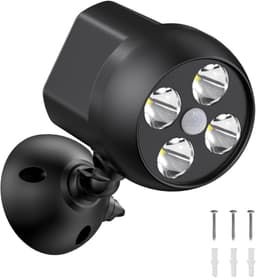
 Auraglow Auraglow PIR security light, black | 3× AA | IP44 | Swap AA cells | 8.4 | about £11.99 | View offer | |
| Best value |  NICREW NICREW PIR security light, single | 4× D-cell | Not stated | Buy D-cells | 7.1 | about £16.99 | View offer |

On this page
What fails when the wall is in shade
What a battery light still asks of you
When solar is still the simpler light
A recommendation with a condition
Common questions
Will solar work on a north wall in Britain?
Do battery lights still need the sun?
Which costs more over a year, D-cells or a rechargeable pack?
Can you mix one solar light and one battery light?
What if the solar light already fails in November?
Related pages
Sources
Public UK sources and the amazon.co.uk listings named in the digest, last checked on 19 October 2026.
- Planning Portal: lighting (retrieved 19.10.2026)
- GOV.UK: artificial light nuisances (retrieved 19.10.2026)
- GOV.UK: light pollution (retrieved 19.10.2026)
- NICEIC: garden electrics (retrieved 19.10.2026)
- Harbro Electrical: how to choose a PIR security light (retrieved 19.10.2026)
- KES Lighting: IP65 vs IP44 (retrieved 19.10.2026)
- DCC Electrics: PIR sensor security lighting (retrieved 19.10.2026)
- YESSS Electrical: PIR instruction manual (retrieved 19.10.2026)