Independent comparisons. We may earn from shop links. More info

20mm conduit stock and die for steel tube

Updated: 2026-10-21

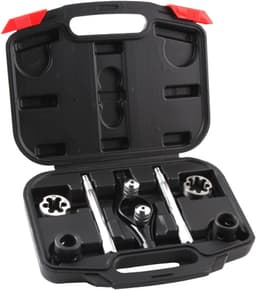
You are about to thread 20 mm or 25 mm steel conduit, and the only die on the bench is a 1/2 inch pipe die or a bolt die. That cutter is the wrong thread, and the tube is too thin to wind in your hand. A 20 mm conduit stock and die is a stock, a guide and a conduit die, used in a pipe vice with cutting compound. Products Compared read the ALETO listing, B09N6NKMWY, at £39.99 on 19 October 2026. There was no lab test. The [die stock comparison](/hub/workshop/die-stock) is where that row sits. If you buy through a link on that comparison, we may earn a commission at no extra cost to you.

You are about to thread 20 mm or 25 mm steel conduit, and the only die on the bench is a 1/2 inch pipe die or a bolt die. That cutter is the wrong thread, and the tube is too thin to wind in your hand.

Our top picks

On this page

Conduit thread is not a pipe thread

Steel conduit in these sizes is a metric electrical thread, finer than imperial water pipe. One UK contributor names a 20 mm × 1.5 die. DETA's DT6012025 stock, which is not this listing, prints 1.5 mm pitch for 20 mm and 25 mm. The ALETO file never prints that pitch. A 1/2 inch BSP die, taper or parallel, will not produce a thread a conduit coupler can use. You may raise a helix that still will not start, or thin the wall until the tube crumples. M20 is not 20 mm conduit. Elec-Mate treats heavy-gauge steel to BS EN 61386-21 as the threaded system, in 16, 20, 25 and 32 mm. Plastic conduit is not cut with this die.

Cut, guide, and compound

Square the end before the die touches it. A UK review of the ALETO set says the 25 mm cut only behaved when the tube was dead square. Deburr the end. A burr stops the guide seating, and a knife edge left inside will cut a cable later. The guide is the bush that keeps the die square. Use the 20 mm guide on 20 mm tube and the 25 mm guide on 25 mm tube. Hold the tube in a pipe vice or a conduit clamp, close to the cut. ALETO reviews say that clamp is not in the box, and one reviewer broke a woodworking vice. Put cutting compound on the die, reverse to break the chip, and stop when the flute is packed. That is how a thin wall collapses.

How far to go, and the earth path

Elec-Mate's installer note, an overview rather than a test of any amazon set, talks about five full turns, and more if a locknut still has to bite. That is a practical stop, not a gauge certificate. Cutting until the tube is a knife edge leaves a thread that splits. One ALETO review reports a thread too small for the coupling. Forcing the coupler crosses whatever thread you have left. Where steel conduit is the circuit protective conductor, the thread is part of the earth path. A MEICA specification citing BS EN 61386-1 asks for clean, gauged threads. ALETO does not claim that standard. If continuity is in doubt, stop and use a competent electrician.

What the £39.99 set does and does not say

ALETO's title is a seven-piece 20 mm and 25 mm conduit stock, guide and die set, at £39.99, rated 4.5 from 76 on amazon.co.uk. The specification block does not itemise the seven parts and does not print a pitch or a standard number. One account is about fifty threads with the die still usable. UK reviews also say the pipe clamp is separate. Others describe a coupling that would not start. It is the top pick only for this conduit job, and only if you can live with that split. It is not a water-pipe stock, and it is not a certificate.

Common questions

Is 20 mm conduit the same thread as 1/2 inch pipe?
No. Conduit in these sizes is a metric electrical thread, finer than imperial water pipe. A 1/2 inch pipe die will not give you a coupler thread. UK discussion of the sizes treats them as different systems, and a bolt die marked M20 is a third thread again.
Do I need a guide as well as a die?
Yes on thin steel tube. The guide keeps the die square while the first turns form. A stock alone, used as you would on solid bar, lets the wall wander. Use the guide that matches 20 mm or 25 mm, not the other size.
How long should the thread be?
A practical installer figure is about five full turns, and a little more if a locknut must still bite. Offer the real coupler up and stop when it runs on cleanly. Cutting until the wall is thin leaves a thread that splits in the fitting.
What holds the tube while I turn?
A pipe vice or a conduit clamp, close to the end you are threading. The ALETO reviews say the clamp is not in the box. A light woodworking vice is a good way to crush the tube or break the vice.
Why will the coupler not start?
The usual causes are an end that was not square, the wrong guide, a pipe die instead of a conduit die, or a thread that has come out small. One ALETO review reports a thread too small for the coupling. Forcing the fitting with a wrench crosses the thread you have left.
Can the conduit thread be the earth?
It can be part of the earth path when the steel conduit is the circuit protective conductor, which is why those threads need to be clean and the joints continuous. If you cannot confirm continuity, stop and use a competent electrician. The ALETO listing does not claim a conduit standard.
Does the ALETO listing state the pitch?
No. The file does not print a pitch or a standard number. DETA prints 1.5 mm on its own 20/25 mm set. That figure is not a fact about the ALETO dies, and plastic conduit is not cut with this tool.

Related pages

Sources

Public UK sources used for this comparison. Listings were read on 19 October 2026.

  1. Accu die stocks and size chart (retrieved 19 October 2026)
  2. Protool diestocks (retrieved 19 October 2026)
  3. HSE metalworking fluids (retrieved 19 October 2026)
  4. MEICA electrical specification, BS EN 61386-1 (retrieved 19 October 2026)
  5. RoyMech pipe threads (retrieved 19 October 2026)
  6. Gas Safety (Installation and Use) Regulations 1998, regulation 3 (retrieved 19 October 2026)
  7. Gas Safe Register, home improvements (retrieved 19 October 2026)
  8. DETA 20/25 mm conduit stock (retrieved 19 October 2026)
  9. Technology Student, external threads (retrieved 19 October 2026)