Independent comparisons. We may earn from shop links. More info

How to grow a fig tree UK

Updated: October 2026

You unpacked a live Ficus carica, and now the branch carries hard green figs in October while pea-sized bumps sit at the tips. How to grow a fig tree UK advice only makes sense once you know which crop ripens here, because treating every swelling as nearly ready leads to wasted feed and broken branches. The [fig tree comparison](/hub/trees-and-palms/fig-tree) covers the listings; this page is care after purchase. Cultivar choice is on [best fig tree for a UK patio](/hub/trees-and-palms/fig-tree/sub/fig-tree-best). Restriction and pit size sit on [fig tree in a pot or in the ground](/hub/trees-and-palms/fig-tree/sub/fig-tree-pot-or-ground). If you buy through our links, a qualifying purchase can earn us a commission at no extra cost to you.

You unpacked a live Ficus carica, and now the branch carries hard green figs in October while pea-sized bumps sit at the tips.

Our top picks

On this page

The crop that ripens outdoors

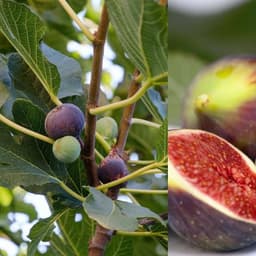
Common figs in Britain usually give one outdoor crop from small embryos that overwintered at the shoot tips. Those pea-sized fruitlets swell through summer and ripen in late summer or early autumn when they soften and hang. The larger green figs formed the same year on older wood rarely ripen outdoors in our cool season; remove them in late autumn so the tree does not waste energy. That two-crop biology explains why your tree can look laden while almost nothing becomes edible. If you bought a mail-order liner, the first years are about establishment and tip survival, not heavy harvests. Suttons quotes about one year to first cropping for Brown Turkey once planted with restricted roots, and about three years to best yields.

Water and feed

Figs in pots dry out faster than figs in a walled pit. Drought in spring can drop fruitlets before they start to swell, which the RHS pruning guide links to irregular watering. Water so compost stays evenly moist in growth, without sitting waterlogged in cold weather. In a rainy British summer, a pot under an eave still needs checking twice a week because the wall radiates heat. Feed with a high-potassium liquid feed fortnightly from spring to midsummer for container plants, following RHS fig pruning guidance. Tomato feed every couple of weeks once fruit develops is the BBC Gardeners' World shorthand many UK owners use. Overfeeding pushes leaves at the expense of fruit; if your tree looks vigorous and barren, cut nitrogen-heavy feeds and confirm roots are restricted. Net ripening figs with canes if birds and squirrels visit, as the RHS grow guide suggests.

How to tell a ripe fig

A ripe fig hangs downward, feels soft when you gently squeeze it, and may show a drop of syrup at the eye or a slight skin split. Colour depends on cultivar; softness and hang matter more than a paint chart. Figs do not ripen off the tree in a useful way, so pick when they give under thumb pressure rather than bagging hard fruit indoors. Leave the pea-sized tip embryos alone when you harvest; those are next year's outdoor crop. Confusing them with failed unripe figs and stripping them in winter removes fruit you would have eaten the following September. If only hard green lumps remain in October, they are likely the second crop that will not finish outdoors. Remove those, and keep the tips.

Winter tips and a light prune

Pea-sized embryos at the tips are frost-tender. Move pots into a frost-free shed, porch, or unheated greenhouse before hard frosts, keeping compost just moist, not soggy. For a fan on a wall, pack straw around the framework and cover with fleece or hessian, as RHS winter advice describes. A cold snap after a mild autumn kills tips fast; one lost winter can mean no crop next year even if the main stem survives. Prune lightly in winter when the tree is dormant: remove dead or crossing wood, shorten overly long shoots, and keep the fan shape if you are wall training. Heavy renovation belongs to experienced growers or professionals on high walls. Sap irritates skin in sunlight for Ficus carica; wear gloves if you are sensitive. Point yourself back to the fig tree buying guide if you realise the fig tree in the corner is faux Ficus lyrata. This calendar does not apply. Live lyrata indoors is a different species with H1B heat needs, not H4 wall fruit.

Common questions

When do UK figs ripen?
Usually late summer into early autumn for the overwintered crop, when individual figs soften and hang. Timing shifts with cultivar, wall heat, and summer sun.
Why are there hard green figs in October?
They are likely the current season's second crop, which rarely finishes outdoors in Britain. Remove them in late autumn and keep the small tip embryos for next year.
How often should I water a pot?
Often enough that compost never dries to dust in growth, without constant saturation. Check sheltered pots under eaves twice weekly in dry spells.
Is tomato feed the right feed?
It is a practical high-potassium option once fruit is set, used fortnightly in the BBC Gardeners' World pattern. Stop overfeeding if you see leaf at the expense of fruit.
Do figs ripen off the tree?
Not in a useful way for dessert. Pick soft, hanging fruit; do not rely on the fruit bowl to finish hard figs.
How do I protect the tiny fruitlets?
Move pots frost-free, or fleece and straw a wall fan before hard frosts. Those tips are next year's crop.
When do I prune?
During dormancy in winter, lightly for shape and dead wood. Major work on tall fans may need professional help.
What if the plant arrives limp?
Water lightly, shade from harsh midday sun briefly, and check the stem is live. Many Brown Turkey reviewers report recovery; reject truly dead or mouldy stems on arrival.

Related pages

Sources

Public UK sources from the research digest, used for this page in October 2026. Prices, stars and review counts are from the amazon.co.uk listings checked on 19 October 2026. This is not a taste test or a hardiness trial.

  1. RHS, How to grow figs (retrieved October 2026)
  2. RHS, Ficus carica ‘Brown Turkey’ (retrieved October 2026)
  3. RHS AGM fruit list (retrieved October 2026)
  4. RHS, Ficus lyrata (retrieved October 2026)
  5. GOV.UK, Issuing plant passports to trade plants in Great Britain (retrieved October 2026)
  6. DEFRA, Xylella host risk levels (retrieved October 2026)
  7. Forest Research, Xylella fastidiosa (retrieved October 2026)
  8. BBC Gardeners’ World, Fiddle-leaf fig (retrieved October 2026)