Independent comparisons. We may earn from shop links. More info

Fruit fly trap vs vinegar: when a bought bottle wins

Updated: 17 October 2026

When vinegar flies circle a fruit bowl, you can spend about £10 on a small pack of pre-baited traps or make a jar from ingredients already in the cupboard. The fruit fly trap vs vinegar decision is not really about two unrelated lures: both exploit fermentation smells. The useful differences are how often you refresh them, whether you want an open jar or closed pot, and how carefully you will maintain either option. Compare the bought products on our [fruit fly trap page](/hub/traps/fruit-fly-trap); this guide decides when homemade is enough. A qualifying purchase can earn a commission at no extra cost to you.

When vinegar flies circle a fruit bowl, you can spend about £10 on a small pack of pre-baited traps or make a jar from ingredients already in the cupboard.

Our top picks

On this page

What the jar actually needs

A basic homemade trap starts with apple cider vinegar because its fermented smell attracts vinegar flies. BBC Good Food describes using roughly an inch in a jar, adding a drop of washing-up liquid and either covering the opening or making a paper cone. The detergent reduces surface tension, so a fly that lands on the liquid is more likely to sink rather than stand on it. Small holes in cling film admit flies while limiting the route out; a paper funnel narrows the exit. An uncovered dish can still attract insects when washing-up liquid is present, but it is easier to spill and leaves the liquid open in a working kitchen. Stand it securely near the activity and away from food preparation. White vinegar is not an equal default simply because it shares the word vinegar. A Yorkshire Live journalist found cider vinegar performed better than white vinegar in one kitchen comparison, but that was a home trial rather than a controlled laboratory study. Cider vinegar is the better-supported starting point in the UK guidance examined. Refresh a homemade jar every few days, particularly when the smell changes, the liquid evaporates or the surface fills with insects and debris. A neglected jar beside an uncleared fruit bowl is another open container, not a treatment plan.

What you pay a bottle for

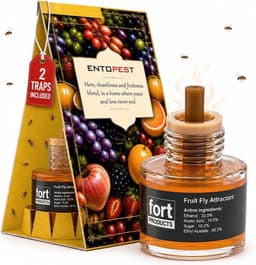
A pre-baited bottle buys convenience and containment. Several listings in the comparison claim up to three weeks of use, compared with the few-day refresh rhythm of a homemade jar. Super Ninja’s two-pack was listed at £9.99, so the practical question is whether avoiding several remixes and keeping the lure inside a purpose-made pot is worth about that entry price to you. The bought bottle still needs correct placement. Super Ninja says its lure should sit on a flat surface within one metre of a fruit bowl, bin, caddy or sink, rather than on the windowsill. If you leave fermenting waste available elsewhere, the trap has to compete with it. Neither the packaging nor the longer stated life removes the need to clean. Not every commercial lure is simply bottled cider vinegar. GroundMaster describes juice and sugar with 0.3% coco amides, while ENTOEND’s listing acknowledges a vinegar scent that is meant to fade. Trappify is a hanging glue tube, and reviews mention users adding vinegar or honey. Compare actual formats rather than assuming every fruit fly trap contains the same mixture. For pack-size trade-offs, see the fruit fly trap buying guide.

Smell, mess and the label

Neither choice is odour-free. Commercial-bottle reviews mention vinegar when the seal is opened, and a homemade jar deliberately exposes a fermented liquid. A closed pot may contain splashes better, but it should not be sold to you on an unsupported promise that the kitchen will have no smell. Position, room size and your own sensitivity all affect the experience. The homemade option creates more routine handling. You pour the liquid, add detergent, make the cover, inspect it and dispose of the contents every few days. That is manageable for many households, but awkward beside a busy sink or where children and pets can reach it. A pre-baited pot reduces those steps, although leaks or loose parts reported in reviews remain possible. The HSE explains that supplying a food such as jam as part of a trap for a biocidal purpose can make that supplied combination a regulated biocidal product. When you buy ordinary cupboard vinegar and decide to pour it into your own jar, the retailer has supplied food, not that ready-made biocidal trap. This is one reason not to describe every option loosely as natural, non-toxic or HSE-approved. Super Ninja’s listing shows GB-2026-1354, with GB-2026-1354-002 on the manufacturer’s UK page. That reference supports traceability; it does not prove that the product is harmless. Follow the label and keep either kind of trap away from food-contact surfaces.

When to choose which

Choose a cider-vinegar jar for a small, identified kitchen outbreak when you already have the ingredients and will refresh it every few days. It is inexpensive, quick to assemble and lets you start without waiting for delivery. Pair it with removing spoiled fruit, washing the caddy and rinsing bottles, because continued breeding can outlast the adult flies you catch. Choose a bought bottle when a closed, pre-measured format and a longer stated replacement interval are worth the cost. A two-pack is a cautious first purchase; bulk stock makes sense only when you have recurring problems or several genuine source areas. Our best fruit fly trap guide explains why a larger pack does not improve each bottle’s individual performance. Do not choose either method for flies emerging from houseplant compost. Those are likely fungus gnats, which call for drier compost management and yellow cards near soil level. Moth-like flies centred on a plughole point towards organic slime in the drain. Whichever option you select, placement and cleaning determine whether it gets a fair test. The how-to-use guide covers those steps. If activity continues for weeks after source removal, seek competent pest advice rather than repeatedly changing lure brands.

Common questions

Does cider vinegar work?
It can attract adult vinegar flies when used in a jar near the source, particularly with washing-up liquid and a cover or cone. It does not remove eggs or larvae in fruit, residue or waste. Clean the breeding material at the same time and avoid promising a fixed catch or clearance time.
Do I need washing-up liquid?
It serves a specific purpose: reducing the liquid’s surface tension so flies are less able to stand on it and escape. Use only a small drop in the homemade method. Do not add detergent to a pre-baited commercial trap unless its own instructions explicitly tell you to.
How often should I refresh a jar?
Every few days is a practical schedule from the UK guidance examined, and sooner if it becomes dirty, diluted or loses its smell. Commercial bottles may claim up to three weeks, but that is product-specific. In both cases, continue cleaning sources throughout the replacement period.
When is a closed bottle worth £10?
It is worth considering when you want less mixing and disposal, prefer a contained pot or know you will forget to refresh an open jar. The £9.99 two-packs in the comparison provide a limited trial. If you will maintain a jar, the bought convenience may add little.
Is white vinegar the same?
No. Both are acidic vinegars, but cider vinegar carries fermentation aromas more closely associated with the flies’ food. One UK journalist’s home trial favoured cider vinegar over white, though it was not a lab test. Use cider vinegar as the supported default rather than treating the two as interchangeable.
Does a bought bottle smell less?
Not necessarily. Reviews of pre-baited products mention a vinegar smell on opening, while a homemade jar leaves its lure more exposed. A closed design may contain liquid and debris better, but no general evidence here supports an odour-free promise.
Is a homemade jar a biocide?
The supply distinction matters. HSE guidance indicates that food supplied as part of a pest trap can fall within biocides regulation, whereas ordinary vinegar sold as food does not become that supplied product because you later use it in a jar. This is not a basis for broad safety claims about either method.

Related pages

Sources

Public UK sources for biocidal lures, monitoring claims, and fungus gnats. Listings are the amazon.co.uk captures for these twelve ASINs on 15 October 2026, not a live reload on 17 October 2026. Prices on amazon.co.uk move.

  1. HSE, insect monitoring traps (retrieved 17 October 2026)
  2. HSE, is your product a biocide (retrieved 17 October 2026)
  3. HSE, biocidal advertising (retrieved 17 October 2026)
  4. BPCA, fruit fly control (retrieved 17 October 2026)
  5. RHS, fungus gnats (retrieved 17 October 2026)
  6. BBC Good Food, DIY fruit fly traps (retrieved 17 October 2026)
  7. Which?, fruit flies (retrieved 17 October 2026)
  8. Super Ninja UK collection (retrieved 17 October 2026)