Independent comparisons. We may earn from shop links. More info

DeWalt impact driver vs combi drill

Updated: 22 October 2026

The two tools share a battery. You meet the split at a brick hole or a buried hinge screw. A DeWalt impact driver vs combi drill choice is a job split. Buy the impact driver when you are driving long screws and you already have, or will share, 18 V XR packs. Keep or buy the combi when you need holes, a clutch, or masonry. The four bodies in the [DeWalt cordless impact driver comparison](/hub/tools/de-walt-cordless-impact-driver) are hex drivers. Figures are saved amazon.co.uk listings from 20 October 2026. This is not a lab test. A qualifying purchase can earn a commission at no extra cost to you.

The two tools share a battery. You meet the split at a brick hole or a buried hinge screw. A DeWalt impact driver vs combi drill choice is a job split.

Our top picks

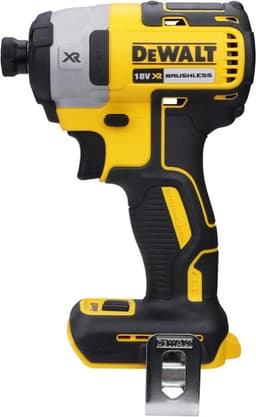
DeWalt DeWalt DCF887N

Best overall

DeWalt DeWalt DCF887N
9.2/10about £59.95
DeWalt DeWalt DCF850N

Best value

DeWalt DeWalt DCF850N
8.0/10about £98.43
DeWalt DeWalt DCF870N

Alternative

DeWalt DeWalt DCF870N
6.6/10about £184.99
On this page

Same battery, different job

An 18 V XR pack will run a combi and any of these four drivers. That is where the similarity ends. Each impact driver uses a 6.35 mm hex holder. A combi uses a keyed chuck and a clutch. The impact driver has no clutch: a mode dial on the DCF887, DCF850, and DCF870, or the trigger alone on the DCF840. On a combi, hammer mode is an axial blow, which is what masonry needs. On an impact driver the hammer strikes an anvil, which is what saves your wrist on a long screw. The DCF840 manual says the tool is for impact screwdriving and it is not a hammer drill. One DCF887 buyer returned the driver because round drill bits would not fit. Coach screws stay with the hex body. A run of 6 mm holes for shelf plugs stays with the chuck.

Screws and bolts

UK reviewers use these drivers for decking, fencing, and coach bolts, and they go back to the drill for a cabinet screw. The DCF887N is the bare three-speed body. The DCF850N shortens the nose to about 101 mm. The DCF870N is the hydraulic body at 56 Nm. A combi kit with batteries is a different sum from a bare body. Mode 1 is the closest they come to a clutch, and reviewers still call it too soft. A clutch on a combi lets you set a number and leave it, which is the point for hinge leaves. Nuts belong on an impact wrench. Bit and mode sequence is on the how to use page.
DeWalt DeWalt DCF887N

Testsieger

DeWalt DeWalt DCF887N
9.2/10about £59.95

Holes and masonry

A hex-shank twist bit will make a hole in timber. It is the wrong first choice when the hole has to be round and a set diameter. Drilling-capacity cells print figures such as 12 mm or 16 mm in wood. Those cells do not add a keyed chuck or a hammer for brick. One DCF870 review claims a screw went through masonry. That is one person's use, not a hammer-drill rating. Brick, block, and concrete want the axial hammer. A combi's hammer mode is the usual DIY answer for light masonry. Heavier concrete is a rotary hammer's job. Pilot holes for deck screws need both bodies, which is the split on the decking page. A row of plugs, a tile, or a wall is where the hex driver fights you.

If you can buy only one

Buy the combi first if this year's budget is one tool. You can drill, drive smaller screws on the clutch, and use hammer mode for light masonry. Add the impact driver later, on the same 18 V XR pack, when long screws are the slow job. The about £59.95 price is only the body. This set does not name a combi. If the wrist-ache is from decking or fencing, the impact driver is the second body, not a replacement. Holes, the clutch, and masonry stay on the combi.

Common questions

Should my next DeWalt tool be an impact driver or a combi?
Choose the impact driver if the work is long screws and you already have an 18 V XR battery, or you will share one with a combi you are keeping. Choose the combi if you need holes, a clutch, or masonry and you do not yet own a chuck. A combi kit with batteries is a different total from a bare hex body.
Can the impact driver drill brick?
The DCF840 manual describes the tool as an impact screwdriver and not a hammer drill. The blow is rotational, through an anvil. A combi's hammer is axial, which is what brick needs. A drilling-capacity cell, or one review that mentions a screw in masonry, does not change that. Use a combi for light masonry and a rotary hammer when the concrete is the real job.
Why will my drill bits not fit?
The holder is 6.35 mm hex. Round bits belong in a chuck. One UK DCF887 buyer returned an otherwise sound tool for that mismatch. Impact-rated hex bits are the accessories these drivers are built for. A hex-shank twist bit can make a rough hole in wood. It does not turn the driver into a combi, and it will not hold a round masonry bit.
I already have a combi. Do I still want an impact driver?
You want one when long screws are hurting your wrist or chewing time, which is the usual decking and fencing case. You can leave it if the combi's clutch already covers your screws and you rarely drive anything long. The impact driver will not retire the combi, because cabinet screws and holes stay easier with a clutch and a chuck. Share the 18 V XR pack rather than buying a second battery platform.
Which tool for decking screws, and which for the pilot holes?
Use the combi, or a drill, for the pilot at the board ends and in hardwood. Use the impact driver for the screws, with an impact-rated bit, and stop when the head is flush. The DCF887 is the usual three-speed body for that run if you already own the batteries. The combi remains the hole tool.

Related pages

Sources

Public UK sources from the research digest, used for this page in October 2026. Prices, stars and review counts are from the four amazon.co.uk listings captured on 20 October 2026. Noise and vibration action values apply at work. They are not a certificate that a domestic driver is silent or safe for all-day use.

  1. DCF887 instruction manual (retrieved 20 October 2026)
  2. DCF850 instruction manual (retrieved 20 October 2026)
  3. DeWalt UK, DCF840N-XJ bare unit (retrieved 20 October 2026)
  4. DeWalt UK, DCF850 compact kit (retrieved 20 October 2026)
  5. HSE, hand-arm vibration calculator (retrieved 20 October 2026)
  6. HSE, noise for employers (retrieved 20 October 2026)
  7. GOV.UK, Supply of Machinery (Safety) Regulations 2008 (retrieved 20 October 2026)
  8. Consumer Rights Act 2015, section 23 (retrieved 20 October 2026)