Drum agitator or overhead stirrer: match the vessel
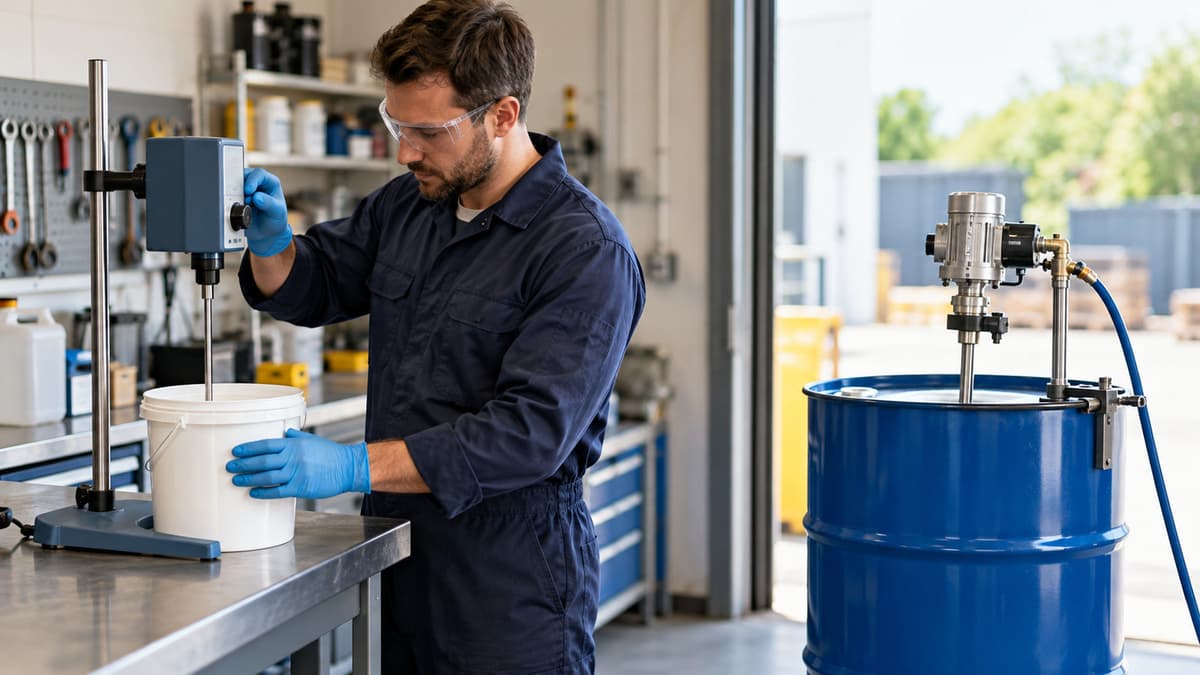
A 10 litre overhead stirrer and a 200 litre drum agitator do different jobs. Match the vessel first, then read every gap in each amazon.co.uk listing.
On this page

You have a 10 litre bucket on the bench and a 200 litre drum by the door, and the search box treats them as one purchase. A drum agitator or overhead stirrer is the right question only after you name the vessel. Use the overhead stirrer when the batch is about 10 litres. Use the pneumatic drum agitator when the container is a 200 litre drum. The two amazon.co.uk files behind this page are ASIN B082LRQ2TK, listed at £225, and ASIN B0BLGN217Y, listed at £550.
Peter F. read those two listing files, plus Health and Safety Executive pages on electrical equipment in explosive atmospheres and on pressure systems. There was no lab mix and no market-size claim. Figures below were checked for this article in October 2026. Live amazon.co.uk prices move. A qualifying purchase through our links can earn a commission at no extra cost to you. The top pick in the agitator comparison is the SZXMDKH ball pack for small bottles, about £5.11. It does not stir a bucket or a drum.
In short
Choose by the litres on the vessel. The 72 W, 220 V overhead stirrer is the 10 litre tool, listed at £225, with two speed lines that disagree and no plug stated. The 1/8 hp air agitator is the 200 litre drum tool, listed at £550, with no reviews, no air-flow figure, and no compressor in the listing. Bottles, and any size neither file names, need a different mixer.
Match the vessel before the motor
A 10 litre overhead stirrer stands over a vessel you can lift onto the bench. A pneumatic drum agitator uses the shaft the listing calls a 200 litre shaft. A partly filled drum is still a drum job. About 10 litres points you at ASIN B082LRQ2TK. A 200 litre drum points you at ASIN B0BLGN217Y. A 20 litre pail or a 25 litre keg sits outside both files.
At £225 beside £550, the stirrer is the smaller payment, and that payment fits a batch of about 10 litres. On a drum, that machine is the wrong shape. Power source comes second, on the page about pneumatic and electric agitators. If the listing and the drum disagree, stop. A brand on a search suggestion does not add capacity the motor was never given.
What the 10 litre overhead stirrer file says
ASIN B082LRQ2TK is the 10 litre overhead stirrer: 10 litres, 72 W, 220 V, listed at £225. It is a bench motor and a shaft you lower into a bucket. The speed lines conflict. One line gives 200–2,000 rpm. Another refers to 3,000 speeds. Averaging them invents a top speed the file does not support. Until the seller states one measured range, treat the speed as unresolved.
The plug is unstated. Nothing confirms a BS 1363 plug or a bare lead. UK sockets are 13 A and the supply is nominally 230 V. The plate says 220 V, which is a different fact from a UK plug in the box. Check the live amazon.co.uk gallery before you pay. As a rule of thumb, 72 W suits a thin liquid at about 10 litres, and the file gives no viscosity rating. A stiff filler or a cold resin can stall it. If the batch is heavier than paint you stir by hand in that bucket, read the agitator buying guide before you spend the £225.
What the pneumatic drum listing leaves out
ASIN B0BLGN217Y is the pneumatic drum agitator in this pair: a 200 litre shaft, a 1/8 hp air motor, listed at £550. There is no air-flow figure, in cubic feet per minute or litres per minute, and no compressor in the box. The air motor still needs a compressor, a hose, a regulator, and enough flow to keep turning in the liquid. You cannot match a compressor from this file. Put the compressor beside the £550 and read the buying guide so the agitator price is not the whole mixer.
The file showed no customer reviews, so bung fit is absent from public comments. This research states neither a thread nor a length in millimetres. Measure the bung and ask the seller before you open the drum. One eighth horsepower is the listing line, not a torque test, and this page will not convert it into watts. No working pressure is stated. A compressor you already own still needs the missing flow figure.
Air mixer versus electric stirrer for paint
The overhead file is electric, 72 W at 220 V. The drum file is air, 1/8 hp. Electric is the simpler feed once a UK plug is confirmed, which this file does not confirm. Air turns a drum shaft when a compressor is already in the workshop, while the compressor at the wall remains an electrical machine.
The Health and Safety Executive explains that electrical equipment can ignite a flammable atmosphere. Solvent-borne paint, two-pack coatings and cleaning solvent can create that atmosphere, depending on the tin and the room. Neither ASIN states an ATEX mark or any solvent-vapour approval. An air motor is not that approval, and a 72 W plate is not that approval. Read pneumatic and electric agitators with the HSE page before you decide the room is suitable. HSE publication INDG178 covers written schemes of examination where the Pressure Systems Safety Regulations apply. Buying the shaft does not tell you whether your compressor is in scope.
When neither tool is the right buy
Bottles, droppers and 20 ml pots match neither ASIN. The 10 litre stirrer is too much machine, and a 200 litre shaft will not enter the neck. Bottle work is a shake, a stick, or a mixing ball in the closed bottle. The how to use guide fits when the container sits in one hand. A 20 litre bucket is twice the stirrer rating and a tenth of a drum. Thick paint in that bucket can overheat a 72 W motor. Use the agitator comparison for a paddle aimed at that bucket.
- Read the litre mark on the vessel and write it down.
- At about 10 litres, open ASIN B082LRQ2TK and settle the plug and the speed lines on the live page.
- For a 200 litre drum, open ASIN B0BLGN217Y, measure the bung, and ask for an air-flow figure before you price a compressor.
- For a bottle, or any size neither file names, leave both listings.
Stop when the plug is unstated, the bung thread is unknown, or solvent vapour has not been assessed. Neither listing states a mix time. Run briefly, stop, and look. A pot life printed on the tin stays as printed.
Common questions
Which tool is for 10 litres?
Which tool is for a 200 litre drum?
Does the stirrer include a UK plug?
Does the drum mixer include a compressor?
What speed does the stirrer actually claim?
Is either one certified for solvent vapour?
What if I only have bottles?

Peter F. is the editor for DIY & tools at productscompared.co.uk. Comparisons in this category are checked against amazon.co.uk listings, review evidence and public UK sources.
Related articles
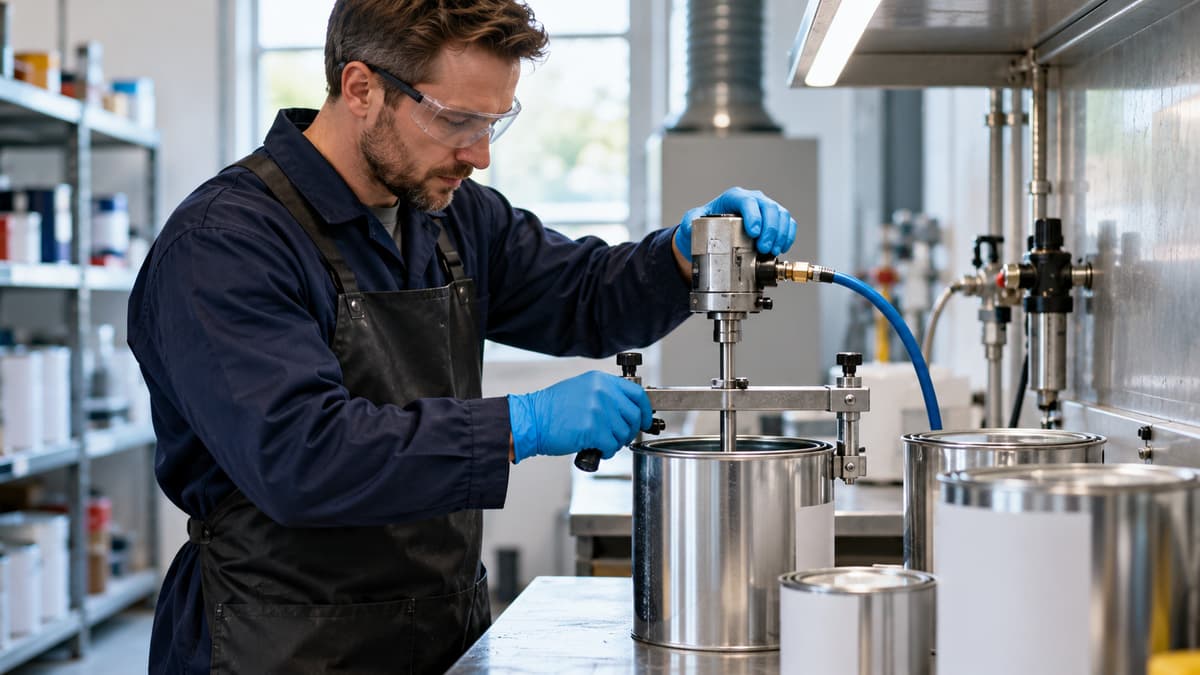
Flammable paint mixing and DSEAR
A listing sentence is not an explosive-atmosphere mark for solvent or two-pack paint.

Air supply and viscosity on an IBC agitator
A horsepower line without an air-flow figure does not tell you which compressor to buy.

Paint agitator cost UK
Balls, a bench stirrer and a drum mixer are different prices for different vessels.