Independent comparisons. We may earn from shop links. More info

How to use a 350mm diamond blade

Updated: October 2026

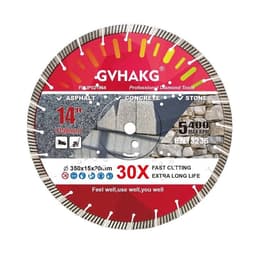
Knowing how to use a 350mm diamond blade starts before the saw is running. You need the correct diameter and bore, an undamaged wheel mounted in the marked direction, effective dust control and a cut that cannot pinch the disc. This guide covers a typical petrol cut-off saw and explains where an electric machine changes the method. It does not replace the saw and blade manuals or operator training. If you have not chosen a compatible product yet, begin with the [350 mm diamond blade comparison](/hub/tool-accessories/350mm-diamond-blade). A qualifying purchase can earn a commission at no extra cost to you.

Knowing how to use a 350mm diamond blade starts before the saw is running.

Our top picks

On this page

Inspect and mount the blade

Isolate the machine first. Switch it off, let moving parts stop and follow its procedure for preventing an accidental start. Reject a blade with cracks, missing or loose segments, a distorted core, damage around the bore or obvious wear in the steel immediately below the segments. Do not try to straighten, weld or continue using a questionable wheel. Confirm diameter, bore, application and maximum speed from the physical markings. The saw must accept 350 mm. A 25.4 mm hole must not rattle on a 20 mm shaft, and a bore must never be enlarged. If the disc will not enter the original guard, stop and use the 350 mm blade bore and saw-fit guide. Match the direction arrow on the blade to the rotation arrow on the guard. Keep the paired flanges clean, flat and in their proper positions. A homemade washer is not a substitute. Tighten the fastener to that saw's instruction. There is no universal torque. Refit the guard, turn the blade by hand if the manual permits, and start in a clear area while standing out of the wheel's plane. Stop if it wobbles, rubs or vibrates.

Control water, dust and slurry

For petrol saws cutting silica-containing construction materials, the Health and Safety Executive says to use water suppression and gives about 0.5 litres per minute as an effective flow. Turn the supply on before the blade enters the material and make sure both sides of the wheel receive water. A damp surface with a dry cutting zone is not effective suppression. Water does not remove the need for suitable respiratory protective equipment. HSE guidance calls for an APF 20 respirator, such as suitable FFP3 disposable protection or a P3 filter, even with water suppression. It must fit the wearer. Facial hair can prevent a tight-fitting mask from sealing. Eye, hearing, head and foot protection, close-fitting clothing and gloves selected for the task are part of the assessment. Do not apply water to an electrically operated saw unless that exact machine is designed for wet cutting. HSE guidance directs users of electric saws towards extraction rather than improvised wet suppression. Plan where the slurry will go. Do not dry sweep silica-bearing dust. The concrete or asphalt blade guide explains the material choice that water cannot fix.

Make a straight, supported cut

Mark the line and inspect both sides of the work. Look for buried services, reinforcement and unstable sections. Support the material so the kerf stays open and the off-cut can move away without trapping the wheel. A kerb or slab that closes onto the blade can create severe kickback. Hold the saw with both hands as the manual shows. Keep your body out of the blade's line and do not use the upper quadrant of the wheel. Let the wheel reach operating speed, then enter progressively. Do not twist, side-load or grind with the disc. For a deep section, follow the machine maker's staged-cut method. About 125 mm is published for the TS 420 by UK dealers, not as a universal depth. If you cross from concrete into asphalt, finish only when the blade's stated application covers every layer.

Stop when the blade or job changes

Stop for wobble, new vibration, a damaged segment, visible cracking, rubbing, repeated stalling or wear in the core beneath the segments. Undercutting can eventually let a segment break away. A blade that polishes and stops exposing diamond may be glazed. OX advises that a few cuts in a soft abrasive brick or block can dress a suitable blade. If glazing quickly returns, the bond may be wrong for the hard material. Hand the job to a trained operator when the saw's fit cannot be verified, the cut is structural, services may be present, the material cannot be supported safely or dust controls cannot be made effective. Employed users fall under PUWER regulation 9, which requires adequate training for people who use work equipment and for those who supervise that use. The 350mm diamond blade buying guide orders the checks before the next job.

Common questions

Which way should the blade arrow point?
Match the arrow on the blade to the rotation direction marked on the guard or machine. If either marking is missing or unreadable, do not guess. Check the manuals or replace the wheel before running the saw.
How tight should the blade nut be?
Use the procedure and torque, if specified, for the exact saw model. There is no single safe torque for every petrol cutter. Clean and correctly paired flanges matter as much as tightness; extra force does not correct a mismatched bore or damaged part.
Do I still need a mask when using water?
Yes. HSE guidance says water suppression should be accompanied by APF 20 respiratory protection, such as suitable FFP3 or P3 equipment. The water flow should be effective at the cut, and tight-fitting protection must fit the wearer properly.
Can I wet-cut with an electric disc cutter?
Only if the manufacturer designed and approved that exact system for wet use. HSE says not to use wet suppression on an electrically operated saw as a general method; use the specified extraction and electrical controls instead.
What should I do if the blade stops cutting?
Stop and inspect it. A glazed blade may be dressed with a few controlled cuts in soft block when its manufacturer permits, but recurring glazing points to the wrong bond or method. Never side-grind, strike or modify the segments.
When should I get a trained operator?
Stop when you cannot verify fit, control dust, support the work or identify services and structural consequences. Paid or employed operation also requires suitable training and supervision under workplace rules. Uncertainty around a large petrol saw is a reason to hand over, not improvise.

Related pages

Sources

Public UK sources for silica, training, marking and saw size. amazon.co.uk listings for B0171VPD7A, B0171VPDSO, B0D8BQZKZQ, B0H4ZJ3T28 and B0FHQF6ZJJ were checked in October 2026. Prices move.

  1. HSE CIS54, dust from cutting and drilling (retrieved 17 October 2026)
  2. HSE INDG461, respirable crystalline silica (retrieved 17 October 2026)
  3. HSE, cutting paving blocks, kerbs and flags (retrieved 17 October 2026)
  4. HSE CN6, cutting paving and kerbs (retrieved 17 October 2026)
  5. PUWER 1998 regulation 9, training (retrieved 17 October 2026)
  6. FEPA safety leaflet, diamond saws on petrol cut-off machines (retrieved 17 October 2026)
  7. OSA, marking to EN 13236 (retrieved 17 October 2026)
  8. Stihl UK, TS 410 petrol cut-off machine (retrieved 17 October 2026)