Independent comparisons. We may earn from shop links. More info

Concrete or asphalt diamond blade 350mm

Updated: October 2026

Choosing a concrete or asphalt diamond blade in 350mm is a material decision, not simply a choice between two labels. A cured-concrete kerb is hard and relatively non-abrasive, while asphalt contains abrasive aggregate and produces slurry that can attack the steel core. The wrong bond may glaze and stop cutting, or wear beneath the segments until they loosen. In the [350 mm diamond blade comparison](/hub/tool-accessories/350mm-diamond-blade), only one retained listing explicitly names asphalt. A qualifying purchase can earn a commission at no extra cost to you.

Choosing a concrete or asphalt diamond blade in 350mm is a material decision, not simply a choice between two labels.

Our top picks

On this page

Why the bond works opposite to intuition

Diamond segments need controlled wear to expose fresh cutting particles. On hard, low-abrasion concrete, a relatively softer bond releases worn diamond and uncovers new edges. If the bond is too hard, the surface can polish instead of renewing. The blade then feels blunt even though segment material remains, a condition generally described as glazing. Asphalt and green concrete are more abrasive. They need a harder bond to resist rapid erosion. Abrasive slurry can wear the steel core immediately below or beside the segment, which is called undercutting. Water helps move dust and slurry, but it does not turn a concrete bond into an asphalt bond. Harder blade for harder material is an unreliable shortcut. Premier, for example, sells a 350 mm product for concrete and asphalt with deep segments intended to protect the core. That shows one blade can cover both when it is labelled to do so.

Cured concrete, reinforced concrete and kerbs

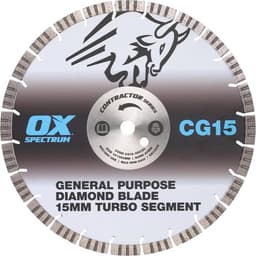
For a cured concrete kerb or slab, start with a blade whose stated application includes the relevant concrete. The 20 mm and 25.4 mm PRODIAMANT listings name concrete, reinforced concrete, concrete products, granite, kerbs, brick and masonry. They state 15 mm turbo segments, 3.5 mm thickness, wet and dry cutting and EN 13236. Select between them only after checking the saw. The OX Contractor CG15-350/20 names bricks, slabs, roof tiles and concrete paviours and states a 15 mm turbo segment plus EN 13236. Its captured fields do not state reinforced concrete, wet or dry use, asphalt or a reliable kerf. The OX Pro V10 names reinforced concrete and metal, but the title says 350 mm while included components says 300/20 mm. A precast concrete kerb is a concrete application, but the surrounding road may be asphalt. The best 350 mm diamond blade page gives the conditional concrete picks.

Asphalt and green concrete

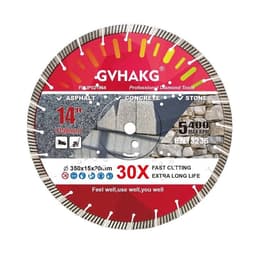
GVHAKG B0FHQF6ZJJ is the only retained amazon.co.uk listing that explicitly names asphalt. Its specification says 350 mm, a 20 mm bore, a 15 mm segmented rim, 3.2 mm thickness and 24 segments, with wet and dry cutting for concrete, asphalt, brick, block and stone. At the captured price of £50.82, it is the direct material match among these five when asphalt is part of the cut. Many reviews discuss 115 mm packs, so the 4.7-star score from 46 ratings is not size-specific evidence. The captured fields do not state undercutting protection, reinforced concrete or EN 13236. None of the retained listing summaries explicitly says green concrete. Do not treat the word concrete as covering every curing stage. HSE guidance for kerbs and paving calls for a diamond blade and water, and broader HSE guidance gives about 0.5 litres per minute for petrol-saw suppression. Follow the practical controls in the how to use a 350 mm diamond blade guide.

One recommendation, with a condition

If the job is entirely cured concrete, a concrete kerb, hard brick or masonry, choose a concrete-focused blade whose bore and speed match the saw. The relevant PRODIAMANT bore is the more completely specified choice. OX Contractor is the budget option for the materials it names. Use a listing that explicitly includes reinforced concrete when the cut will meet steel. If asphalt is in the cut, use a blade that names asphalt. GVHAKG is the only retained row that does. For repeated work across both materials, a documented combination blade may be a better trade choice. For an asphalt-over-concrete driveway, establish the layers before choosing. Do not change a blade beside a live or hot machine. The 350mm diamond blade buying guide covers bore, segment, kerf, speed and markings once you know the material family.

Common questions

Can one blade cut both concrete and asphalt?
Yes, if the manufacturer expressly designs and labels it for both. Purpose-made combination blades exist. Within this five-product comparison, GVHAKG names both concrete and asphalt; the other retained listings do not state asphalt, so they should not be treated as equivalent.
What is undercutting?
Undercutting is wear in the steel core beside or beneath the diamond segment. Abrasive material and slurry can erode that area until a segment loses support and breaks away. Water carries slurry but does not replace the correct bond or protective design.
Why did my concrete blade glaze?
The bond may be too hard for the concrete, or the operating method may not be exposing fresh diamond. A manufacturer may permit a few dressing cuts in soft abrasive block. If glazing returns, stop and select the correct bond rather than repeatedly dressing it.
Is a kerb a concrete or asphalt job?
The kerb itself is usually a concrete application, but the complete cut may enter surrounding asphalt. Choose for every material the blade will cross. A concrete-only disc is not automatically an asphalt blade because the two meet at the road edge.
Which listing in this comparison names asphalt?
GVHAKG B0FHQF6ZJJ names asphalt together with concrete, brick, block and stone and states wet and dry cutting. Its reviews are mixed across sizes, and the captured listing does not state undercutting protection, so keep those limits in view.
Does water stop undercutting?
No. Water supports dust control, cooling and removal of debris, but abrasive slurry can still wear the core. Correct material application, controlled cutting and regular inspection remain necessary even when the water flow is effective.

Related pages

Sources

Public UK sources for silica, training, marking and saw size. amazon.co.uk listings for B0171VPD7A, B0171VPDSO, B0D8BQZKZQ, B0H4ZJ3T28 and B0FHQF6ZJJ were checked in October 2026. Prices move.

  1. HSE CIS54, dust from cutting and drilling (retrieved 17 October 2026)
  2. HSE INDG461, respirable crystalline silica (retrieved 17 October 2026)
  3. HSE, cutting paving blocks, kerbs and flags (retrieved 17 October 2026)
  4. HSE CN6, cutting paving and kerbs (retrieved 17 October 2026)
  5. PUWER 1998 regulation 9, training (retrieved 17 October 2026)
  6. FEPA safety leaflet, diamond saws on petrol cut-off machines (retrieved 17 October 2026)
  7. OSA, marking to EN 13236 (retrieved 17 October 2026)
  8. Stihl UK, TS 410 petrol cut-off machine (retrieved 17 October 2026)