Hot tub holiday let legionella: the host duties
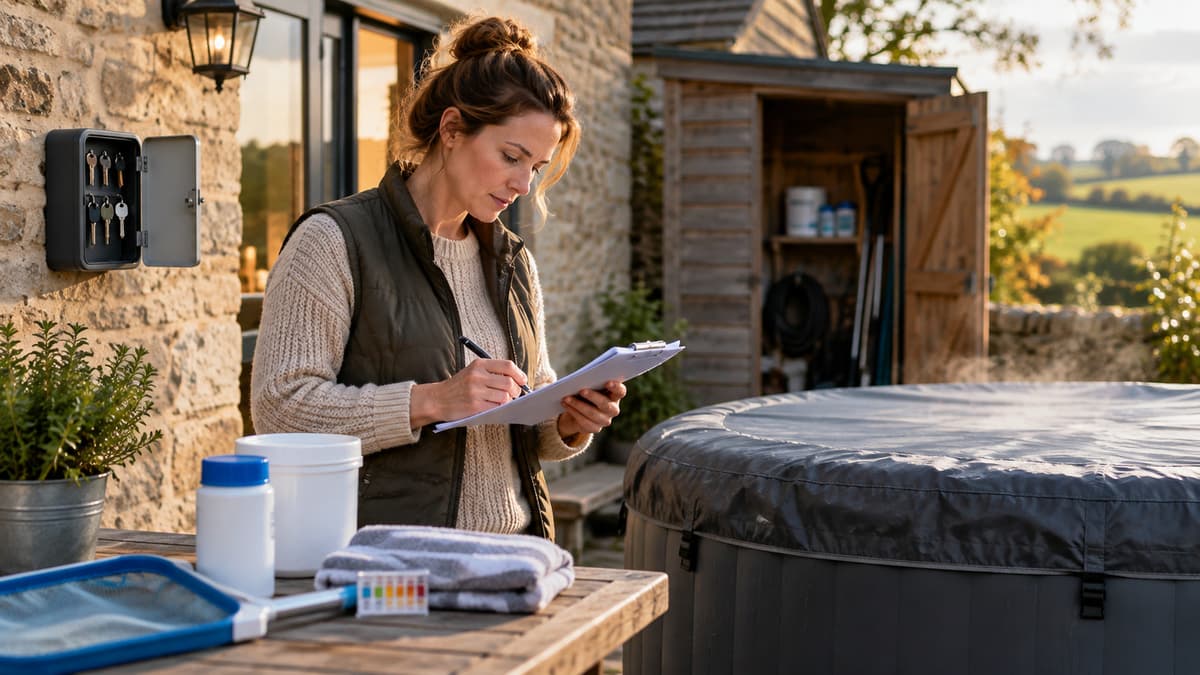
A holiday let hot tub is a business system under HSG282. See water-change timing, continuous dosing, records, and why a home inflatable is not enough.
On this page
- 1.In short
- 2.A private garden and a let are different duties
- 3.What HSG282 says about a domestic-type spa
- 4.Why councils reject a plain inflatable for commercial use
- 5.Water changes, dosing, and the record
- 6.One tub for several cottages is the commercial case
- 7.When a competent person replaces a shopping link

The key safe is full, the inflatable is still warm from the last guests, and the changeover note says the tablets live in the shed. Hot tub holiday let legionella is the reason that note is not a control scheme. Once the tub is part of a let, HSE publication HSG282 and the HSE spa-pool pages treat a domestic-type spa as a business system, including at a holiday park or in a hotel room. A cartridge filter does not finish that job. If you never let the house, this duty is not yours. A purchase through our links can earn a commission at no extra cost to you.
In short
A holiday let puts a domestic spa under HSG282. Change the water after each rental or each week, whichever is shorter, and disinfect continuously. Local notes reject a plain inflatable with a floater for commercial use. A private garden, with no let, sits outside this duty.
A private garden and a let are different duties
The same inflatable can sit under two duties. On a private Saturday it is a household soak. On a Monday changeover, if the patio belongs to a cottage you let, that shell is part of the business you offer guests. HSG282 is the guidance the HSE spa-pool pages send a business to. The bathers are a booking.
A homeowner who does not let the house is outside this duty. Keep these rules off a buying decision for your own garden. The inflatable hot tub comparison is a shopping table for a private soak. A star rating, a cover, and a filter in the box are listing facts. They do not show that HSG282 has been met.
The boundary follows the let. Drain the family water before a paying week and that paid week is still the business system. A tub only your household uses, in a house you do not advertise, stays on the home side. Write the pattern down, because environmental health staff ask how the property is used.
What HSG282 says about a domestic-type spa
An HSG282 domestic spa is a small group, with the water changed after each rental or each week, whichever is shorter. Unrelated bathers moving through the same water are a different system. A listing photo of eight people around a two-person ring has already left the domestic-type category.
You are the responsible person when you control the let, unless a written management contract puts water treatment on an agent. A cleaner on changeover morning does not inherit the duty by lifting the cover. Name the person who can order a refill, a closure, and a call for help, and name a deputy for days you are away.
Write the risk assessment so a stand-in can follow it. Include where the tub sits, who can open it, whether one cottage uses it or several, the guest cap, how disinfection runs, when the water is dumped, the RCD on the supply, and what you do if a guest reports illness after a soak. Review it when the tub, the dose method, or the way you let changes. Keep the disinfectant capped, labelled, and off the welcome tray, with the safety information that came with it, and tell guests to leave it alone. A shared tub or a party rota is already the commercial-spa case.
Why councils reject a plain inflatable for commercial use
Local notes are blunt about inflatable hot tub rental kit sold for gardens. East Renfrewshire's holiday-let material says an inflatable is not acceptable for commercial use. Where a single-let domestic-type tub is still in view, that material expects continuous disinfection and an RCD on the supply. Devon and Somerset Trading Standards, writing for accommodation providers, say cheap inflatables are not suitable for commercial use, and they treat an inline feeder as a minimum.
A floater is chlorine in a plastic cage. Continuous dosing means disinfectant is metered while the water circulates. A cage stuck under a seat, or a pump left off between guests, breaks that path. Feeders run empty, so you test and write the result down.
Our comparison's top pick, the Lay-Z-Spa Aruba AirJet, is a 2-3 person home listing at about £394.74, with 4.4 from 30 amazon.co.uk ratings, a cover, a type VI filter and a dispenser in the box. Those are listing facts. A filter on a domestic inflatable does not meet HSG282 by itself. East Renfrewshire and Devon and Somerset are two published notes, not every UK council. Ask that council before the tub goes into the listing title, and take it off the advert if they refuse the category.
Water changes, dosing, and the record
Holiday let hot tub rules on the water are a calendar. For a domestic-type spa, change it after each rental or each week, whichever is shorter. A Friday-to-Monday booking still ends with a drain and refill on Monday. A stay past seven days needs a change during the stay, not only at checkout. Topping up restores the level and leaves the old water in service. If you cannot refill before the next keys go out, keep the tub closed and say so in the arrival message.
Work through the changeover in this order:
- Drain and refill when the booking ends, or at seven days if the stay runs longer.
- Put continuous disinfection back into service before the next guests receive the key.
- Test the water, then write the date, the booking, the result, the dose, and your name.
- Fasten the cover so an empty cottage does not leave an open paddling pool.
Keep the book in the plant cupboard, and write an empty feeder on the same line as the test. Household bands are in the hot tub chlorine and pH article. This page is the interval, the continuous dose, and the written line. Out-of-date strips mean the cover stays on. If the reading will not hold, leave the tub shut until a competent person has seen it.
One tub for several cottages is the commercial case
Shared tubs between units are the commercial-spa case. Domestic-type use is one small group, then new water. Slots between three cottages are unrelated bathers in a queue, and that rota is inflatable hot tub commercial use. A shared gate code does not make those households one family. Name the cottages, the slot rules, the bather cap, and who may dose on the first page of the assessment.
You then need disinfection you can explain, records that match the real load, and a competent person who works on spa pools. A second garden inflatable is still commercial use if guests rotate through it. Say shared in the advert. Twelve people through a 2-3 person shell is outside the small-group pattern, so decline the booking or close the tub.
When a competent person replaces a shopping link
Call a competent person when the tub is shared, when the load is a party, when you cannot explain the dose and the water change in a few plain sentences, or when a guest reports illness that may relate to the water. They should see the patio, the supply, the dose method, and the booking pattern, then tell you whether a domestic-type interval fits. A neighbour who once owned a tub, or the seller of a tablet brand, is the wrong call for that judgement.
Shopping pages answer a home question. The buying guide and the setup guide describe garden products and a home fill. An RCD is part of what East Renfrewshire expects where a domestic-type tub is still allowed. The outdoor socket for a hot tub article covers plugs and distance from water. An improvised supply needs an electrician. Write down who visited and what they told you to change, and remove the inflatable from the listing before the next check-in if that is the advice.
Clear water is not a laboratory result. HSG282 exists because spa pools have made people ill when control slipped, and this page does not diagnose illness. Your record, the water change, and a tub you will close are the tools you can use. If the category is unclear, keep guests out until a competent person has answered you in writing.
Common questions
Can I put an inflatable hot tub in a holiday let?
What is HSG282?
How often must the water be changed?
Is a chlorine floater enough?
Do I need a risk assessment?
What if several cottages share one tub?
Who is the responsible person?
Does this apply to my own garden at home?

Peter F. is the editor for DIY & tools at productscompared.co.uk. Comparisons in this category are checked against amazon.co.uk listings, review evidence and public UK sources.
Related articles
Hot tub chlorine and pH: the bands to test
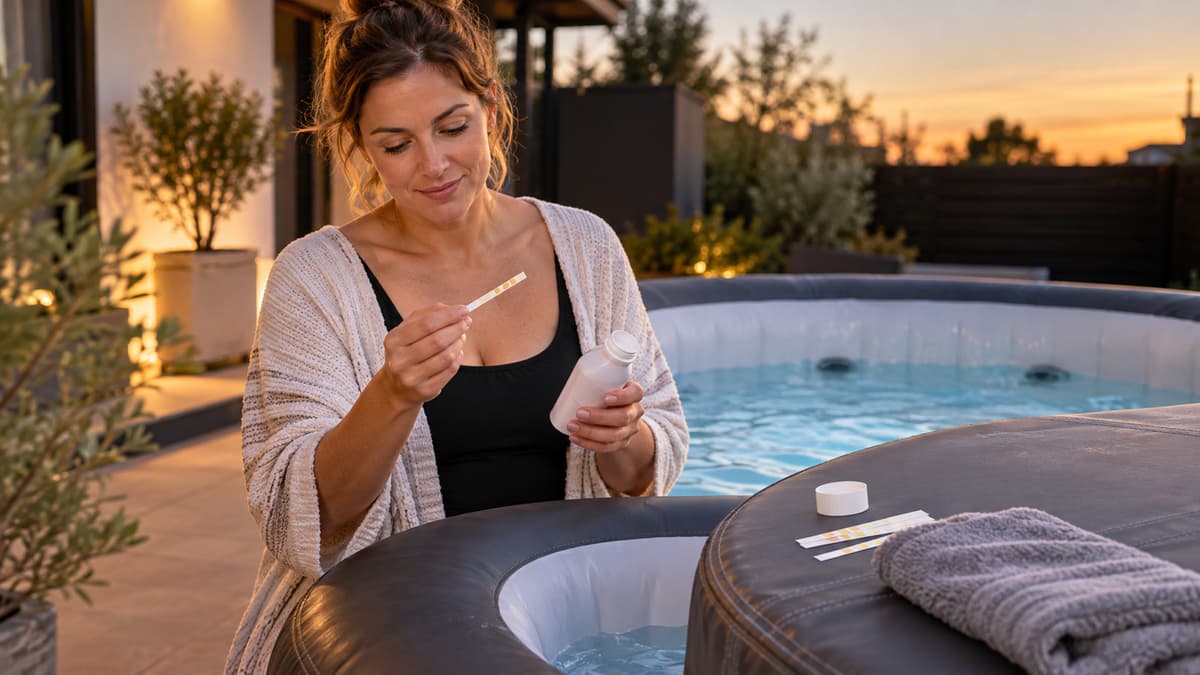
Household chlorine and pH bands, and the written record a holiday let keeps.

Outdoor socket for a hot tub
An RCD on the supply, and why an extension lead is a weak feed for a patio tub.
How often to change hot tub water
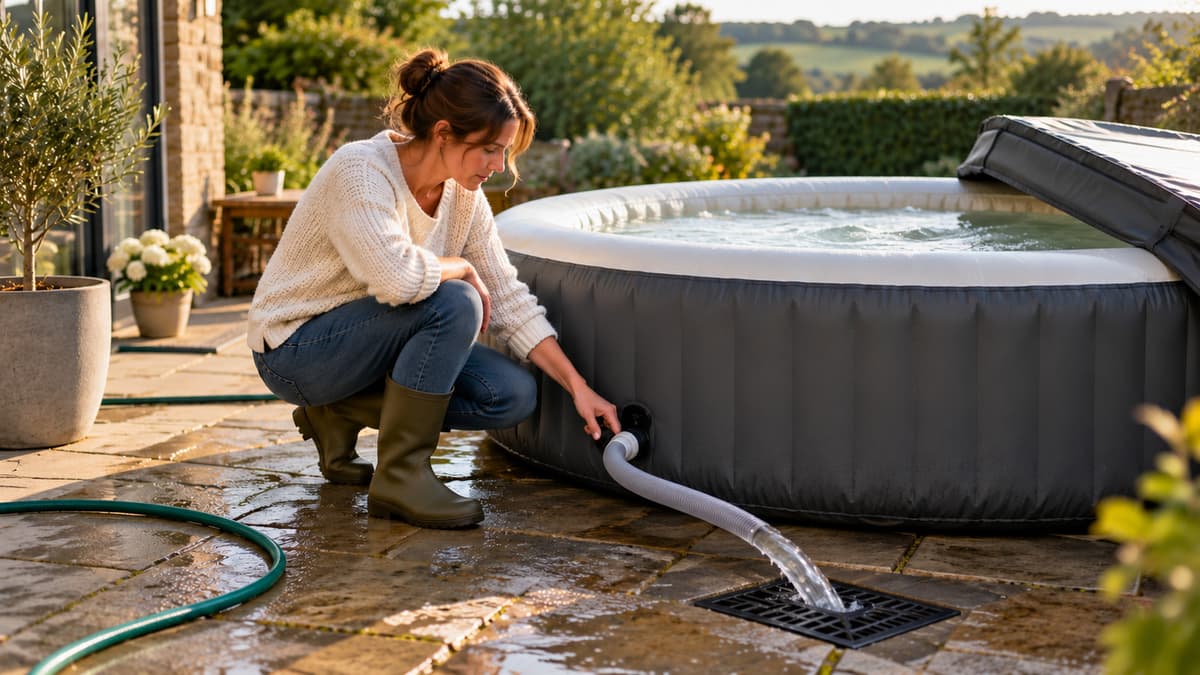
The private gap between water changes, and the shorter gap a holiday let keeps.