Independent comparisons. We may earn from shop links. More info

How to anchor a beach tent

Updated: 22.10.2026

You have the shelter out of the bag, a corner is already lifting, and the pegs look shorter than the ones you use in the garden. How to anchor a beach tent on sand is ballast, then direction, then the decision to take it down. A light frame is a sail until sand is in the pockets or on the skirt. The parts below are the ones named on the [beach shelter comparison](/hub/sun-shades/beach-shelter). Products Compared editorial team, 21 October 2026. The order follows Outwell’s UK pitch notes and these amazon.co.uk listings. It is not a pull-out test. A qualifying Amazon purchase can earn us a commission at no extra cost to you.

You have the shelter out of the bag, a corner is already lifting, and the pegs look shorter than the ones you use in the garden.

Our top picks

On this page

What actually holds it

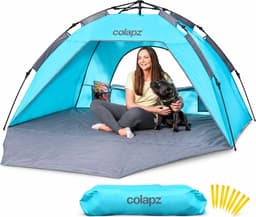
Sand weight holds a beach shelter. A short steel peg is a locating pin, and on dry sand it pulls. UK reviews of the Yello dome say the supplied pegs were too small for the beach, and a review of the small Glymnis says longer pegs may be needed. An empty pocket plus a loose peg is the pitch that becomes airborne. Use the parts your listing names. Colapz has fillable sand pockets and one guyline. The small Glymnis lists two sandbags, four windproof ropes, and ten steel pegs. Amazon Basics lists four guylines. Reviews mention corner pockets and damp sand, which the spec block does not call sandbags, so you fill what arrives. Yello lists pegs and grappler feet. WOOTMIN lists sandbags and ropes that are pre-attached. Shakespeare reviews describe skirts under sand or shingle. Which shape you bought is on the beach shelter buying guide. A guy rope works when the other end is heavier than the gust. Tie it to a filled bag, or to a peg in damp sand, and keep the line low. Neso publishes bag weights for its own tents. Those figures are not a spec for Glymnis or Colapz.

A pitch order you can follow

Practise the pitch and the fold at home. Outwell’s Compton notes say the same. On sand you have less time, because the wind does not wait. Small Glymnis reviews say the pitch is a few minutes once practised, and that the round bag is the step people abandon. Face the opening away from the wind. Outwell’s beach notes put the opening off the breeze, then fill the corner pockets, then add sand pegs. A door into the wind inflates the shelter. On the Shakespeare, the same idea is the skirt. Reviewers, including on Chesil, call it stable when sand or shingle is on the skirts. The fishing stop is on beach shelter for sea fishing. Fill pockets or sandbags before you trust the pegs. Scoop damp sand from under the dry surface. One Amazon Basics reviewer said damp sand in the bags held that shelter in a moderate beach wind. Bank extra sand on the windward edge, which is what Colapz reviewers describe. Then add pegs and ropes. If a peg will not bite in stones, add weight. Shake the sand out before you pack. Thanet’s code says structures may need consent, so a better peg does not fix a pitch the beach does not allow.
Colapz Colapz pop-up shelter

Testsieger

Colapz Colapz pop-up shelter
9.2/10about £62.19

When to stop

Take it down when a corner lifts and you are holding it by hand. That stop arrives before a dramatic failure. A Yello review describes a collapse in strong wind because the poles did not lock. If a lock will not seat, fold it. A CUUPO review describes the canopy dropping because the cloth stretched. More tension will not put that ridge back. Drop it, empty it, and wait. The RNLI orange windsock is a warning for inflatables, not a tent bylaw. If the sock is flying, a 1.15 kg pop-up is the wrong thing to leave while you swim. Wind alone, with no need for a roof, is the split on beach shelter vs windbreak. Keep any stove outside a zipped shelter. These listings are day shade, not a bothy. You do need the council for an event structure or an overnight camp.

Pack while you still have two hands

Pack while you still have two free hands. Yello reviewers called the bag too small. The small Glymnis pack-down fails for some buyers even after a video, and one needed two people. That is why the garden practice matters, and why you stop before the frame is a sail.

Common questions

Do you fill the sand pockets before or after the pegs?
Fill the pockets or sandbags first, then peg. Outwell’s order is the opening away from the wind, sand in the corners, then sand pegs. A peg in dry sand with an empty pocket is the pitch that lifts. Damp sand from under the surface holds better than a scoop of the loose top. Close the pocket before you tension a rope onto it.
Which way should the opening face?
Away from the wind, or at an angle off it, so the breeze does not inflate the door. Outwell states that for beach tents. If the only flat patch forces the door into the wind, move. A shelter that fills like a bag will pull pegs that would have held a quieter pitch. On a fishing shelter, put weight on the windward skirt.
Are the pegs in the bag enough on dry sand?
Often they are not. Yello reviews call the supplied pegs too small for the beach. A small Glymnis review says longer pegs may be needed. That listing still includes two sandbags and four ropes beside the ten pegs. Use the pegs with the ballast. Do not use them instead of it.
What should you do when the shelter starts to lift?
Get people out from under the frame and take it down. Holding a lifting corner is the moment the pitch has failed. Unlocked Yello poles and a stretched CUUPO ridge are examples from these reviews, and more pegs did not fix either. Empty the sand once the cloth is on the ground and under control.
Why practise the fold at home?
The first pack-down is the step that fails. Small Glymnis buyers describe giving up on the round bag, and one needed two people. Yello’s bag is called too small. A garden practice also shows the pole order on the Amazon Basics shelter, which one older couple found slow on the first beach pitch. You want that confusion on grass.

Related pages

Sources

Public UK sources and the amazon.co.uk listings compared on this page. Listings captured 19 October 2026. Updated 22.10.2026.

  1. NHS: sunscreen and sun safety (retrieved 22.10.2026)
  2. Cancer Research UK: sun safety (retrieved 22.10.2026)
  3. Met Office: sunburn and UV (retrieved 22.10.2026)
  4. GOV.UK: General Product Safety Regulations 2005 (retrieved 22.10.2026)
  5. Thanet: code of conduct for responsible beach use (retrieved 22.10.2026)
  6. RNLI: on the beach safety advice (retrieved 22.10.2026)
  7. amazon.co.uk: Beach & Sun Shelters best sellers (retrieved 22.10.2026)
  8. ASA: substantiation (retrieved 22.10.2026)