Independent comparisons. We may earn from shop links. More info

How to look after a rattan sun lounger

Updated: October 2026

You have a rattan sun lounger on the patio, or you are about to leave one there, and the bullet says weather-resistant. That sentence does not tell you where the cushion sleeps, or what a steel hinge does in a wet UK winter. This is how to look after a rattan sun lounger after you have already chosen the shape: wash the weave, dry it, take the pad indoors, and stop if a weld has failed. The listings themselves are on the [rattan sun lounger comparison](/hub/sun-loungers/sun-lounger-rattan). The Products Compared editorial team used those amazon.co.uk files and public UK care guides, and did not weather-test a lounger. A qualifying purchase can earn us a commission at no extra cost to you.

You have a rattan sun lounger on the patio, or you are about to leave one there, and the bullet says weather-resistant.

Our top picks

On this page

What can stay outside

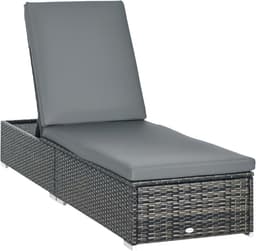
A polyethylene weave is the part UK guides leave outside. BBC Gardeners' World treats synthetic PE as the outdoor rattan and tells you to store steel components inside over winter. Natural rattan is the material they keep under cover. If your bullet says polyethylene or PE rattan, as the EVRE chaise and the Outsunny chaise do, the strands are the piece that can stay on the patio between showers. A moulded plastic Daytona is also a plastic body, not cane, and it still has a cushion that should not live in the rain. Weather-resistant is a feature claim on these listings, not a cited test. BS EN 581-2 does not test weathering or removable upholstery. No kept file shows a lifespan in years, so do not plan on a number of seasons the page never printed. A UK review of the Outsunny says the pivot hinges failed in the first winter. That is one report, not a failure rate, and it is the reason a steel joint is not the same as the weave. The EVRE cushion is called shower-proof in a bullet only. Shower-proof is not leave the pad out. If the bed is the Bali daybed, the canopy is shade, not a rain cover. The included list has no rain cover, and a UK review still recommends buying one. The care rule for the cushions is the same as on a chaise.

How to wash the weave

Take the cushions off before you wet the frame. Brush or vacuum leaves out of the strands so you are not grinding grit into the plastic. Wash with warm water and a small amount of washing-up liquid, using a soft brush along the weave, then rinse with a garden hose. Ideal Home’s garden-furniture steps are the same shape: cushions off, debris out, soapy water, no bleach, no pressure washer, then air dry. Lazy Susan says a hose is acceptable and a pressure washer is not. Harbour Lifestyle, writing about their own PE-on-aluminium sets, also says not to use a pressure washer at close range. Do not copy their guarantee onto an Outsunny or an EVRE. A gentle setting on a pressure washer is still the wrong tool. Close-range water lifts strands and drives dirt into the frame joints. If the bed is a moulded Daytona rather than a weave, you can wipe the shell, and you still should not blast the cushion loops or the recline slots. Let the frame dry in the air before you put anything back. Covering a wet weave traps the water you just added. Which material you bought is on PE rattan or moulded rattan-look.

Cushions and covers

The cushion is a different material from the frame, and it comes indoors. Dry it through before you store it. Harbour’s cushion guide and Laura James both say a shower-proof cover is not an invitation to leave the pad out, and that a damp pad grows mould in storage. Do not fold a wet cushion into a bag for the week. Which? says to bring cushions in when it is cold or wet, and that ties are what stop a pad walking off the bed. EVRE’s 7 cm cushion is in three sections with ties. Outsunny’s is 5 cm with a removable, washable cover. Hand-wash is the care line on the EVRE listing. A machine cycle is not stated, so do not assume the cover can take one. A winter furniture cover is for the empty frame, and it should breathe. Harbour says cushions never go under the winter cover, and that bolts can rust even on aluminium. A sealed cover over a damp pad is how you store mould, not how you store a lounger. The graphite Daytona’s three-year guarantee excludes cushions. A UK review says the grey pad stained after a light shower and the holding loop was broken. If you buy a cover for the Bali set, it is an extra, not a part in the box.

Hinges and when to stop

In spring, before you lie on the bed, move the back through every position and look at the pivot. You are checking for a cracked weld, a seized pin, and rust flaking at the bolt, not for a new colour on the weave. BBC Gardeners' World’s winter advice is to store steel inside. If your frame is the powdered or galvanised steel named on the EVRE and Outsunny bullets, a cover on the patio is a compromise, not that storage advice. The Grand patio’s frame lines do not even agree, so you cannot maintain the aluminium until the page names one metal. The conflicts to read before you pay are on the rattan sun lounger buying guide. Stop using the lounger if a hinge weld has failed. The Outsunny review that describes a first-winter failure is the stop point, not a home repair with a drill. A new hole in a failed pivot is how a bed collapses under you. A broken strap on the grey Daytona, in one UK review, failed on first sitting. That is a day-one fault, and the Consumer Rights Act 2015 gives 30 days to reject goods that are not of satisfactory quality. Cleaning will not put a strap or a weld back.

Common questions

Can the weave stay outside?
A polyethylene weave is the part these UK guides leave on the patio. Natural rattan is not. The cushion and, on BBC Gardeners' World’s advice, a steel frame in winter are the parts that should come under cover or indoors. Weather-resistant on a listing is not a count of years, and no kept file here shows a weathering test.
How do I wash it without damaging the strands?
Cushions come off first. Then warm water, a little washing-up liquid, and a soft brush, followed by a hose rinse and a full air dry. That is the sequence in Ideal Home’s cleaning steps and in the synthetic-rattan guides cited here. Do not use bleach. Do not scrub a moulded Daytona’s cushion loops as if they were a weave.
Is a pressure washer acceptable on a gentle setting?
No. Ideal Home, Lazy Susan, and Harbour Lifestyle all reject a pressure washer on synthetic rattan, including at close range. A gentle setting still forces water into the joints. A garden hose is the rinse these guides allow. If the weave is already lifting, stop and let it dry rather than blasting it flat.
Where do the cushions go overnight and in winter?
Indoors, and dry. A shower-proof line, including the one on the EVRE bullet, is not permission to leave the pad in the rain. Store the cushion off the bed in winter, not inside a sealed cover with the frame. The graphite Daytona guarantee excludes cushions, and one UK review saw staining after a light shower.
Will a furniture cover protect the cushion as well?
A breathable cover is for the frame after the cushion has been removed. Harbour’s care guide says the cushions never go under the winter cover, because damp storage grows mould in the pad. The Bali listing does not include a rain cover. A canopy is shade. If you want a cover, you buy it separately, and you still take the pads in.
What should I check on a steel hinge in spring?
Move every recline position and look for a cracked weld, a seized pin, and rust at the bolt before anyone lies down. The Outsunny UK review of hinges failing in the first winter is one report, not a rate. If the weld has opened, stop. That is no longer a wash and a cover.
When is a broken hinge no longer a cleaning job?
When the pivot has failed, or when a strap has broken under you. Do not drill a repair into a failed weld. A fault on arrival sits inside the 30-day right to reject under the Consumer Rights Act 2015. If the seller refuses, Citizens Advice is the route. Washing the weave does not restore a hinge.

Related pages

Sources

Sources from the research digest, last checked on 16 October 2026.

  1. BSI, BS EN 581-2:2015 outdoor seating (retrieved 16 October 2026)
  2. Catas on EN 581-2:2026 (retrieved 16 October 2026)
  3. GOV.UK, General Product Safety Regulations 2005 (retrieved 16 October 2026)
  4. Furniture and Furnishings (Fire) (Safety) Regulations 1988, regulation 3 (retrieved 16 October 2026)
  5. GOV.UK, 2025 fire-regulations amendment (retrieved 16 October 2026)
  6. Consumer Rights Act 2015, section 22 (retrieved 16 October 2026)
  7. BBC Gardeners' World rattan guide (retrieved 16 October 2026)
  8. Harbour Lifestyle rattan care guide (retrieved 16 October 2026)