Sauna pregnancy NHS advice: what you need to know
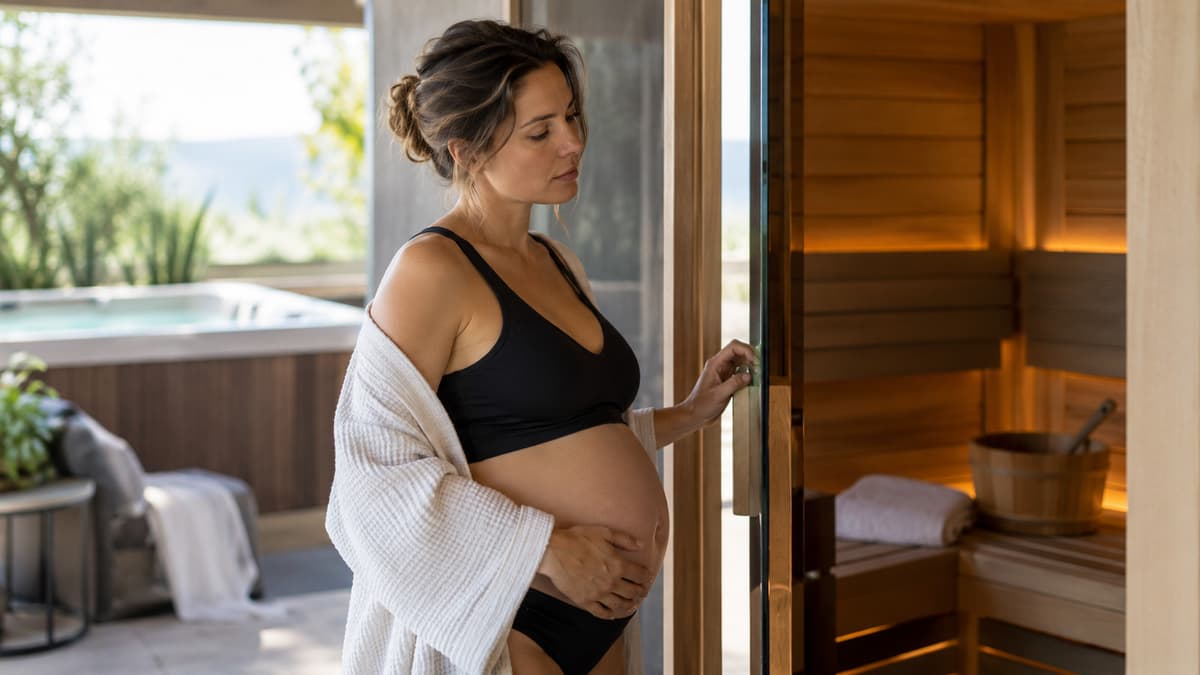
Understand NHS sauna pregnancy advice, why the first 12 weeks matter, and when to ask your midwife or GP before a sauna, steam room or hot tub session.
On this page

You may be looking at a booked spa day, a home cabin you used before pregnancy, or an invitation to sit in a hot tub. The useful answer to sauna pregnancy NHS searches is cautious: an NHS-hosted guidance page says little is known about the safety of saunas, jacuzzis, hot tubs and steam rooms during pregnancy, and you may choose to avoid them because of overheating, dehydration and fainting, particularly in the first 12 weeks. It does not supply a safe session length or give infrared heat a special exemption.
In short
The guidance is not a legal ban, but it does not clear any sauna type as safe during pregnancy. Your midwife, GP or maternity team is the right source of individual advice. A timer, a lower thermostat or a cabin manufacturer's instructions cannot account for your pregnancy and health.
What the NHS page says
The NHS-hosted pregnancy guidance from Collingwood Surgery says little is known about the safety of saunas, jacuzzis, hot tubs and steam rooms during pregnancy. Overheating, dehydration and fainting are reasons you may choose to avoid them, with particular emphasis on the first 12 weeks. It does not say that heat sessions become safe from week 13.
Consider avoiding is not a legal prohibition, and it is not permission to choose an arbitrary temperature and time. The page offers no pregnancy-specific ten-minute, fifteen-minute or twenty-minute rule, so an adult limit on a spa sign should not be turned into NHS pregnancy advice.
The same page contrasts hydrotherapy pools, which should not be above 35°C, with hot tubs that can reach about 40°C. That is not a universal safe cut-off. Water, steam and dry air transfer heat differently, and your response can change with hydration, illness, medicines and stage of pregnancy. The infrared cabin guide explains what these cabins are. It is not medical clearance to use one. A qualifying purchase can earn a commission at no extra cost to you.
Why infrared is not given a free pass
An infrared cabin may run at a lower air temperature than a traditional sauna and feel gentler. That does not make it safe during pregnancy. Infrared heaters still deliver heat to your body, and the NHS-hosted page does not publish a pregnancy protocol for them.
Claims such as lower temperature, deep heat or comfortable warmth describe marketing. They do not measure your core temperature or how long you stay inside. A display showing 45°C or 50°C is not a reading of your body, and two people in the same cabin may respond differently.
Sweating is not a reliable safety gauge. You can become dehydrated while sweating, and mild discomfort does not prove that your core temperature is unchanged. Anxiety after a brief exposure does not prove that harm occurred. The supplied UK guidance does not declare infrared sauna use safe in pregnancy and does not give a safe number of minutes. If you own a cabin, ask what your maternity clinician advises, not how to make a session fit.
Heat, fainting and the first 12 weeks
The first 12 weeks are highlighted because of overheating, dehydration and fainting. The page notes a possible risk of heat causing problems in this early period, and research on saunas in pregnancy is limited. That supports caution. It does not mean one exposure will cause harm.
Pregnancy can already make some people light-headed, and heat may add to that. It widens blood vessels, sweating removes fluid, and standing in a small cabin can bring dizziness on quickly. A bench, floor or glass door makes a faint more hazardous because a fall can injure you.
Leave immediately if you feel dizzy, faint, sick, weak, confused or unusually breathless, if a headache starts, or if you cannot cool down. Sit or lie somewhere safe, loosen clothing, cool down gradually and drink water if you can. Do not finish the session, and do not stand suddenly if you feel unsteady.
These are stop signals, not a home test. Collapse, persistent confusion, chest pain or breathing difficulty need urgent help. Bleeding, significant pain, reduced foetal movement when you would expect movement, or any pregnancy concern should go to your maternity service. Use NHS 111 or the emergency services according to urgency.
Saunas, steam rooms and hot tubs
A traditional sauna uses hot, comparatively dry air. A steam room adds very high humidity. An infrared cabin heats you more directly, and a hot tub surrounds much of your body with hot water. Each can make it harder to shed excess heat. Humidity weakens the cooling from sweat. Water limits heat loss from skin below the surface.
Changing format is not a dependable workaround. Comfort is not a core-temperature measurement, and a lower infrared setting is not safe merely because it sits below a traditional sauna thermometer. A leisure spa pool is not clinical hydrotherapy. Its temperature and house rules still do not decide whether you should enter. Substituting one product for another in pregnancy is a question for your clinician, not sales copy.
If you have already used one
If you have already sat in a sauna, steam room or hot tub, leave and cool down rather than judging the risk from anecdotes. Drink water, rest, and note the temperature if you know it, how long you stayed, whether you were in the water, and any symptoms. Those details help a clinician more than a brand name.
Do not assume one exposure means harm. The guidance describes limited evidence and reasons for caution. It does not say every exposure causes harm. The lack of immediate symptoms is not proof that another session is safe.
Contact your midwife, GP or maternity unit if you are worried, after a long exposure, if you felt very hot, faint or dehydrated, or if you have a health condition or a pregnancy complication. Ongoing vomiting, confusion, collapse, severe weakness, chest pain, breathing difficulty, bleeding, significant abdominal pain or another acute concern need urgent advice. NHS 111 can direct you when it is urgent but not an emergency. Call 999 for a medical emergency.
Avoid an ice plunge or other aggressive cooling unless a clinician tells you to. A cooler place, fewer layers and fluids, if you are alert and able to drink, are the first steps while you arrange advice.
Studio rules are not medical advice
A studio may list pregnancy as a contraindication, refuse entry, require medical approval or set a trimester policy. Follow those rules. They are the venue's policy, not a personal assessment. A disclaimer does not make heat safe, and being allowed in does not mean the NHS recommends it.
A manual can state the operating range, ventilation, electrical warnings and the controller's maximum session. It cannot weigh blood pressure, previous fainting, fever, medicines, a multiple pregnancy or complications. Only a clinician can use that information in advice to you.
A personal account of sauna use in pregnancy does not establish safety or predict your outcome. Some US wellness articles state a twenty-minute allowance. The UK guidance considered here does not, so calling that number NHS advice would be inaccurate. This article sets out the caution in the supplied NHS-hosted guidance and supporting UK heat-safety material. There was no clinical or laboratory test. It cannot diagnose overheating or replace advice based on your history.
Who to speak to
Your midwife is usually the first contact for a routine question. Your GP can help when a condition, a medicine or current symptoms are involved. Maternity assessment covers pregnancy-specific concerns. NHS 111 can direct you if you are unsure who to call. An emergency needs 999.
Say how many weeks pregnant you are, whether the session is still ahead or already happened, the type of heat, approximate temperature and duration, and whether you felt dizzy, sick, faint or unable to cool down. Mention conditions and medicines. Ask whether to avoid the facility, which symptoms need assessment, and who to call out of hours.
If you are advised to avoid the heat, switching to infrared or lowering the setting is not a substitute unless the clinician says so. Follow that advice. A home cabin can wait. A later comparison should cover installation and the UK electrical supply, not a health promise. The NHS-hosted page does not define a safe sauna dose in pregnancy.
Common questions
Does the NHS ban saunas during pregnancy?
Is an infrared sauna safe during pregnancy?
Why are the first 12 weeks mentioned?
Is a hot tub at 40°C safe in pregnancy?
What should I do if I already used a sauna while pregnant?
Is fainting the only concern?
Who should I ask about sauna use in pregnancy?

Peter F. is the editor for DIY & tools at productscompared.co.uk. Comparisons in this category are checked against amazon.co.uk listings, review evidence and public UK sources.
Related articles
How often to use a home sauna
Why there is no single weekly schedule that suits every sauna user.

When to leave a sauna session
Recognise dizziness and other warning signs that mean a heat session should end.

Steam room or infrared heat
Compare humid steam with dry infrared heat before choosing a home product.