Independent comparisons. We may earn from shop links. More info

Electric nailer for skirting boards: when it works

Updated: October 2026

You have cut the skirting, the socket is close and you want a clean fixing with little filling afterwards. An electric nailer for skirting boards can pin light MDF or softwood trim into suitable timber, especially when adhesive provides the main bond. It cannot fire an 18-gauge brad into brick as if it were a masonry fixing, and none of the seven mains tools compared here accepts the 16-gauge nails commonly used for stronger second-fix work. One listing explicitly names skirting; another explicitly rules out baseboard. Check the [main electric nailer comparison](/hub/staplers-and-nail-guns/electric-nailer) before treating maximum brad length as permission for the job.

You have cut the skirting, the socket is close and you want a clean fixing with little filling afterwards.

Our top picks

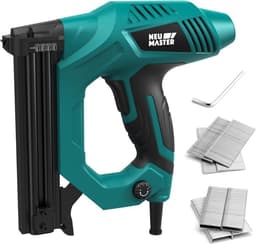
NEU MASTER NEU MASTER PLD6043

Best overall

NEU MASTER NEU MASTER PLD6043
9.0/10about £42.19
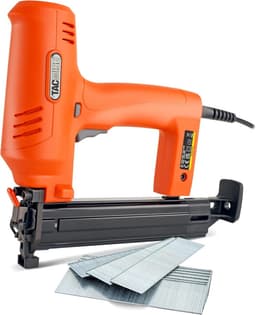
Tacwise Tacwise 181ELS

Rank 2

Tacwise Tacwise 181ELS
8.4/10about £79.95
Tacwise Tacwise 400ELS

Alternative

Tacwise Tacwise 400ELS
7.2/10about £74.94
On this page

Decide what will hold the board

The fixing method starts with the wall behind the skirting. On a timber stud wall, a suitable nail can pass through the board and plasterboard into the stud. On masonry, a light electric brad nailer is not designed to drive into brick or concrete. Use plugs and screws or another approved method when the substrate must carry the fixing. Adhesive often supplies the continuous bond on a reasonably flat wall, with small pins holding the board while it cures. The adhesive must suit both surfaces, and the board must make consistent contact. A bowed wall, heavy board or loose substrate needs a more robust plan than more fine brads. Check for hidden pipes and cables before you drill, screw or nail. If you cannot establish a safe fixing line, stop and use a competent tradesperson.

Which listings allow skirting work

The Tacwise 181ELS is the clearest candidate because its application list names skirting, moulding, panelling and furniture. It fires straight Type 180 18-gauge brads from 15–35 mm and includes 1,000 nails of 30 mm plus a case. That permission is not a promise that it will hold every board to every wall. The gun has 4.0 stars from 123 amazon.co.uk reviews, and feedback says longer nails may need firm pressure. One reviewer says firing depth is not adjustable, so test the brad in an offcut before finished skirting. The NEU MASTER PLD6043 reaches 32 mm, yet its listing says baseboard is not recommended. The PLD6013 also rules out moulding and quarter round. The Stanley TRE550 and Tacwise 140EL stop around 14–15 mm, so they stay with upholstery and sheeting. The angled Tacwise 400ELS reaches 40 mm, but the bullets do not name skirting, and the listing shows 3.4 stars from 94 reviews. An angled nose does not make it a masonry tool or a 16-gauge nailer. Use the electric nailer buying guide to compare codes and maker exclusions before you choose by reach.
NEU MASTER NEU MASTER PLD6043

Testsieger

NEU MASTER NEU MASTER PLD6043
9.0/10about £42.19

18-gauge versus 16-gauge for skirting

An 18-gauge brad is thinner than a 16-gauge finishing nail. It leaves a smaller hole and suits fine trim and light holding, but it has less resistance to pull-out. UK fixing guides commonly place 16-gauge nails in the skirting and architrave role, often longer than any gun in this set accepts. Gauge is a magazine specification, not a setting. You cannot put a 16-gauge nail into the 18-gauge Tacwise 181ELS or NEU MASTER tools. For light trim on a flat wall, adhesive plus a few 18-gauge pins into timber can be reasonable when the instructions allow it. For thick hardwood, heavy skirting, a bowed wall or a fixing without adhesive, leave this category for a 16-gauge second-fix nailer or plugs and screws.

Using the 181ELS on suitable light trim

Plan the line before you connect power. Locate the timber, check for services and choose a brad that passes through the board and still has purchase in the backing. Apply adhesive if that is part of the system, and support the board so it cannot slide. The Tacwise manual states a 25 mm minimum firing distance from a wall, which can limit a corner or return. Dry-position the unplugged tool so the nose sits square. If the body has to tilt, move the fixing rather than fire with incomplete nose contact. With eye protection on and the lead behind the tool, press the safety nose fully, then pull the trigger once. Do not defeat the contact safety. Test first and stop if nails sit proud. The how-to-use guide covers the firing sequence and a jam. The 181ELS manual identifies a 13 A UK plug and 220–240 V, while the listing describes an interchangeable UK and EU plug on a 2.4 m lead. Inspect the plug before use. If the lead will not reach safely, compare a cordless nailer.

Common questions

Can an electric nailer fix skirting directly to brick?
No light 18-gauge electric nailer in this set should be treated as a masonry fixing tool. For brick or concrete, use an appropriate method such as plugs and screws or a specified masonry fixing. Adhesive may provide the main bond on a suitable flat surface.
Which model here actually names skirting?
The Tacwise 181ELS application list names skirting and moulding. It takes straight Type 180 18-gauge brads from 15–35 mm. That makes it the clearest candidate, but suitability still depends on timber backing, board weight, nail length and the overall fixing method.
Why not choose the PLD6043 for its 32 mm brads?
Because its own listing says baseboard is not recommended. Maximum magazine length only shows what the tool accepts; it does not override the maker’s application exclusions. Select a gun whose instructions permit the job and still test the material before visible work.
Is 18-gauge strong enough for skirting?
It can pin light trim into suitable timber, particularly while adhesive cures, but it is finer than the 16-gauge nails commonly used for stronger second-fix work. Heavy boards, hardwood, bowed walls or fixing without adhesive may require 16-gauge nails, plugs and screws or another method.
How close can the 181ELS fire to a corner?
The Tacwise manual states a minimum firing distance from a wall of 25 mm. That can restrict the last fixing near a return or corner. Check the unplugged tool’s physical access before applying adhesive, and plan an alternative fixing where the nose cannot sit squarely.
Do I still need adhesive?
Often, yes. On a flat suitable wall, adhesive can provide the continuous bond while fine brads hold alignment during curing. Follow the adhesive and board manufacturers’ instructions. Pins alone may be inadequate for heavy skirting, uneven walls or substrates without sound timber purchase.

Related pages

Sources

Public UK sources for nail-gun safety, plugs, and consumer rights. Listing prices and specs are the amazon.co.uk pages for these seven ASINs. Checked 17 October 2026. Prices move.

  1. HSE, Nail guns (retrieved 17 October 2026)
  2. HSE, PUWER overview (retrieved 17 October 2026)
  3. Electrical Safety First, Nail guns (retrieved 17 October 2026)
  4. Electrical Safety First, Plugs and fuses (retrieved 17 October 2026)
  5. GOV.UK, Supply of Machinery (Safety) Regulations 2008 (retrieved 17 October 2026)
  6. GOV.UK, Electrical Equipment (Safety) Regulations 2016 (retrieved 17 October 2026)
  7. Consumer Rights Act 2015 (retrieved 17 October 2026)
  8. Screwfix, Nail gun buying guide (retrieved 17 October 2026)