Independent comparisons. We may earn from shop links. More info

Hardwearing vs fine grass seed

Updated: October 2026

The two titles sound like quality grades, as if fine turf were simply the better hardwearing bag. They are different lawns. Hardwearing vs fine grass seed is a ryegrass-type surface you will walk on, against a finer, slower lawn that will not take the same wear. A hardwearing title that never names the grasses fails the check. The [grass seed comparison](/hub/seeds-and-plants/grass-seed) still lists every price. We updated this contrast in October 2026. It is not a cultivar trial. A qualifying purchase through our links can earn a commission at no extra cost to you.

The two titles sound like quality grades, as if fine turf were simply the better hardwearing bag. They are different lawns.

Our top picks

On this page

Hardwearing means wear. Fine means a slower, less tough lawn

A hardwearing mix, in the terms used here, is ryegrass with fescues and browntop: faster, and expected to take regular cutting and family traffic. A fine mix is fescues and browntop, slower and less tough under feet. Where ryegrass is used, the RHS treats a sensible buy as a named turf or fine ryegrass, not a coarse agricultural type you cannot identify. That check only works when the bag names what is inside. A mix that lists ryegrass is a family lawn, not a fine ornamental one. A blend sold for wear, shade, and a fine leaf at once is a compromise, not this split. A true fine lawn in this contrast is fescue and bent, without ryegrass. A title is not a species list. The buying order is on how to choose grass seed.

The hardwearing bag does not name the mix. The fine bag names fescue

Lawns Direct ProGrass hardwearing 2 kg costs £13.99. The listing facts used here do not name perennial ryegrass, fescue, or bent, and there is no coverage figure. The sun line is full sun or partial sun. Germination is described as fast, with no day count. The rating is 4.2 from 185 reviews. Skip this bag when you need the species named. The lower shelf price is not a value win while the mix and the area are both missing. ProGrass fine turf 2 kg costs £17.59. The plant-type field identifies fescue, which is why it is the fine side of this pair. It does not state coverage or mix percentages, so you do not know whether browntop is present. The sun line includes partial shade. That does not make this a shade article. Skip the fine bag for a lawn that will be walked on. Both bags show ratings around 4.2, from 185 and 190 reviews, and the Lawns Direct files share review text. Do not rank 185 against 190 as separate trials.

A named ryegrass-and-fescue bag is still a family lawn

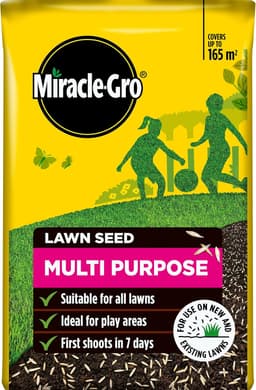
If you want a family bag that names the grasses, the check in this set is Miracle-Gro multi-purpose, not the unnamed hardwearing title. The 5 kg bag costs £28.94, names ryegrass and fescue, and states up to 165 m². The 500 g box costs £7.90 and states about 17 m². Both show 4.3 from 331 reviews. Both are family bags. Neither becomes a fine lawn because fescue appears beside ryegrass. The skip list, including when 5 kg is too much seed, is on best grass seed UK.

What is not a fine lawn or a named wear mix

GroundMaster 1.5 kg states an overseeding area and does not name the species. EverGreen Fast Grass has no coverage figure and a four-day claim. Neither is the fine choice. EquiGrass 5 kg is the paddock bag, clover-free and tetraploid-free on the listing, and it is not ornamental turf. Do not call a lawn mix safe for horses. For a garden you will walk most days, choose a hardwearing mix whose ryegrass you can read. For a slower lawn you will keep off, choose the fescue-typed bag and accept that it states no area. Neither style is the best grass seed in Britain, and neither file shows a certification label.

Common questions

What is the difference between a hardwearing mix and a fine lawn mix?
Hardwearing means ryegrass with fescues and browntop: faster, and expected to take family wear. Fine means fescues and browntop: slower, and less tough. A bag that names ryegrass stays on the family side even if fescue is listed too. A bag that names nothing leaves the coarse-ryegrass check undone.
Which one should a family garden use?
Use the hardwearing side if people will walk the lawn, and only when the grasses are named. Here that check is Miracle-Gro multi-purpose, in 5 kg or 500 g. ProGrass hardwearing 2 kg does not name the species, so the title alone fails the check. Use the fine side only if you accept less wear.
Does the ProGrass hardwearing bag name perennial ryegrass?
No. The £13.99 listing does not name the grasses. You cannot tell turf ryegrass from a coarse agricultural type, and there is no coverage figure. A fast germination word does not fill that gap.
The fine bag says fescue. What does it not tell me?
It is typed as fescue and does not state a coverage area, mix percentages, or browntop. The 4.2 from 190 reviews overlaps other Lawns Direct files, so it is not a clean fine-turf trial. Partial shade on the sun line does not make it a shade product.
Can I judge the two ProGrass bags by their 4.2-star scores?
No. Hardwearing shows 4.2 from 185 reviews and fine turf 4.2 from 190, and the files share review text. A five-review gap is not a trial of wear against fineness. Fine turf names fescue. Neither bag states coverage.
Why does a fine lawn need a different mowing habit?
A fine mix is slower and less tough. It is not the lawn you hard-mow under daily foot traffic. This page does not set a separate mowing height. The first cut, about 5–7.5 cm with about one third removed, is the same starting point. The difference is what the lawn will tolerate after that.
Is a bag that lists both ryegrass and fescue a fine lawn?
No. Ryegrass places it on the family side. Miracle-Gro multi-purpose names both and remains a family bag at either size. A fine lawn in this split is the fescue-typed bag. EquiGrass is the paddock listing, not fine turf.

Related pages

Sources

Public UK sources and the amazon.co.uk listings in this set, last checked on 17 October 2026.

  1. RHS, Starting a Lawn from Seed (retrieved 17 October 2026)
  2. RHS, Lawns in Shade (retrieved 17 October 2026)
  3. RHS, Repairing Lawns (retrieved 17 October 2026)
  4. RHS, Lawn Care for Drought (retrieved 17 October 2026)
  5. GOV.UK, certify seeds for marketing in England and Wales (retrieved 17 October 2026)
  6. Seed Marketing Regulations 2011 (retrieved 17 October 2026)
  7. Fodder Plant Seed (Scotland) Regulations 2005 (retrieved 17 October 2026)
  8. Rolawn, overseeding (retrieved 17 October 2026)
  9. Lawns Direct EquiGrass paddock mix (retrieved 17 October 2026)