Independent comparisons. We may earn from shop links. More info

Grass seed for shade: when a fast ryegrass mix fails

Updated: 21 October 2026

The side of the house stays damp, the fence throws a shadow until lunchtime, and the grass under the apple tree has gone to moss. It is tempting to buy the fastest seed on amazon.co.uk and throw it at the bare patch. Fast mixes in Britain are usually perennial ryegrass, and ryegrass is a weak choice once the light drops. This page is about hours of sun and species, not about prices. The [fast growing grass seed comparison](/hub/seeds-and-plants/fast-growing-grass-seed) still holds the GBP shelf and the review counts. The [buying guide](/hub/seeds-and-plants/fast-growing-grass-seed/sub/fast-growing-grass-seed-buying-guide) explains ryegrass against fescue in general. Here the question is whether your shady ground should get a fast bag at all.

The side of the house stays damp, the fence throws a shadow until lunchtime, and the grass under the apple tree has gone to moss. It is tempting to buy the fastest seed on amazon.co.uk and throw it at the bare patch.

Our top picks

On this page

How much light grass needs

Most turf grasses want about four to six hours of sun. That is the RHS figure, and it is a better test than the word shade on a pouch. Stand in the bare spot on a clear day in June and note when the sun arrives and when the fence or the canopy takes it away. A north-facing strip that is bright and open can still clear four hours. Under a dense summer canopy it often does not. The RHS says up to about 95 per cent of the light can be lost there, while the roots take water and nutrients. Deep shade is a stop, not a sowing problem. If you cannot see sky, another fast bag will not build a lawn. Damp shade, where the soil stays wet, is where the RHS points towards more bent. Dry shade under a mature tree is harder. Fine fescue lawns that cope with lower light are also not hard-wearing. Sow only the edge of a north-facing fence bed if it clears four hours, and plant something else in the permanent shadow. Do not average the two into one fast mix.

Why fast mixes struggle

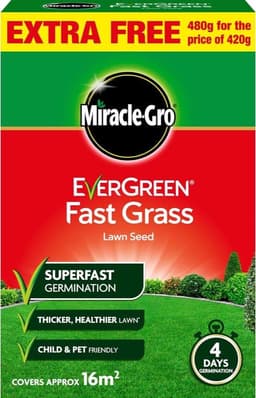
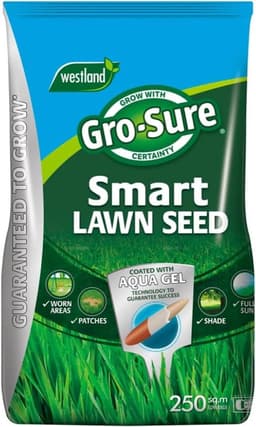
Perennial ryegrass makes a family lawn green quickly and then demands the mower. It is a poor specialist for real shade. Red fescues tolerate lower light better, and a shade mix is usually fescue-heavy. Love The Garden notes that browntop bent does not suit shade. The RHS says shade lawns are typically fine-leaved and usually not the ones you want for heavy wear. None of the twelve listings is a shade specialist with percentages you can check. UKgrow’s 20 m² names perennial ryegrass and red fescue, with no split, and claims shade and sun. That is a fast ryegrass product that also mentions fescue, not a shade mix. The UKGROW 100 g tub says shade tolerant and names no species. Gro-Sure’s 10 kg bullet mentions shady areas, while the sunlight field says full sun only. Wolf-Garten LR 25 has a sunlight field that says full shade and an item type that says all lawn types, with no species list. Do not buy Wolf because a field says full shade. EverGreen’s sunlight field says full sun. ProGrass lists full sun and partial sun, which is not deep shade.

What to do in light shade

Light shade means the ground still gets roughly four hours, the canopy is deciduous, and you can see the soil. The RHS suggests sowing under deciduous trees while they are leafless, so the seed gets spring light before the leaves close over. Tree roots and a moss mat are why seed fails here even when the species is right. The sequence and the first cut are on the how to sow page. Do not bury the seed to protect it from shade. Raise the mowing height so each plant keeps more leaf. A fescue shade lawn marks under a goal or a daily dog path. Overseeding a shady lawn with a pure fast ryegrass mix can give a green flush in the bright weeks and a thin mess once the leaves are out. If you buy from this set for light shade, UKgrow at least names red fescue beside ryegrass. Everything else is a shade word without a recipe, so you cannot know whether fescue is a trace or a third of the bag.

When to stop

Stop when the cover is dense and evergreen, when the soil stays dry an hour after you water, or when two careful sowings have already failed. Grass is the wrong plant there. Ground cover, a mulch and a path will look better than a third year of moss and seed. The RHS is plain that a fine lawn under dense trees is unlikely. Call a professional when the shade is really a drainage problem, or when tree roots need to be respected rather than buried under topsoil. Do not fix that ground with the largest bag in the comparison. Gro-Sure’s 250 m² sack is best value only when the area is real lawn, not when you are fighting a yew hedge. A pet-safe line is not a shade claim. Buy the fast mix for the sunny worn lawn and leave the dark corner out of the order.

Common questions

How much sun does a lawn need?
About four to six hours for most turf grasses, which is the RHS guide. Less than that and you are in specialist shade-mix territory, or past the point where grass is sensible. Time the spot in summer, not on a bright February morning when the trees are bare. A north-facing strip that is open can still clear four hours.
Will fast growing seed work under a tree?
Under a light, deciduous canopy, and only if the ground still gets those hours of sun once the leaves are out, you may get a thin lawn from a fescue-containing mix. Under a dense crown, fast ryegrass is the wrong species and often the wrong plant. Tree roots also steal water, so germination slogans do not apply.
Which grasses tolerate shade?
Fine and red fescues are the usual shade-tolerant lawn grasses. Shade mixes are often fescue-heavy and not hard-wearing. More bent is used in damp shade. Perennial ryegrass is for sun and wear. Browntop bent is a poor shade grass. None of the twelve listings here gives a percentage split you can check.
What do the amazon listings in this set actually say about shade?
Mostly a bullet or an unanswered question. UKgrow 20 m² claims shade and sun and names ryegrass plus red fescue, without percentages. Gro-Sure 10 kg mentions shade in a bullet and full sun in the sunlight field. Wolf’s full-shade field conflicts with all lawn types and is not a species list. EverGreen’s field says full sun.
Should I raise the mowing height in shade?
Yes. Leave more leaf than you would on the sunny lawn, so the plants can live on less light. Do not scalp a weak shady patch at the first cut. The usual first-cut height on new grass, about 5–7.5 cm, is a reason to stay at the higher end afterwards, not a reason to cut shade grass shorter than the rest.
When is grass the wrong plant?
When the shade is deep all summer, the roots dry the soil, or two careful sowings have already failed. A fast bag will not change the light. Use ground cover or a path, and keep lawn seed for the part of the garden that actually sees the sun. Under a deciduous tree, sow while the branches are still leafless so the seedlings get light before the canopy closes.

Related pages

Sources

Sources taken from the research digest. Listings were checked in October 2026.

  1. RHS — Starting a lawn from seed (retrieved 21.10.2026)
  2. RHS — Lawns in shade (retrieved 21.10.2026)
  3. RHS — Repairing lawns (retrieved 21.10.2026)
  4. RHS — October lawns (retrieved 21.10.2026)
  5. RHS — Lawn drought care (retrieved 21.10.2026)
  6. Seed Marketing Regulations 2011 (retrieved 21.10.2026)
  7. GOV.UK — Certify seeds for marketing in England and Wales (retrieved 21.10.2026)
  8. Love The Garden — How to sow grass seed (retrieved 21.10.2026)
  9. Boston Seeds — Overseeding an existing lawn (retrieved 21.10.2026)
  10. amazon.co.uk listings for the twelve ASINs in this comparison (retrieved 21.10.2026)