Independent comparisons. We may earn from shop links. More info

How to fluff dried pampas grass safely

Updated: October 2026

Your dried stems have arrived flattened into a narrow parcel, and the first temptation is to shake them hard or stand them in water. Do neither. Learning how to fluff dried pampas grass starts with a dry inspection, gentle movement outdoors and enough time for compressed heads to open. The products in the [dry grass comparison](/hub/seeds-and-plants/dry-grass) carry different seller instructions. The safe common ground is a dry vase, controlled airflow and distance from flames. This page is the after-delivery routine, not a ranking of the seven bunches.

Your dried stems have arrived flattened into a narrow parcel, and the first temptation is to shake them hard or stand them in water. Do neither.

Our top picks

On this page

Flat on arrival is the usual first look

A pampas-type plume often looks thin when the wrapping comes off. That first shape is usual compression. CUPRUM and N&T NIETING reviewers report fuller heads after dry air or a hairdryer. Unpack outside on a dry, still day if you can. Separate stems near the lower stalk, count them if a number was promised, and photograph anything substantially wrong. Flatness is expected. Wet patches, visible mould, a rotten or urine-like odour and extensive breakage are not. Airing can reduce a packaging smell. It does not repair decay. Do not add water to make a display bunch expand. The N&T NIETING bullets say no water. Water can soften stalks, encourage mould and leave dye on the vessel. Wheat has one craft exception in the dried wheat sheaf guide: a temporary soak, then a full dry.

Shake outside, then use air carefully

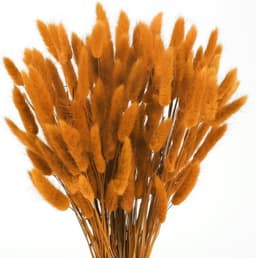
Hold a few stems by the base, turn the heads away from your face and move them gently outdoors. Do not beat the plumes together. The Zythrem bunny-tail listing warns against a hard shake, because thin stems snap and rough handling pulls more fibre off. Stand the stems in an empty vase with space around each head. Some listings suggest several hours, or 24–48 hours, of sun. Sun can open compressed heads and it can fade colour, so keep that period short. A hairdryer can speed it, and the advice disagrees. Use the coolest, lowest setting, keep the dryer moving, and stop if stems whip, fibres fly or a head becomes warm. One reviewer described fluff through a bedroom after indoor blow-drying. Open a small group, then judge the shape before you do more. Bunny tails need less air than large plumes. Light hairspray is optional, and only in ventilation. The spray is flammable. Never use it beside a candle, fire, hob or heater, and do not treat the finished bunch as flame-resistant.

Use a dry vase away from damp and flames

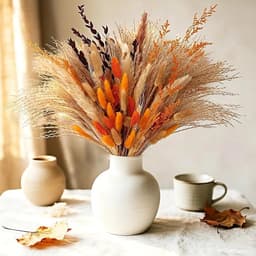
Use a clean, completely dry vessel. A narrow neck holds fewer tall stems. A broad mouth needs more stems or dry filler such as paper or sand. Trim from the base, and vary the height rather than cutting every stem at once. Put the tallest heads at the back or centre. A 43 cm stem in a 20 cm vase leaves roughly 23 cm above the rim, which is a table arrangement, not a floor display. Keep the finished bunch away from bathrooms and condensation. London Fire Brigade and Scottish Fire and Rescue advise keeping candles away from anything that can burn. None of the seven listings states a flame-retardant standard. A photograph of a mantel is styling. Keep the vase away from candles, open fires and hot lamps, especially after hairspray.

When flat means a fault

A plume that stays modest after careful dry airing may be a smaller grade than the photograph. Many snapped stems, the wrong colour, missing quantities, wet material or mould are a different issue. Compare the parcel with the words and the variant on the order. A light packaging smell may fade in dry air. A rotten, ammonia-like or urine-like smell, especially with damp or discolouration, means you stop. Do not cover it with fragrance or hairspray. Isolate the parcel and contact the retailer with photographs. The Consumer Rights Act 2015 requires satisfactory quality and a match to the description. If orange stems arrive blue, genuine grass arrives as plastic, or wheat heads arrive mouldy, name that mismatch and keep the packaging. Sound stems that simply look sparse can still go into a bud vase, a wreath or several small arrangements.

Common questions

Should dried pampas grass go in water?
No for ordinary display. Use a clean, dry vase and keep the arrangement away from damp. Water can soften stems and encourage mould. The exception in this set is a temporary wheat soak for weaving, after which the finished work must dry fully.
What should I do if the plumes arrive flat?
Unpack carefully, separate the stems and let them stand dry with space around the heads. Use gentle outdoor movement or cool, low hairdryer airflow if you need it. Give them time before you judge fullness, and document missing, broken or mouldy material immediately.
Where should I shake dried stems?
Outside, in dry and still conditions, is best. Point the heads away from your face and move them gently over a surface you can sweep. A hard indoor shake can spread fibres through carpets and bedding and may break thin stems.
Does hairspray stop shedding?
It may reduce loose fibres, and it will not make a natural plume shed-proof. Use only a light application in ventilation and let it dry. Aerosol hairspray and dried plant material can burn, so keep the arrangement far from flames and heat.
Can I put dried grass beside a candle?
No. Dried stems are combustible, and none of these listings states a flame-retardant standard. Keep them away from candles, open fires, hobs and hot lamps. A product photograph beside a fireplace is styling, not a safety assessment.
How do I distinguish compression from a faulty parcel?
Compression produces flat but dry heads that may open with air and time. Mould, wet patches, rotten smells, extensive snapped stems, a wrong colour or materially missing contents indicate a possible fault. Photograph the parcel and contact the retailer rather than trying to disguise it.

Related pages

Sources

Public UK sources on pampas status, dried plant material, hay fever and fire safety. Listing prices and stars are from amazon.co.uk on 15 October 2026.

  1. RHS: Cortaderia selloana (retrieved 15 October 2026)
  2. RHS: Lagurus ovatus (retrieved 15 October 2026)
  3. GOV.UK: Invasive non-native plants in England and Wales (retrieved 15 October 2026)
  4. NNSS: Cortaderia selloana (retrieved 15 October 2026)
  5. Defra: Scientific authorisations for plants (retrieved 15 October 2026)
  6. NHS: Hay fever (retrieved 15 October 2026)
  7. GOV.UK: Fire safety in the home (retrieved 15 October 2026)
  8. Consumer Rights Act 2015 (retrieved 15 October 2026)