Independent comparisons. We may earn from shop links. More info

Dried pampas grass buying guide: what to check

Updated: October 2026

You have found a bunch that looks right in the photographs, but the title, the bullets and the product table may describe three slightly different things. This dried pampas grass buying guide checks the stem count, the length, the finish and the review count before you decide whether the parcel fits the vase and the colour you expect. If two lines disagree, pause rather than choosing the more convenient claim. Start with those four lines, then compare them with the listing you are about to order. Prices, star samples and the seven listings are in the [dry grass comparison](/hub/seeds-and-plants/dry-grass).

You have found a bunch that looks right in the photographs, but the title, the bullets and the product table may describe three slightly different things.

Our top picks

On this page

Four lines that decide the bunch

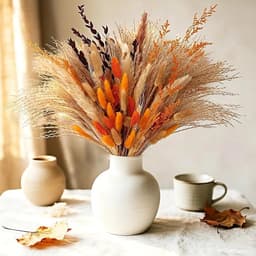
Read the stem count separately from the unit count. A unit count of 1.0 often means one parcel, not one stem. N&T NIETING says 104 pieces in a bullet and 1.0 in the attributes. CUPRUM’s white bunch also says 1.0 and gives no stem count. The first is a seller claim. The second leaves the quantity unknown. Where this set states a length, it is mostly about 31–44.5 cm. If a 43 cm stem needs 20 cm inside the vase, about 23 cm stays visible. Natural does not mean undyed, organically grown or grown in Britain, and several pages list China. The Zythrem 120-stem page says orange, while two UK reviews describe blue stems. Put the review count beside the stars. The best dried bunches in this set applies that check to the seven listings.

When the page disagrees with itself

Note the feature that matters, keep a screenshot if you order, and judge the parcel against the description at purchase. Under the Consumer Rights Act 2015, goods should match their description. “104 pieces” against “unit count 1.0” may separate the contents from the parcel, and the page should still say so. Yattuyix calls its 100 cream stems reed grass in the attributes and pampas in the title. Those names are not interchangeable. Terilamy’s tri-colour bunny tails are artificial in the title and genuine dried rabbit’s-tail grass in a bullet. Ask the seller, or choose a page that states the material once. Reviews of the orange Zythrem Lagurus describe blue stems. That may be a variant, an older listing or a wrong delivery. Treat it as uncertainty when the shade is essential.

Length for the vase you already own

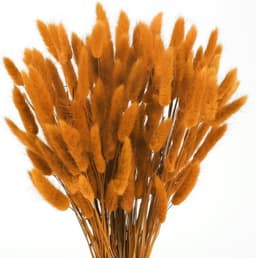
Measure the vase height, the narrowest opening and where it will stand. A narrow neck holds fewer long stems. Stems of about 31–44 cm suit a vase roughly 15–20 cm high, and they sit too low in a tall floor vase unless you add dry support. A florist bunch of 70–120 cm is a different product. Yattuyix states 100 stems at 43 cm. The mixed N&T NIETING bouquet is about 44.5 cm. The orange Zythrem bunny tails use about 31, 37 and 43 cm. CUPRUM gives no usable length. Pampas-type plumes make broad volume. Lagurus heads are small ovals, so 120 bunny tails are not 120 plumes. The two wheat pages state about 300 stalks at 40 cm, with ears of 6–8 cm, for a sheaf or a wreath.

What the stars do not say

Stars do not say whether the reviewer ordered your colour. Read recent reviews for mould, broken stems, severe shedding, the wrong colour or a rotten smell. The mixed bouquet has 4.2 from 1,766 ratings. The cream 100-stem listing shows 5.0 from one review. The higher average is the thinner sample. CUPRUM’s 4.1 from three, and the wheat listings’ five and seven ratings, need the same caution. The £8.99 CUPRUM bunch has no stated count, so you cannot price it per stem. The £10.99 orange Zythrem states 120 stems, with colour uncertainty if the shade is fixed. The wheat pages state the same size at £13.99 and £16.99. Inspect the parcel before you throw the packaging away. Flat plumes may open with dry care. Mould, a wrong material or missing contents are different problems.

Common questions

Why does the unit count say 1 when a bullet says 104?
Marketplace unit count often refers to one sold parcel, while a bullet describes the pieces inside it. That reading is plausible, but the page should still state both clearly. Save the 104-piece claim if quantity matters, and count the usable contents promptly after delivery.
Is reed grass the same as pampas?
No. Pampas usually refers to Cortaderia-type plumes, while reed grass covers other grasses. Dried sellers sometimes use pampas loosely for a look. If the title and the attribute disagree, treat the botanical identity as unresolved rather than choosing whichever term appears first.
How can I tell whether bunny tails are dyed?
Look for the word dyed, a colour name unlike the natural straw tone, and care warnings about colour transfer or fading. Photographs cannot guarantee an exact shade. Reviews that report another colour are a reason to ask the seller before you order for a colour-critical event.
Does natural mean grown in the UK?
No. Natural may mean real plant material or a natural-looking colour. It does not state where the crop was grown. Check the country-of-origin line. Several products in this comparison state China. Buy from a named UK grower if British origin is a requirement.
Is 5.0 from one review better than 4.2 from 1,766?
It is a higher average and much weaker evidence. One five-star review tells you that one parcel pleased one reviewer. A 1,766-rating sample covers far more deliveries, although you should still read recent comments for variant changes and recurring faults.
What if the title says artificial and the bullets say genuine?
Do not guess. Ask the seller for a written answer, or choose a consistently described product. Material affects appearance, disposal and some craft briefs. If what arrives does not match the description you relied on, keep the listing record and contact the retailer.

Related pages

Sources

Public UK sources on pampas status, dried plant material, hay fever and fire safety. Listing prices and stars are from amazon.co.uk on 15 October 2026.

  1. RHS: Cortaderia selloana (retrieved 15 October 2026)
  2. RHS: Lagurus ovatus (retrieved 15 October 2026)
  3. GOV.UK: Invasive non-native plants in England and Wales (retrieved 15 October 2026)
  4. NNSS: Cortaderia selloana (retrieved 15 October 2026)
  5. Defra: Scientific authorisations for plants (retrieved 15 October 2026)
  6. NHS: Hay fever (retrieved 15 October 2026)
  7. GOV.UK: Fire safety in the home (retrieved 15 October 2026)
  8. Consumer Rights Act 2015 (retrieved 15 October 2026)