Are home grown sprouts safe? The ready-to-eat risk
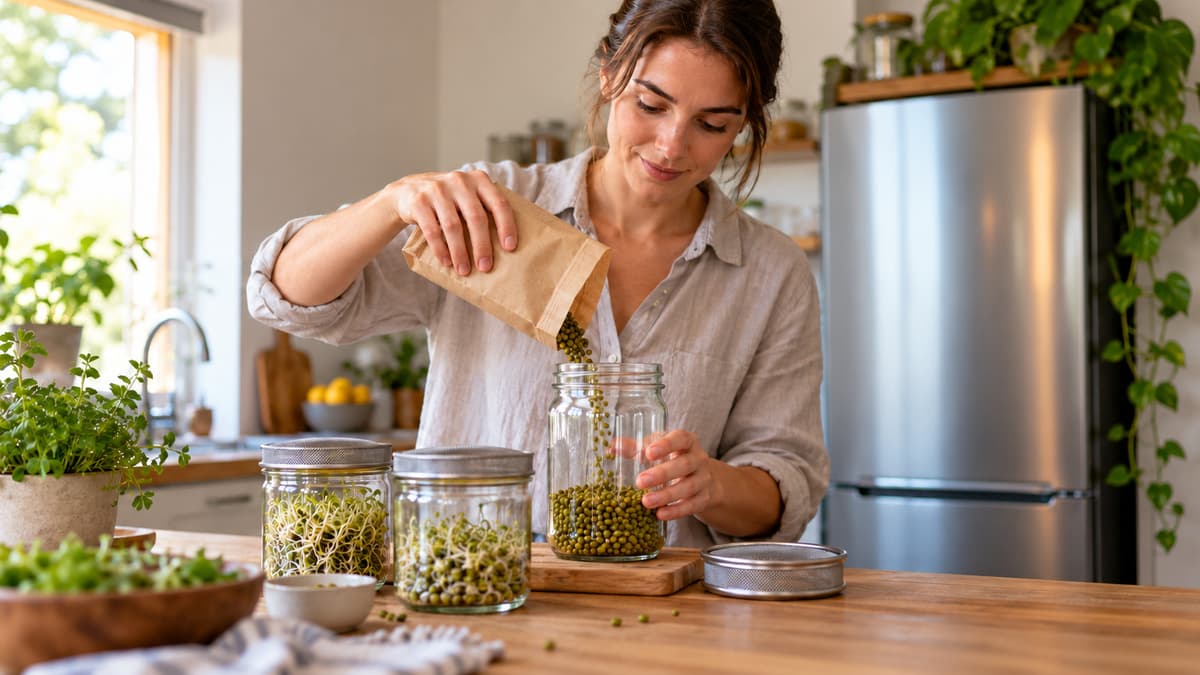
Are home grown sprouts safe? The FSA treats sprouted seeds as ready-to-eat food linked with STEC. A rinse or a lawn packet does not make a home jar safe.
On this page

You have a glass jar, a mesh lid, and a packet that might be mung beans or something you bought for the lawn. Are home grown sprouts safe is a food question. The Food Standards Agency already files sprouted seeds as ready to eat. Growing them on the worktop puts that food in a warm, wet jar you control. This page says what that means. It does not give you a sprouting method.
In short
Home-grown sprouts are a ready-to-eat food. The Food Standards Agency names sprouts and sprouted seeds among foods where Shiga toxin-producing E. coli, STEC, has been detected, in guidance written for businesses. Rinsing is not a kill step. A lawn or clover packet is not a sprouting food. A jar kit is equipment, not a safety approval, and this article does not claim a home jar is safe.
Sprouts are a food, not a lawn
Sprouted seeds are the shoots you eat, often raw, from beans, lentils, alfalfa, radish and similar seed. FSA food-type data names them ready to eat: you do not rely on a thorough cook. A shop punnet and a jar you started on Sunday are the same class of food. One has a factory use-by date and a chilled lorry. The other has your tap water and your draining rack.
Most packets in this hub are for soil. Sprouting seed is sold to be eaten. Mixing the aisles is how a turf bag ends up in a jar. Our sprouts comparison is the shelf for that food equipment and for seed titled as sprouting seed. Clover and grass listings are for the ground.
The listing beside this page is a Hisredsun two-jar kit, £14.49 in the captured amazon.co.uk file, rated 4.3 from 1,011 ratings. It is two 1000 ml jars with mesh lids, stands, trays and shading cloth. Seeds are not included. That score is what buyers said about the kit. It is not a bacteria test or a Food Standards Agency approval. Some reviews mention rust, which is a product fault, separate from STEC.
A kit is a sensible buy only if FSA and NHS advice has already settled that sprouted seeds belong in your kitchen, and you want jars you can wash. Equipment does not settle the safety question. The same comparison contains Unwins sprouting mung beans, 15 g at £1.48, rated 3.9 from 31 ratings, with foliage bullets that conflict with a sprouting title. Read that conflict before you eat anything from the packet. Brussels sprout seed in the same file is a winter vegetable, not a bean sprout.
What the FSA has said about STEC
STEC means Shiga toxin-producing E. coli. FSA business guidance names sprouts and sprouted seeds among foods where STEC has been detected. The page is written for food businesses. A home cook is not the licence-holder it regulates, but the food on the list is still the food. This article uses the page for that one fact.
Warmth and moisture help the seed grow, and bacteria can use the same conditions. A cleaner jar, a UK seller, or the word natural does not close that gap. Rinsing removes dust and spent water. It is ordinary hygiene, not a control the agency presents as enough. This page will not give soak times or a rinse count. A method would look like a way to remove the hazard, and these sources do not say that.
If you are pregnant, older, very young, or immunocompromised, be stricter than a keen gardener. The STEC business page we are using does not set out a household medical prohibition, so this article will not invent one. NHS and FSA food advice is the place for that decision. Home growing does not create an exemption.
Dates, cold storage and surfaces
On shop food, a use-by date is a safety date. The FSA best-before and use-by page says use-by is about safety and best before is about quality. You should not eat food after its use-by date, and you should keep the fridge at 5°C or below. Those two lines apply to a punnet of sprouts you bought. They are the clearest instructions the agency gives a household on this kind of food.
A jar you grew often has no use-by date. A missing label is not a lower risk, and this page will not invent a number of days. Take any day count from current NHS or FSA advice. Home sprouts are the same ready-to-eat food without the shop's date stamp.
A fridge set above 5°C is warmer than the FSA line. Move finished sprouts into the fridge if you are keeping them, covered so they do not drip onto other food. Throw away a batch that smells sour, feels slimy, or has sat warm for a stretch you cannot account for. Looking normal is not a guarantee.
Ready-to-eat food picks up whatever the board just held. FSA cross-contamination guidance says wash your hands and keep raw foods off ready-to-eat surfaces. Raw meat, raw poultry and unwashed soil from a seed tray are the obvious neighbours. Wash the board, the knife, your hands, the jars and the mesh. A stand and a shading cloth are not sterile because they arrived in a retail box.
None of this is a sprouting recipe. If the STEC warning is more risk than you want, do not start the jar. Beans you boil are a different dish. Skipping raw sprouts is a complete answer.
Garden packets stay in the garden
A lawn packet is described as seed for turf. It may be coated, mixed with other species, or stored next to fertiliser. The listing talks about square metres, not about eating. Putting that seed in a warm jar recreates the sprouting conditions without a food specification. White clover for a lawn, red clover for a cover crop, and a sprouting pouch are three products. Only the pouch is aiming at a plate.
In this hub a crimson-clover sprouting pouch was removed from the clover comparison and belongs with sprouts. If the title says sprouting and the species is a food seed, read the FSA material before you eat it. If the title says lawn, meadow or green manure, sow it in the ground. Clover listings are the wrong shop for a jar.
Garden Brussels sprout seed is the other trap. Evesham Special and similar packets are brassicas for winter buttons, not mung beans, alfalfa or radish seed sold to eat in a few days. The shared word sprout is the confusion. A vegetable packet at £2.95 can outrank a true sprouting packet on a careless search. Read the species, and do not sprout a Brussels variety to get around that.
A bean in a cup on a windowsill is a school habit. Eating it is a food decision. Compost a garden packet when the lesson ends. If you want to eat sprouts, start from seed sold as food, then use FSA and NHS advice before a child or anyone pregnant eats any of it.
A mushroom kit is a different product
A shiitake kit is a culture on a block, sold to fruit indoors. In the mushroom comparison the Carbeth Plants shiitake kit is £19.99, rated 3.3 from 9 ratings, with an indoor claim. That review count is small. You usually cook those mushrooms. This article does not grade kits as safe or unsafe. It only stops the mix-up with a sprout jar.
People land on both products from the same grow-food-at-home search. The FSA STEC note names sprouts and sprouted seeds. It does not, in that citation, name a shiitake block. A kit's indoor claim does not bless a jar of raw sprouts. The mushroom culture comparison is the kit shelf. The sprouts comparison is the jar shelf.
If you run both in one kitchen, keep compost, spent substrate and raw sprouts apart, and wash the bowl and your hands between them. Prices move. £14.49 for the Hisredsun kit and £19.99 for the shiitake kit are captured amazon.co.uk figures, in GBP. A qualifying purchase can earn us a commission at no extra cost to you. We did not send a jar to a lab. For a food-safety plan, use the agency and, where health advice matters, the NHS.
Common questions
Are home-grown sprouts a ready-to-eat food?
Does rinsing sprouts remove the risk?
What is a use-by date for on sprouts?
Can I sprout lawn clover or other garden seed?
Should pregnancy or a weak immune system change this?
How is a mushroom kit different from a jar of sprouts?
Where is the sprouting comparison?
What will this article not teach?

Peter F. is the editor for DIY & tools at productscompared.co.uk. Comparisons in this category are checked against amazon.co.uk listings, review evidence and public UK sources.
Related articles
UK seed packet label: species, grams and certification
Read the species, the grams and any certification words before you trust a coverage claim on a marketplace title.

Green manure UK allotment: clover before the crop
A cover crop on an empty bed is a different sowing from a micro-clover lawn, and crimson stops when you cut it down.
When to sow cucumbers UK: indoor and outdoor dates
Heated glass, an unheated tunnel and an outdoor bed use three different cucumber sowing dates in Britain.