Electronic safe battery dead: keep the override key out
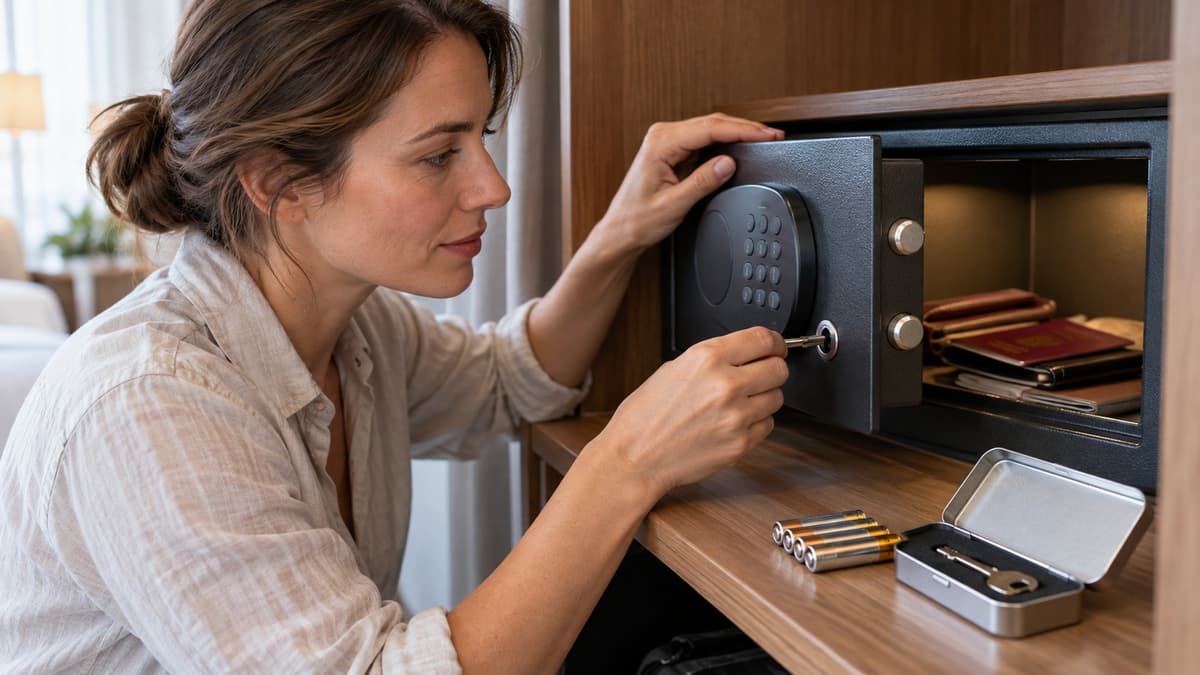
An electronic safe battery dead leaves the keypad dark. Keep the emergency key outside the box. A Favor S3 E uses four AA cells, with no 9V pad on the fascia.
On this page
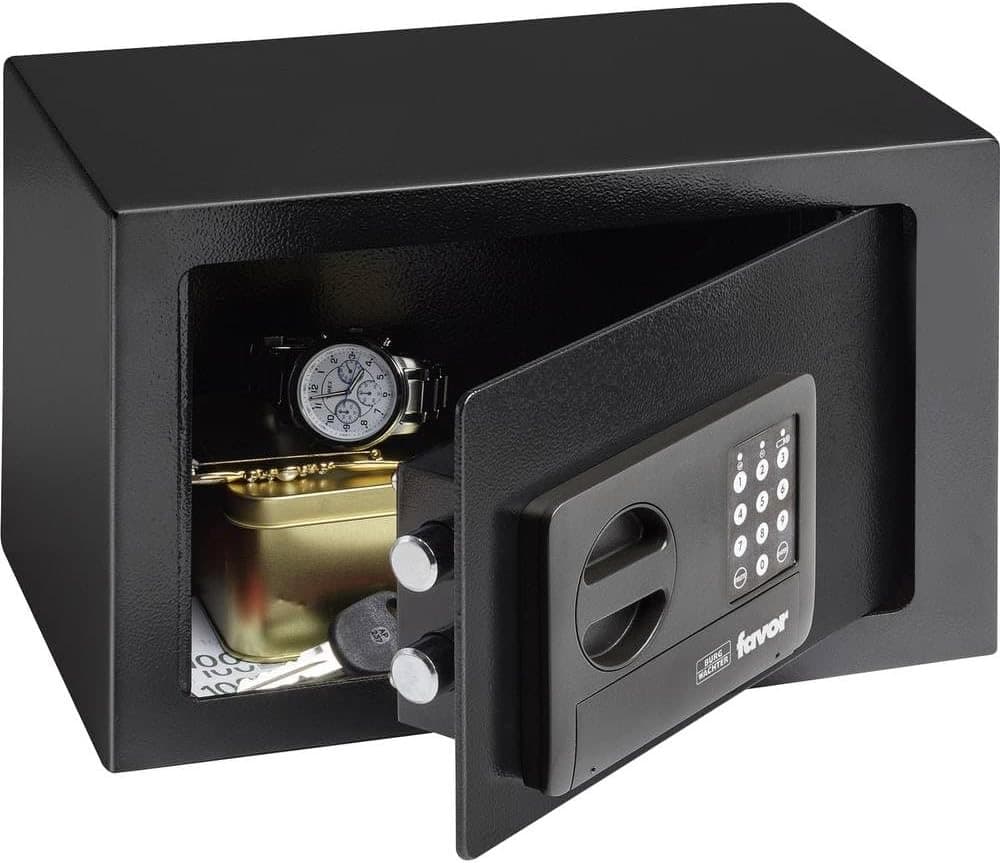
The keypad on the cupboard safe is dark, and the passports are on the other side of the door. An electronic safe battery dead is a flat cell, or a set of them, and the door still has to open. On the Burg-Wächter Favor S3 E the amazon.co.uk listing names four AA batteries and a mechanical emergency lock. That lock is only useful if the safe emergency key is already in your hand.
An override key inside the safe turns a battery change into a lockout. Independent Safes, writing about cheaper digital safes, tells you to keep that key outside the box and to call a locksmith if it is lost. safe.co.uk's SafeZone page names a Master Locksmiths Association locksmith and tells you to leave DIY opening videos alone.
We checked those two UK guides, Yale Home's note on its own smart safe, the Burg-Wächter UK Favor page, the Consumer Rights Act 2015, and the amazon.co.uk listing for Favor S3 E B00J95WM6C in October 2026. We did not open a locked safe or run a battery test. A qualifying purchase through our links can earn us a commission at no extra cost to you.
In short
When the electronic safe battery is dead, the emergency key has to be somewhere you can reach without opening the door. The Favor S3 E listing describes four AA cells and a mechanical emergency lock, and it does not describe a 9V pad on the keypad. A 9V contact shown on a Yale page belongs to that Yale safe. If the key is inside, or lost, use the seller or a locksmith, and leave DIY opening videos alone.
Keep the emergency key outside
The emergency key still works when the keypad has no power. Independent Safes is plain about cheaper keypad safes: store the override key outside the safe. An override key inside the safe feels tidy until the cells fail, and then the only mechanical way in is on the wrong side of the door.
Keep it somewhere you can open without a code. A drawer in another room, a tin that is not fixed to the same cupboard, or a trusted person who can reach you the same evening, all meet that test. A hook labelled "safe" next to the box fails it, because anyone who finds the cupboard has found the override. A spare left at work does not help at 11pm.
Test the Favor S3 E key while the door is still open, then put it back in that second place. One UK review says the key was too thin to open the flap. If it does not fit or does not turn, stop storing anything you cannot replace, and take it up with the seller while you can still get inside.
Our furniture safe comparison is the cupboard box itself. A key mislaid in the house is a search. A key shut inside with dead batteries is the job in when a locked safe needs a locksmith.
What the Favor S3 E listing includes
The Burg-Wächter Favor S3 E on amazon.co.uk is ASIN B00J95WM6C. The bullets name four AA batteries and a mechanical emergency lock. Burg-Wächter's UK Favor page says a resettable combination, an emergency mechanical lock, and four AA cells, and it gives no replacement interval.
Fit four new cells of the same type with the door open, and write the month on a slip you keep with the emergency key, outside the safe. The listing does not choose alkaline over lithium. Mixing old and new cells lets the weakest one drag the pack down, and the Favor page does not name a cell brand.
Set a code you can remember without writing it under the cupboard, then check the keypad accepts it before you load the safe. If the lock will not take a new code while the door is open and the batteries are new, the goods fail the resettable lock in the description. The Consumer Rights Act 2015 sends that back to the amazon.co.uk seller.
The listing does not mention an external power socket or a 9V wake-up. The Burg-Wächter safe comparison is where this electronic model sits beside the key models. Buy it if you will keep the mechanical key outside and change the cells with the door open.
What buyers reported
UK review texts on that listing show how a lockout starts: an emergency key too thin for the flap, keys locked inside with no batteries fitted, a code that would not change, and batteries that fell away to about two hours. These are individual amazon.co.uk reports, and none of them is a way to open the door.
With the door open, the flap and the key either work together or they do not. Ask the seller for a key that fits while the keypad still opens the door. On a new parcel, fit four AA cells, confirm the code, remove the emergency key, close once, then open with the code and again with the key. If it arrives already locked and you have no key in your hand, tell the seller the goods were not usable as supplied.
One owner changed the cells once a year. safe.co.uk suggests every 6 to 12 months as that retailer's habit, and the Favor page does not adopt that figure. The two-hour report shows a pack can collapse the same day, so change the keypad safe batteries on a written date with the door open.
A 9V pad is not on every keypad
Some keypad safes have outside contacts so you can hold a fresh battery against the lock and enter a code you already know. Independent Safes notes that some locks have an external power point. Yale Home describes 9V terminals on that Yale smart safe.
If your manual shows two marked contacts and names the battery, touch those contacts with that cell, enter the code, open the door, and replace the internal cells.
The Favor S3 E sources we used do not give you that contact. Holding a 9V battery against the Favor keypad, because a Yale page showed terminals, can mark the fascia and still leave you locked out.
External power helps only when you know the code. It does nothing for a flap the key will not open. Look for the external point on that model's own listing before you pay, and still keep the override key outside. Our safe comparison separates a furniture box with a PIN from a cabinet bought against a stated attack grade.
When the seller or a locksmith takes over
If the door is open and the key is in your hand, change the four AA cells, test the code, test the key, and close up. If the key does not fit, the code will not change, or the hex key will not open the cover, stop. Forcing a hex key can round the socket. Photograph it and ask the seller for the right key or a replacement unit.
If the door is shut and the emergency key is in your hand, use that key. If it will not turn, leave the pliers in the drawer. Extra leverage can twist the bow off in the lock, and a locksmith is then the cheaper call.
If the door is shut and the key is inside or lost, you are past a battery change. The search "safe batteries died and key is inside" is this case. safe.co.uk names a Master Locksmiths Association locksmith, and Independent Safes says the same when the override key is lost. Agree call-out, labour, and parts before anyone cuts or drills.
A new safe that never accepts a code, or that arrived locked with the keys inside and no batteries fitted, starts with the amazon.co.uk order. The Consumer Rights Act 2015 requires goods to match the description. Use a locksmith when the seller will not collect a locked box, or when the safe is older than that order.
Common questions
Where should the emergency key live?
Does every keypad have an external battery point?
What did Favor S3 E buyers report?
How often should I change safe batteries in the UK?
What if the hex key will not open the battery cover?
What if the keys were locked inside on day one?
Who opens the safe if the emergency key is lost?

Peter F. is the editor for DIY & tools at productscompared.co.uk. Comparisons in this category are checked against amazon.co.uk listings, review evidence and public UK sources.
Related articles

Locked out of a safe: agree the locksmith price first
A failed code or keys inside the safe is a locksmith job. Forcing the door makes the opening harder, and the price should be agreed first.

How to bolt down a home safe without the wrong wall
Bolts only hold a light safe when the wall or floor can take them. Plasterboard with no timber, or a floating floor, is the wrong substrate.
Home insurance safe rating UK: cash versus the booklet
A maker's cash line and the money limit in your contents policy are different figures. The booklet, not the box, sets what a claim can pay.