How to put up a tomato greenhouse
The grow bag is on the slabs, or the pots are on the allotment bed, and the carton is a polyethylene cover on a push-fit frame. How to put up a tomato greenhouse of this kind is a short order: join the frame where it will stay, pull the roof taut, then peg soil or weight paving. A two-metre cover built in the hallway will not come back through the doorway. The covers we checked are on the [tomato greenhouse comparison](/hub/raised-beds-greenhouses-and-compost/tomato-greenhouse). The Products Compared editorial team updated this on 16 October 2026 from those amazon.co.uk listings and public UK sources, without a laboratory wind test. A purchase through a comparison link can earn us a commission at no extra cost to you.
The grow bag is on the slabs, or the pots are on the allotment bed, and the carton is a polyethylene cover on a push-fit frame.
The grow bag is on the slabs, or the pots are on the allotment bed, and the carton is a polyethylene cover on a push-fit frame. How to put up a tomato greenhouse of this kind is a short order: join the frame where it will stay, pull the roof taut, then peg soil or weight paving. A two-metre cover built in the hallway will not come back through the doorway. The covers we checked are on the tomato greenhouse comparison. The Products Compared editorial team updated this on 16 October 2026 from those amazon.co.uk listings and public UK sources, without a laboratory wind test. A purchase through a comparison link can earn us a commission at no extra cost to you.
Our top picks
| Badge | Product | Stated size | Cover | Anchors | Note | Price | Offer |
|---|---|---|---|---|---|---|---|
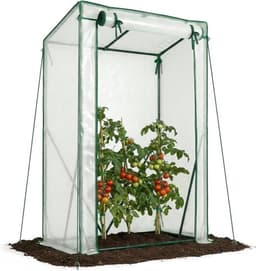
| Best overall |  VOUNOT VOUNOT tomato grow house, white, 100 cm | 100 x 50 x 150 cm | 135 g/m² polyethylene | 4 ropes, ground stakes, nylon ties | 7.8 | about £23.49 | View offer |
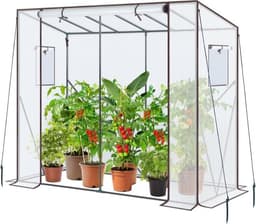
 Ohuhu Ohuhu tomato greenhouse, white, 200 cm | 200 x 77 x 170 cm | 130 g/m² polyethylene | Stakes and windproof ropes | 8.2 | about £49.99 | View offer | |
| Best value |  Outsunny Outsunny tomato greenhouse, 200 cm | 200 x 76 x 150–168 cm | Polyethylene, gsm n/a | Four guy ropes, four pegs, edges to bury | 7.7 | about £27.99 | View offer |

On this page
On the spot you will leave it
A roof that can shed rain
Pegs in soil, weights on paving
When it comes down
Common questions
Do I build it indoors and carry it out?
What holds a 100 cm house on soil?
What do I use on paving, where pegs will not go in?
How do I stop rain sitting on the roof?
When must I take the cover down?
Can I leave the zip shut on a hot day?
Does an allotment let me peg a polyethylene cover in?
Related pages
Sources
Public UK sources from the research digest, last checked on 16 October 2026.
- RHS — How to grow tomatoes (retrieved 16.10.2026)
- RHS — Tomato blight (retrieved 16.10.2026)
- RHS — Choosing a greenhouse (retrieved 16.10.2026)
- RHS — Ventilation and shading (retrieved 16.10.2026)
- Planning Portal — Outbuildings (retrieved 16.10.2026)
- Class E, GPDO 2015 (retrieved 16.10.2026)
- GOV.UK — General Product Safety Regulations 2005 (retrieved 16.10.2026)
- National Allotment Society — Allotment laws (retrieved 16.10.2026)