Paraffin heater indoor safety
The amazon.co.uk listing says bedroom, living room, or indoor, and you are deciding whether to sleep with it on. Paraffin heater indoor safety starts from a harder fact: that tag is not an approval. Carbon monoxide has no smell, and the NHS says a camping stove must not be used indoors or in a tent. This page is the limit, not a ranking. The six heaters stay on the [paraffin heater comparison](/hub/portable-heaters/paraffin-heater). Fill, soak, and flame height stay on [how to use a paraffin heater](/hub/portable-heaters/paraffin-heater/sub/paraffin-heater-how-to-use). Peter F. used NHS, fire-service, and legislation sources on 19 October 2026. He did not test a listing’s indoor claim. A qualifying purchase can earn a commission at no extra cost to you.
The amazon.co.uk listing says bedroom, living room, or indoor, and you are deciding whether to sleep with it on. Paraffin heater indoor safety starts from a harder fact: that tag is not an approval.
The amazon.co.uk listing says bedroom, living room, or indoor, and you are deciding whether to sleep with it on. Paraffin heater indoor safety starts from a harder fact: that tag is not an approval. Carbon monoxide has no smell, and the NHS says a camping stove must not be used indoors or in a tent. This page is the limit, not a ranking. The six heaters stay on the paraffin heater comparison. Fill, soak, and flame height stay on how to use a paraffin heater. Peter F. used NHS, fire-service, and legislation sources on 19 October 2026. He did not test a listing’s indoor claim. A qualifying purchase can earn a commission at no extra cost to you.
Our top picks
| Badge | Product | Listed setting | Shut-off | Fuel as listed | Note | Price | Offer |
|---|---|---|---|---|---|---|---|
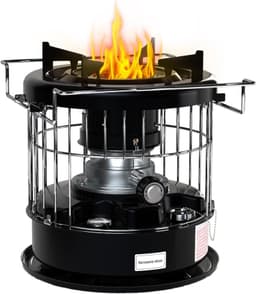
| Best overall |  PFCTART PFCTART YMHW00084 5 L | Indoor on the form; bullets also say outdoor and camping | No tip-over device visible to a UK reviewer | Kerosene; bullets also say paraffin; title says bioethanol | 6.6 | about £89.99 | View offer |
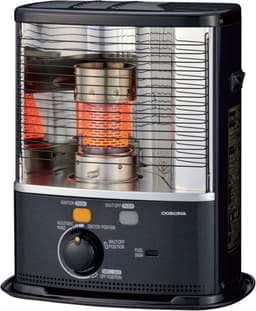
 Tecno Air System Corona RX 2485 (Tecno Air System) | Indoor; floor mount | Emergency shut-off mentioned in a UK review | Liquid fuel; power source also says corded electric | 8.2 | about £189 | View offer | |
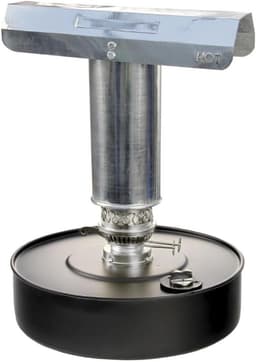
| Best value |  Trendi Trendi E-SP100 4.5 L | Greenhouse; attribute block also says Indoor | not stated | Paraffin; premium paraffin in the bullets | 7.0 | about £18.95 | View offer |
On this page
What an indoor tag does not prove
Carbon monoxide
Alarm, distance, and fuel
Tents, bedrooms, and water in the air
Common questions
Do I need a carbon monoxide alarm, and to which standard?
Can I sleep with it on?
Can I use a camping kerosene stove in a tent?
What are the symptoms, and when is it 999?
Does indoor on amazon.co.uk mean the 1977 warnings were checked?
Related pages
Sources
Public UK sources on carbon monoxide, unflued heaters, kerosene and greenhouse heating. Listing prices, stars, and review counts are from amazon.co.uk on 19 October 2026.
- NHS — Carbon monoxide poisoning (retrieved 19 October 2026)
- Oil Heaters (Safety) Regulations 1977 (retrieved 19 October 2026)
- GOV.UK — General Product Safety Regulations 2005 (retrieved 19 October 2026)
- GOV.UK — Kerosene: general information (retrieved 19 October 2026)
- London Fire Brigade — Portable heaters, gas fires and open fires (retrieved 19 October 2026)
- RHS — Heating greenhouses efficiently (retrieved 19 October 2026)
- NWF Fuels — Kerosene FAQs (retrieved 19 October 2026)
- Dry-it-Out — Corona RX2485 seller description (retrieved 19 October 2026)