Independent comparisons. We may earn from shop links. More info

Fan heater vs oil filled radiator: speed or stored

Updated: 21 October 2026

You are choosing between a heater that blows hot air in a few minutes and a radiator that stays warm after the element stops. Fan heater vs oil filled radiator is that choice, and it is not two rows in the same table. The [electric heater comparison](/hub/portable-heaters/electric-heater) scores fans, ceramic towers, one convector, and one glass panel. No oil-filled radiator is in that ASIN list, so this page will not name an oil-filled winner. A qualifying purchase can earn a commission at no extra cost to you.

You are choosing between a heater that blows hot air in a few minutes and a radiator that stays warm after the element stops. Fan heater vs oil filled radiator is that choice, and it is not two rows in the same table.

Our top picks

Dreo Dreo Atom 316 1500 W (White)

Best overall

Dreo Dreo Atom 316 1500 W (White)
9.2/10about £42.49
CUQOO CUQOO DYN12000 2 kW

Best value

CUQOO CUQOO DYN12000 2 kW
8.4/10about £11.99
On this page

What each one actually does

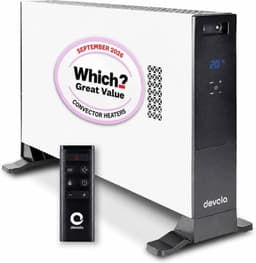
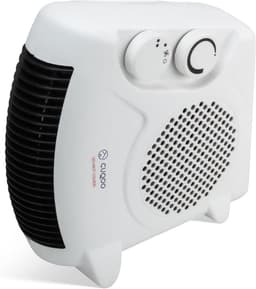
A fan heater, including the ceramic PTC models here, pulls room air across a hot element and pushes it out. The Warmlite fans, the CUQOO, the Dreo Atom 316, the Russell Hobbs, and the larger Dreo and Philips towers all work that way. You feel heat in minutes, and you stop feeling it when the fan stops. An oil-filled radiator is a sealed reservoir. The oil is a heat store, not a fuel you top up. Electrical Safety First describes the split: fan heaters are quick and noisy, oil-filled radiators take longer and keep giving heat after switch-off. The Devola convector is still not oil-filled. The oil-filled radiator is a different shop.

Speed, noise, and leftover heat

Which? found that oil-filled radiators heated a test room more slowly than fans and convectors. Ideal Home quotes roughly 10–20 minutes before a room notices one. Treat that range as reported. High speed on the CUQOO is called loud. An oil-filled radiator without a fan does not make that rush. Which? still found about half an hour of warmth after switch-off. When the Dreo stops, the heat stops with the fan. While the element is on, the same watts cost the same. At the October to December 2026 Ofgem average, a kilowatt-hour is 26.32p in a fan or in an oil-filled fin. Residual heat means fewer minutes on. The hourly table is on the electric heater running cost page.
Dreo Dreo Atom 316 1500 W (White)

Testsieger

Dreo Dreo Atom 316 1500 W (White)
9.2/10about £42.49

Overnight and children

Electrical Safety First advises against leaving portable heaters on overnight, and GOV.UK says to unplug when you go to bed or go out. If someone does it anyway, the charity’s lower-risk example is an oil-filled radiator, not a fan. Fins stay hot enough to burn. None of the ASINs here is that oil-filled example. Do not sleep with a Dreo, a Warmlite, the CUQOO, the convector, or the panel because a different product is described as relatively lower risk. Placement is on the how to use an electric heater page. A tip-over claim is for a fall while you are in the room, not an overnight mode.

When to pick which

Pick a fan or ceramic heater from this set when you need heat in minutes and you will switch it off when you leave. The white Dreo at about £42.49 is the top pick for a desk or a small bedroom you stay awake in. The CUQOO at about £11.99 is the best value if you still want a tip-over claim. Pick an oil-filled radiator, outside this table, when you want quieter heat that continues after the element stops and you can wait. Expect the half-hour tail Which? measured. Updated on 19 October 2026 from Electrical Safety First, Which?, and Ideal Home, not from a listing we scored.

Common questions

Which heats a room faster, a fan heater or an oil-filled radiator?
A fan heater heats the air in front of you faster. The models in this comparison are built to move hot air within minutes. Which? found oil-filled radiators slower to heat a test room than fans and convectors. Ideal Home quotes roughly 10–20 minutes before a room notices an oil-filled radiator. That range is reported, not a time we measured. If you need the desk warm now, use a fan. If you can wait, the slower start is the trade for heat that lingers.
Which is cheaper to run?
While both draw the same watts, they cost the same per hour. At the Ofgem average of 26.32p/kWh for 1 October to 31 December 2026, 2 kW is about 53p for a full hour on, whether the element is a fan or an oil-filled radiator. An oil-filled radiator can cost less over an evening if it runs for fewer minutes because the case stays warm. That is fewer minutes, not a lower price per kilowatt-hour.
Do oil-filled radiators stay warm after you turn them off?
They stay warmer than a fan heater. Which? measured about half an hour of extra warmth after switch-off in their oil-filled test. Commentators quoted by Ideal Home sometimes talk about a longer tail. Call the half hour a test result and the longer times a reported range. The Dreo and Warmlite heaters in our table do not keep that store of heat.
Can I leave either on overnight?
The advice is not to leave portable heaters on overnight. Electrical Safety First still says that, and then names an oil-filled radiator as relatively lower risk if someone does it anyway, with clearance and a smoke alarm. That is not a recommendation, and the fins stay hot. Fan heaters in this comparison are the wrong example for that exception. Unplug them when you sleep.
Are oil-filled radiators in this comparison?
No. The main table covers wire fans, PTC ceramic heaters, the Devola convector, and the Devola glass panel. If a page names an oil-filled model as a winner, it is not this comparison. Shop an oil-filled radiator as its own product. Come back to this shortlist if you need heat in minutes and you will switch it off when you leave.

Related pages

Sources

Public UK sources for the plug, clearance, the seasonal-efficiency rule, bathroom zones, and the unit rate. Listing prices, stars, and review counts are the amazon.co.uk figures in this set, checked on 19 October 2026.

  1. Electrical Safety First — Portable heaters (retrieved 19 October 2026)
  2. Ofgem — Energy price cap unit rates and standing charges (retrieved 19 October 2026)
  3. GOV.UK — Placing energy-related products on the UK market (retrieved 19 October 2026)
  4. Regulation (EU) 2015/1188 — local space heaters (retrieved 19 October 2026)
  5. Electrical Equipment (Safety) Regulations 2016, regulation 35 (retrieved 19 October 2026)
  6. Consumer Rights Act 2015, section 22 notes (retrieved 19 October 2026)
  7. Intertek — BEAB product certification mark (retrieved 19 October 2026)
  8. SELECT — BS 7671 Section 701 pocket guide (retrieved 19 October 2026)