Independent comparisons. We may earn from shop links. More info

How to use a pool chlorinator

Updated: 16.10.2026

You have already bought a floater or a salt cell, and the listing still says the chlorine is automatic. Automatic here means the device releases or makes chlorine while it is in the water. It does not mean the residual is correct, the lid stayed shut, or the plug suits a UK socket. This is how to use a pool chlorinator you own: test, add only the chemical that device uses, then test again. If the unit is the wrong type, the replacement row is the [pool chlorinator](/hub/pool-care/pool-chlorinator) comparison. Products Compared wrote these steps from amazon.co.uk captures on 16 October 2026. A qualifying purchase through our links can earn a commission at no extra cost to you.

You have already bought a floater or a salt cell, and the listing still says the chlorine is automatic. Automatic here means the device releases or makes chlorine while it is in the water.

Our top picks

FENRIR FENRIR 5 inch floater

Best overall

FENRIR FENRIR 5 inch floater
9.0/10about £5.99
Intex Intex CG-26664

Rank 2

Intex Intex CG-26664
8.8/10about £118.56
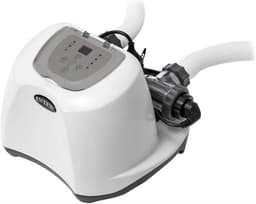
Intex Intex 26670 salt system

Alternative

Intex Intex 26670 salt system
8.6/10about £301.32
On this page

What you are switching on

A floater is on when tablets are inside, the lid is closed, and the vent lets water reach the puck. Nothing is plugged in. A salt cell is on when the pool already holds the salt that listing asks for, the pump is moving water through the cell, and the lead is in a proper UK socket. Intex 26670 states about 3 kg of salt per cubic metre and 12 g/h. That kilogram is for 26670. The cell does not watch the residual. If the device may be the wrong type, use the pool chlorinator buying guide. Test before you open a tub or tip in a bag.

Test free chlorine and pH before you change anything

Test free chlorine and pH, then decide whether to add anything. PWTAG’s technical note explains that pH changes how much free chlorine is the active form. Blue Horizons’ above-ground guide puts free chlorine at about 1–3 ppm and pH at 7.2–7.6, with a daily test in use. That chart is not a dose for FENRIR, Hayward or Intex, and it is not the Intex 0.5–3.0 ppm extract. If the ranges differ, follow the manual you own and the label of the chemical you add. Write the numbers down before you open a vent or raise a cell output. The Health and Safety Executive expects the biocide label and the original container. Never mix acid and a chlorine donor in one bucket. HSG179 is for pools other people use, not a domestic log.
FENRIR FENRIR 5 inch floater

Testsieger

FENRIR FENRIR 5 inch floater
9.0/10about £5.99

Floater steps, including a lid that must stay shut

On the first day, test, then add only the tablet size the floater and the label both allow. Close the lid, set the vent partly open, and keep the unit off the liner and the steps. Retest later the same day. If free chlorine has jumped past the tablet label, close the vent or remove a tablet and test again before you swim. UK reviews of FENRIR describe lids that open and tablets that fall out. That is the failure you are checking for. CMXOAJ says to crush 3 inch tablets. Use a 1 inch tablet, or a feeder that states the larger size. A crushed puck dissolves in a rush. Lift a puck off the floor and retest. A smaller, warmer spa makes the same lid failure sharper, which is the hot tub chlorinator case.

Salt-cell steps, then the point where you stop

Confirm the salt figure on the listing you bought, weigh it for your known volume, and dissolve it with the pump running and the cell off. Intex 26670 says about 3 kg per cubic metre, so a 10 m³ pool on that listing is about 30 kg if 10 m³ is the real volume. Start the cell, run the pump for the hours the manual asks, and test. Move the output one step and test the next day. Stop when the work leaves the dial. Cutting pipe near a heater, acid-cleaning a cell, or fitting a euro plug is a competent person. A UK review says Intex 26670 arrived with a euro plug. Electrical Safety First says a travel adaptor is not the fix. Leave 26670’s 3 kg figure on that listing.

Common questions

How do I know the vent is too open?
Free chlorine rises quickly, the tablets shrink in a day or two, or a harsh chlorine odour sits at the surface. UK reviews also describe tablets that fell out once the lid opened, which dumps the puck. Close the vent, recover any loose tablet, and retest. A vent left wide open to catch up after a cloudy weekend is the usual way a small pool overshoots.
What salt figure do I use?
Use the kilograms printed for the cell you own, on the volume in your pool manual. Intex 26670 states about 3 kg per cubic metre. SPATA’s 3,000 mg/l matches that listing and is still a trade description, not a dose for every brand. CG-26664 does not print a salt figure in this file. Leave table salt and seawater out. Weigh the bag rather than guessing a scoop.
Does the cell tell me the chlorine level?
No. The Poolpro extract of an Intex manual says the owner tests free chlorine, with 0.5–3.0 ppm for that manual, and that the cell does not monitor the residual. Bestway’s 6 g/h pack includes 50 strips, which is a kit in the box, not a sensor. A green light means the electrode is powered. It does not mean the reading is inside your target band. Test after you change the output.
Can I put acid and tablets in one bucket?
No. Acid and a chlorine donor in one container can release dangerous gas. Add them separately, with the pump running, and only in the amounts on each label. The Health and Safety Executive expects biocides to stay in the original container. A floater is for tablets only. A cell does not need those tablets. If you are unsure which bottle is which, read the labels before either goes near the water.
What if the plug is not UK?
Stop and unplug it. A UK review of Intex 26670 reports a euro plug, and NYANS and Briidea do not state a voltage in the file. A travel adaptor is not the repair. Electrical Safety First rejects that workaround, and regulation 35 points to a BS 1363 plug or a fused conversion plug. A competent person fits it, or you return the unit. The same stop applies if you would have to cut pipe beside a heater.

Related pages

Sources

Public UK sources from the research digest, retrieved 16 October 2026. Prices, stars, and review counts are the amazon.co.uk captures for these ASINs.

  1. HSE, swimming pool safety management (retrieved 16.10.2026)
  2. HSE, HSG179, health and safety in swimming pools (retrieved 16.10.2026)
  3. HSE, using biocides safely (retrieved 16.10.2026)
  4. HSE, biocide product types (retrieved 16.10.2026)
  5. PWTAG TN60, free chlorine and pH (retrieved 16.10.2026)
  6. SPATA, salt chlorinators factsheet (retrieved 16.10.2026)
  7. BSI, BS EN 16401:2013, sodium chloride for electrochlorinators (retrieved 16.10.2026)
  8. Sunshine Pools, Bestway Hydrogenic 6 g/h (retrieved 16.10.2026)