Filter balls vs sand for a domestic sand tank
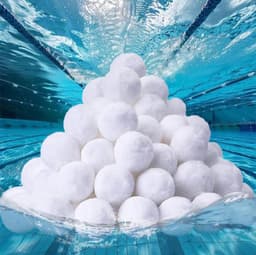
Filter balls vs sand is a choice between a graded granular bed and a loose fibre bed in the same tank, and only when that tank is allowed to run on balls. Balls win on weight. They lose on a single agreed way to clean them, and they are not the medium UK public-pool guidance names. The [filter balls comparison](/hub/pool-care/filter-balls) is the seven amazon.co.uk bags, from about £3.99 to about £13.99. This page is the fork before any of those bags. A qualifying purchase can earn a commission at no extra cost to you.
Filter balls vs sand is a choice between a graded granular bed and a loose fibre bed in the same tank, and only when that tank is allowed to run on balls. Balls win on weight.
Filter balls vs sand is a choice between a graded granular bed and a loose fibre bed in the same tank, and only when that tank is allowed to run on balls. Balls win on weight. They lose on a single agreed way to clean them, and they are not the medium UK public-pool guidance names. The filter balls comparison is the seven amazon.co.uk bags, from about £3.99 to about £13.99. This page is the fork before any of those bags. A qualifying purchase can earn a commission at no extra cost to you.
Our top picks
| Badge | Product | Sand claim | Weight lines | Cleaning stated | Note | Price | Offer |
|---|---|---|---|---|---|---|---|
| Best overall |  STEEIRO STEEIRO filter balls, 1800 g | 4 lb replaces 150 lb, and 1,800 g equals 65 kg | Title 1,800 g, technical line 1.82 kg | Machine wash in a laundry bag | 6.8 | about £13.99 | View offer |
| Best value |  Bomxmon Bomxmon filter balls, 1.54 lb | Replaces 75 lb of filter sand | Title 1.54 lb, technical line 720 g | Washable and reusable | 7.3 | about £9.99 | View offer |
 Intex Intex fiber balls, 500 g (29045) | 500 g equivalent to 18 kg of silica sand | Title 500 g, technical line 510 g | Machine washable | 9.3 | about £10.99 | View offer |


On this page
What you are actually comparing
Weight and cleaning are the real split
What UK pool guidance names
When to stay and when to switch
Common questions
Are filter balls better than sand?
Will I still backwash?
Can I use builder’s sand if balls are awkward?
Is filter glass the same kind of switch?
Do balls remove the need for chlorine?
Will a public or club pool accept balls because a domestic listing says so?
Can I mix sand and balls?
Related pages
Sources
Public UK sources for pool filtration, taken from the research digest. Listing prices, stars and review counts are from amazon.co.uk on 19 October 2026.
- HSE — Swimming pool safety (retrieved 19 October 2026)
- PWTAG TN50 — Swimming pool filter specification (retrieved 19 October 2026)
- BSI — BS EN 16713-1:2016 domestic pool filtration (retrieved 19 October 2026)
- SPATA — Swimming pool filtration factsheet (retrieved 19 October 2026)
- Intex support — Fibre ball filtration media (retrieved 19 October 2026)
- Bestway UK — Polysphere pool filtration balls (retrieved 19 October 2026)
- Filterlogic SFL700P pool filter balls (retrieved 19 October 2026)
- Consumer Rights Act 2015, section 9 (retrieved 19 October 2026)