Independent comparisons. We may earn from shop links. More info

How to attach trellis to a fence

Updated: October 2026

If you are holding a thin expanding lattice, attaching trellis to a fence starts with a gap, not a screw size. Battens keep the plant off the panel, and a pilot hole is what stops the lath splitting. Confirm you may drill the fence first. [Trellis on a fence](/hub/plant-accessories/trellis/sub/trellis-on-a-fence) covers ownership and height. The Products Compared editorial team used the amazon.co.uk extracts in the [garden trellis comparison](/hub/plant-accessories/trellis), plus Royal Horticultural Society and Ronseal notes, not a garden trial. A qualifying purchase can earn a commission at no extra cost to you.

If you are holding a thin expanding lattice, attaching trellis to a fence starts with a gap, not a screw size. Battens keep the plant off the panel, and a pilot hole is what stops the lath splitting.

Our top picks

Gardman Gardman 07250

Best overall

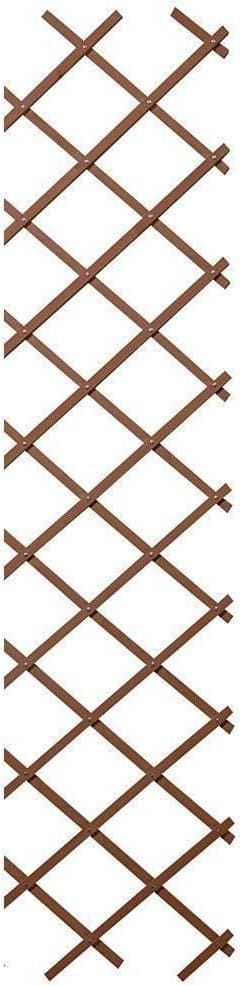
Gardman Gardman 07250
9.2/10about £7.14
LATERN LATERN 180 x 30 cm

Alternative

LATERN LATERN 180 x 30 cm
7.3/10about £14.99
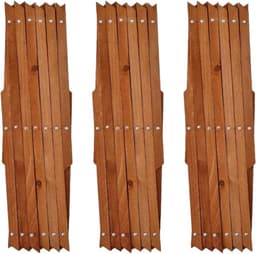
Kanta Kanta KL2002 3-pack

Best value

Kanta Kanta KL2002 3-pack
6.0/10about £13.99
On this page

Put battens up before the plant

A climber needs room behind the lattice for stems and air. RHS guidance recommends a support about 5 cm from a wall or fence, and a lower edge about 30 cm above the soil. Its clematis guidance gives a minimum gap of 2.5 cm for mesh. Do not average those into one figure. Use battens that keep the lattice off the surface. Ronseal suggests battens roughly 30–60 mm deep. Set them vertically on sound boards, spaced so the pivots stay in line. Match the fixing to timber or masonry, and follow the fixing maker’s instructions. This guide does not invent a screw gauge. Keep the bottom clear of wet soil even if a listing calls the wood treated. Open the lattice to its final shape before you drill, because the diamonds change the height as you stretch the width. Then fix the battens, pilot through sound wood, and only then tie in the plant.

Pre-drill because these laths split

The Gardman and Kanta expanding panels use thin wood, and their listings do not include fence fixings. UK reviews report splitting when buyers nail or screw through the lath without a pilot hole. One Gardman reviewer estimated the material at about 4 mm. That is a review, not a stated specification. Use a sharp bit suited to the screw’s core and support the lath while drilling. Tighten only until the lattice sits against the batten. If the lath starts to crack, stop. Do not put a screw through every crossing. A framed panel can take a corner fixing that this unframed lattice cannot. Inspect pinned products before you drill. Reviews of the brass-pinned Kanta three-pack say pins can pull out while the lattice is opened. A panel that is already separating is not made sound by more screws. Photograph the fault and use the return process if the goods are not as described or not of satisfactory quality.
Gardman Gardman 07250

Testsieger

Gardman Gardman 07250
9.2/10about £7.14

Tie the plant with twine, not wire

RHS advice recommends garden twine for annual climbers and young rose stems, with stronger ties for mature woody growth. Bare wire can cut into a stem as it thickens. Use a soft tie in a loose figure of eight, leaving room for growth, and loosen any tie that starts to constrict the stem. A seller’s 10 kg claim on the LATERN or Toyosport listing is not a load test of your installation. Fence condition, batten fixings, wind and the mature plant all add load. Wisteria and established climbing roses need a support designed for woody growth, not more twine on thin expanding lath.

Stop if the frame or joints are failing

An expanding panel is the wrong start when it cannot hold its shape, its pins are pulling free, or the fence is decayed. Return a faulty new panel. If the fence rocks or has rotten posts, fix that before you add battens and foliage. A rigid framed trellis can be easier across a broad area, and horizontal wires can give more control over spacing. The garden trellis buying guide sets out those trade-offs. Ask an installer if the hole would be in a neighbour’s fence, or if the lattice will sit over a public path.

Common questions

Can I nail expanding trellis straight to a fence board?
That risks splitting the thin lath and leaves little room for stems behind it. Use battens or suitable stand-offs, open the lattice to its final shape, and drill pilot holes through sound wood. Choose exterior fixings for the fence construction rather than assuming one nail suits every panel.
How large should the gap behind trellis be?
RHS general training guidance uses about 5 cm from a wall or fence, while its clematis guidance says mesh should be at least 2.5 cm away. Use the requirement for the plant and support you have. A consistent gap that permits growth matters more than a flush lattice.
How high should the bottom sit above soil?
RHS guidance suggests about 30 cm above the soil for training supports. This keeps the wood away from damp ground and leaves room to manage the base of the plant. Other framed-panel guides may give a larger range, so follow the design instructions if your product is not thin expanding lattice.
Are fixings included with Gardman or Kanta panels?
No fence fixings are listed for the Gardman, Kanta, LATERN or Toyosport expanding lattices in this comparison. Plan for battens, exterior screws and plant ties. Check what is behind the fence before drilling and buy fixings suitable for that material and exposure.
What should I do if the wood splits?
Stop tightening and do not place a second screw beside the crack. A newly delivered panel that splits under gentle opening, or arrives with failed joints, should be documented and returned. Replacing a thin panel is often safer than relying on a compromised lath.
Can I use cable or metal wire to tie in a climber?
Avoid bare wire around living stems because it can cut in as they thicken. Use soft garden twine or a purpose-made flexible tie, leave growth room and inspect it during the season. Mature woody stems may need stronger ties, but those should still avoid constriction.

Related pages

Sources

Public UK sources for height, training and timber use class, plus the amazon.co.uk listing facts in the display file. Shelf prices and star lines are those extracts, not a live reload on 16 October 2026.

  1. Class A, means of enclosure, England (retrieved 16 October 2026)
  2. Planning Portal: fences, gates and walls (retrieved 16 October 2026)
  3. Welsh Government: fence permission (retrieved 16 October 2026)
  4. RHS: training climbers (retrieved 16 October 2026)
  5. RHS: clematis growing guide (retrieved 16 October 2026)
  6. Wood Protection Association: BS 8417 (retrieved 16 October 2026)
  7. Consumer Rights Act 2015, section 11 (retrieved 16 October 2026)
  8. Party Wall etc. Act 1996 explanatory booklet (retrieved 16 October 2026)