How to use rose fungicide
You have a bottle in one hand and a marked rose in a UK garden in the other, and the last article you read quoted a timetable from a different product. This is how to use rose fungicide without copying that timetable: hygiene first, then both leaf surfaces, then the interval printed for the bottle you are holding. The twelve listings, with their prices and review counts, stay on the [rose fungicide comparison](/hub/plant-accessories/rose-fungicide). We wrote this on 16 October 2026 from those listings, the Royal Horticultural Society’s spraying note, and Health and Safety Executive garden guidance. If you buy through our amazon.co.uk links, we may earn a commission at no extra cost to you.
You have a bottle in one hand and a marked rose in a UK garden in the other, and the last article you read quoted a timetable from a different product.
You have a bottle in one hand and a marked rose in a UK garden in the other, and the last article you read quoted a timetable from a different product. This is how to use rose fungicide without copying that timetable: hygiene first, then both leaf surfaces, then the interval printed for the bottle you are holding. The twelve listings, with their prices and review counts, stay on the rose fungicide comparison. We wrote this on 16 October 2026 from those listings, the Royal Horticultural Society’s spraying note, and Health and Safety Executive garden guidance. If you buy through our amazon.co.uk links, we may earn a commission at no extra cost to you.
Our top picks
| Badge | Product | Interval claimed | Systemic on listing | Diseases named | Note | Price | Offer |
|---|---|---|---|---|---|---|---|
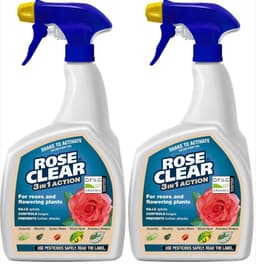
| Best overall |  BugClear RoseClear 3 in 1, 2 × 800 ml | No day count | – | Black spot, mildew, rust | 4.2 | about £10.98 | View offer |
 Provanto Provanto Fungus Fighter Plus, 2 × 1 L | Up to 3 weeks | Yes | Black spot, mildew, rust, blight | 8.9 | about £16.00 | View offer | |
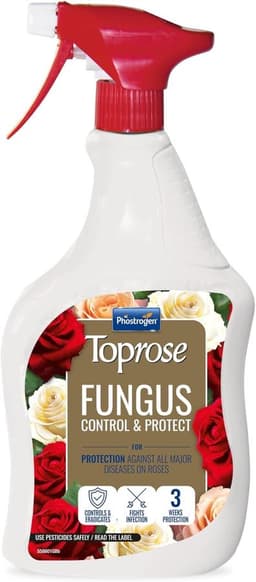
| Best value |  Phostrogen Toprose Fungus Control and Protect, 1 L | Up to 3 weeks | Yes | Black spot, mildew, rust, leaf spot | 8.6 | about £8.52 | View offer |

On this page
Read this bottle, not the last one
Cover both leaf surfaces and the stems
Up to three weeks, every seven days, or the label only
When to stop and what to do with the bottle
Common questions
Do I spray the underside of the leaf?
How soon can I spray again?
Can I use Provanto’s up to 3 weeks on a sulphur 3-in-1?
What if the label says dangerous to bees?
Where do I put an expired or professional-only bottle?
Related pages
Sources
Public UK sources checked for this comparison, plus the amazon.co.uk listing facts in the display file on 16 October 2026. Shelf prices and star lines are those UK figures. HSE and RHS pages are the legal and hygiene frame. They are not a ranking of these twelve bottles.
- HSE: garden and home pesticide use (retrieved 16 October 2026)
- HSE: Sustainable Use Regulations 2012 guidance (retrieved 16 October 2026)
- HSE: MAPP 18223 Fungus Control and Protect (retrieved 16 October 2026)
- HSE: MAPP 14854 Roseclear Ultra (retrieved 16 October 2026)
- HSE ebulletin, 5 June 2024, myclobutanil (retrieved 16 October 2026)
- RHS: rose black spot (retrieved 16 October 2026)
- RHS: fungicides for home gardeners (retrieved 16 October 2026)
- Westland Fungus Guard (retrieved 16 October 2026)
- Toprose SDS, code 86600038 (retrieved 16 October 2026)